DingleOutdoor Escape Game & Treasure Hunt
Where the wild Atlantic meets Irish charm
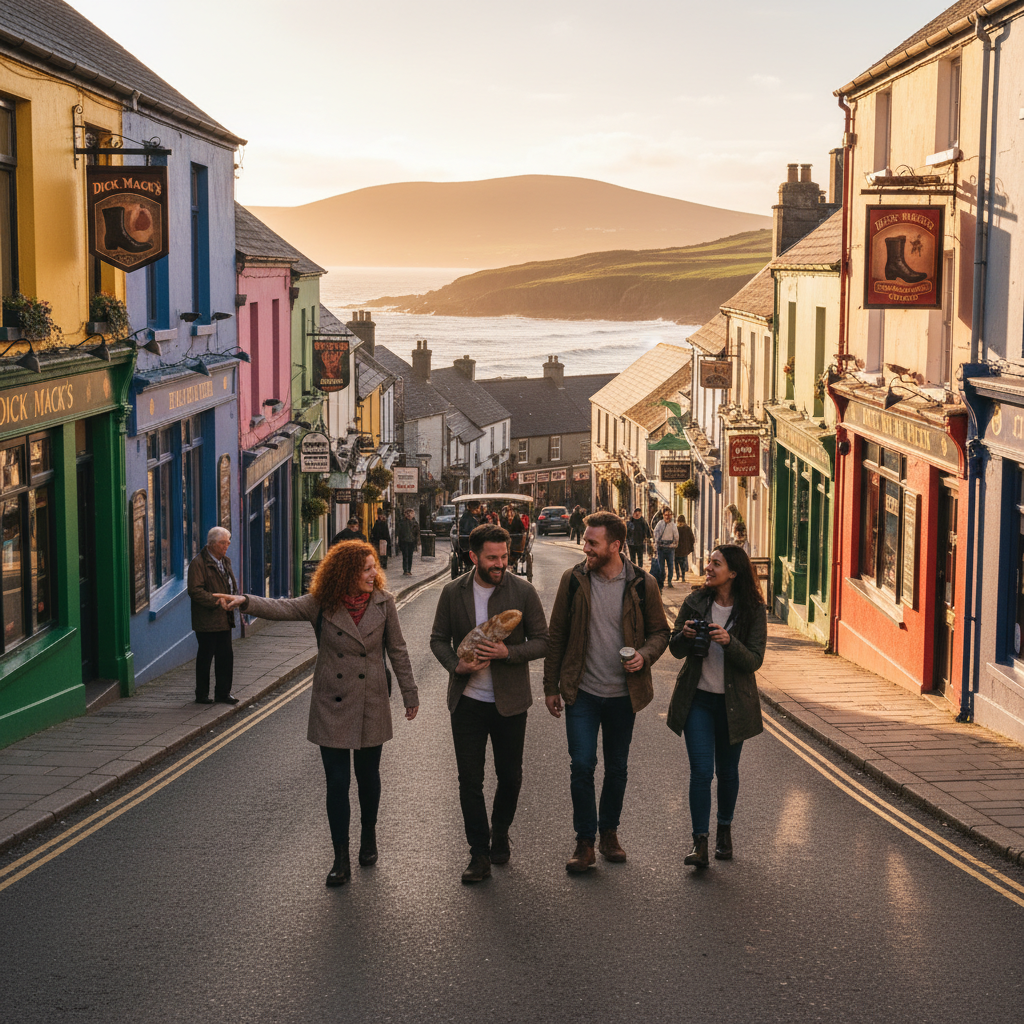
Dingle is an explosion of color and culture nestled on its namesake peninsula, where the wild Atlantic meets Irish charm. If you're wondering what to do in Dingle, prepare to be enchanted. Beyond its breathtaking landscapes, the town itself is an invitation to explore. Stroll along the picturesque Dingle Harbour, admire the colorful fishing boats, and breathe in the sea air. The narrow streets of the town center, with their traditional pubs and artisan shops, are a true labyrinth of discoveries. For an unusual activity, why not embark on an outdoor escape game? It's a fun way to uncover Dingle's secrets, transforming your visit into a life-sized treasure hunt. Imagine a scavenger hunt where each clue leads you to a new corner of this vibrant town, from the lively area around Main Street to the quieter nooks near St. Mary's Church. It's an adventure that combines history, culture, and fun, perfect for all ages.
Unusual things to do in Dingle
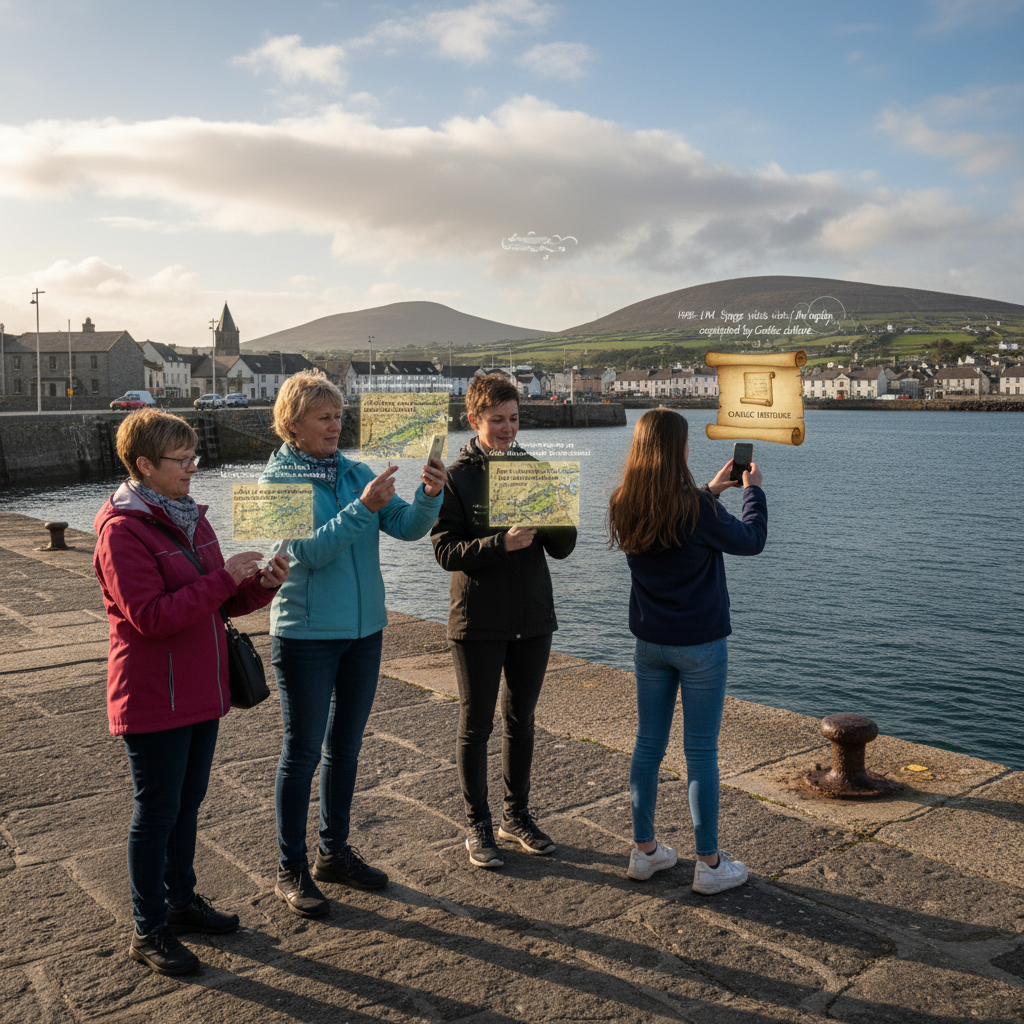
For an unusual activity in Dingle, forget the beaten paths and dive into the Gaelic soul of the peninsula. Beyond the iconic landscapes, the town offers unique experiences. Imagine deciphering riddles while wandering through colorful alleys, encountering lively local characters, or discovering hidden pubs where traditional music resonates. An outdoor scavenger hunt or treasure hunt transforms the town into a giant playground, inviting you to observe details that tourist guides often overlook. It's an original outing that stimulates the mind while immersing you in Dingle's authentic atmosphere, away from the crowds.
Things to do in Dingle with kids
Dingle is a dream destination for families with children and teens, offering a multitude of fun activities. Besides beaches where you can collect shells and potential encounters with marine wildlife, an outdoor escape game is a fantastic option. From 6-8 years old, younger participants can actively take part in the treasure hunt, helping to spot clues and solve simple puzzles, while older children and adults will appreciate the more complex challenges. It's an activity that encourages collaboration and teamwork, transforming the discovery of the town into an exciting adventure for the whole family. Your children will love this interactive and educational experience!
Dingle for couples
Dingle is a romantic setting, perfect for a couple's getaway. Imagine yourselves hand in hand, getting lost in the winding alleys, discovering small art galleries and intimate cafes. The breathtaking views of the bay at sunset are a sight not to be missed, offering an idyllic backdrop for unforgettable memories. Participate in a two-person scavenger hunt, solving riddles while exploring the town's rich heritage, from historical ruins to colorful facades. It's a unique way to strengthen your bond, share laughs, and create your own story in this enchanting corner of Ireland.
What to do in Dingle when it rains
Even in the rain, Dingle retains all its charm, and there's plenty to do! For adventure seekers, know that our outdoor escape game is designed to be enjoyable even in wet weather. Approximately 80% of the route takes place under arcades, covered passages, or near shelters, allowing you to enjoy the experience without being too exposed to the elements. Between two puzzles, you can always take refuge in a cozy pub for a hot chocolate or a pint. The rain even adds a mystical atmosphere to the cobblestone streets and landscapes of the peninsula.
Where is Dingle, and where do the routes start?
Starting points of our routes and the places they pass through.
Route starting points
Places in Dingle
- Dingle Pier
- Main Street
- Dingle Courthouse
- St. James' Church
- The Healing Stone
- Bridge over Dingle River (Strand Street)
- John B. Keane Road (near the library)
- The Marina Walkway (near the Dingle Skellig Hotel)
The history of Dingle
A Medieval Trading Hub
Dingle's history begins in the Mesolithic period, with human settlement evidence found at Ferriter's Cove, near Ballyferriter, around 4000 BC. These early inhabitants were migratory people who relied on wild game and seafood. The town of Dingle developed as a trading port in the 13th century. By the 15th and 16th centuries, Dingle was a center for merchant ships, trading wine and other goods with ports in France, Spain, and Britain. Spanish merchants lived in Dingle, and some buildings were constructed in the Spanish style. This Spanish connection is also seen in Dingle's role as an embarkation point for pilgrimages to Santiago de Compostela in Galicia, Spain.
Rebellions and Resilience
The 16th century saw Dingle involved in the Desmond Rebellions. In 1529, the Treaty of Dingle was signed between the Earl of Desmond, James Fitzgerald, and an envoy of King Charles V of Spain, incorporating much of southwest Ireland into the Habsburg Monarchy and granting Irish people citizenship rights in Habsburg territories. In July 1579, James Fitzmaurice Fitzgerald arrived in Dingle Harbour with a Spanish expeditionary force, but was killed shortly after coming ashore. The Dingle Peninsula, like much of Ireland, experienced hardship during An Gorta Mór, the Great Irish Famine, from 1845 to 1849, which reduced its population. Despite these challenges, Dingle continued to develop. The fishing industry saw major growth in the 1870s, supported by the arrival of rail transport in 1891, which helped distribute fish throughout the country.
What to see in Dingle
- Dingle Pier — Observe fishing boats. The pier and maritime facilities were developed in the late 19th century to support the fishing industry.
- Main Street, Dingle — Walk this central street to see elements of Dingle's medieval past. The street layout and some architectural details reflect the influence of merchant families who traded with continental Europe.
- St. James' Church, Dingle — This Church of Ireland church, built in 1807, stands on the site of a 13th-century medieval parish church, believed to have been constructed by Spaniards. It hosts concerts, including the 'Other Voices' TV programmes.
- The Healing Stone, Páirc an Ásaigh — Find this stone, a local point of interest.
- Dingle Courthouse — This building on Main Street has served as a center of local justice and administration. Its architecture indicates Dingle's civic importance in County Kerry.
- Bridge over Dingle River (Strand Street) — This bridge crosses the Dingle River where it flows into Dingle Harbour, providing views of the water and docked boats. It offers a vantage point for observing the town's maritime activity.
- John B. Keane Road (near the library) — This road is named after the Irish playwright and author. The nearby library is a community center.
- The Marina Walkway (near the Dingle Skellig Hotel) — Walk along the marina to see leisure boats and fishing vessels, providing a view of Dingle's relationship with the sea.
When to visit Dingle
The best time to visit Dingle is during May, June, or September. These months offer long daylight hours and fewer crowds than July and August. Temperatures are milder, with average highs around 14-16°C (57-61°F) in May and September, and up to 18°C (64°F) in August. Rain is possible year-round, but April, May, June, and July tend to be the driest months.
Avoid January and February if you prefer more daylight and open attractions. Many businesses operate reduced hours or close for part of the winter, and daylight is limited. However, for those who prioritize quietness, winter offers a peaceful experience.
Getting around Dingle
Dingle has no train station. Public transport to the town typically involves a bus connection from Tralee. Bus Éireann operates a service from Tralee to Dingle, which connects to the wider rail and coach network. Kerry Airport (KIR) is the closest airport, and a pre-booked shuttle bus service operates between the airport and the Dingle Peninsula.
Within Dingle town, walking is the best way to navigate its narrow streets. Taxis are available, but public transport within the Dingle Peninsula itself is sparse. A car is the most flexible option for exploring beyond the town. The main route into Dingle by car is the N86 from Tralee. The R560 over Conor Pass offers views but has vehicle restrictions and can close due to ice. Parking can be congested in the town center during summer.
Things you probably do not know about Dingle
Verified details most visitors walk straight past.
- Green Street
- Look closely at some of the older buildings on Green Street. You might spot stones with carvings, some dating back to 1586, believed to be remnants of Spanish architectural features from the 16th century, reflecting Dingle's trade links with Spain.
- St. James' Church
- The current St. James' Church was built in the early 19th century, but its dedication has a much older, international story. The church is dedicated to St. James, likely referring to St. James of Compostela in Spain, highlighting Dingle's historical role as an embarkation point for medieval pilgrimages to Santiago de Compostela.
- Dingle Peninsula
- The Dingle Peninsula is a treasure trove for history enthusiasts, but not just for its well-known sites. It is one of the richest archaeological areas in Western Europe, with over 2000 monuments, including beehive huts (clocháns) dating from the 6th century, whose true function remains a subject of debate.
- Dingle Town
- Dingle's official name has been a point of contention and change in recent history. In March 2005, the name Dingle was officially abolished by the government, to be referred to solely as An Daingean. After a lengthy dispute, legislation in 2011 reinstated both Dingle and Daingean Uí Chúis as official names.
- Dingle Harbour
- For decades, Dingle Harbour was home to a famous resident who became a symbol of the town. An adult Bottlenose dolphin named Fungie had been courting human contact in Dingle Bay since 1983, becoming a local celebrity, though he disappeared in 2020.
Questions about visiting Dingle
How long should I plan to stay in Dingle?
One full day can provide an introduction to Dingle Town and parts of the Slea Head Drive. Two to three days allow for a more relaxed exploration of the western peninsula, including sites like Conor Pass or Inch Beach, offering flexibility for weather changes.
What are the best ways to get around Dingle and the peninsula?
Dingle town is best explored on foot due to its compact and often congested streets. For exploring the wider Dingle Peninsula, a car offers the most flexibility, as public transport services to smaller villages and scenic routes like the Slea Head Drive are limited. Taxis are available in town.
What is the typical budget for a trip to Dingle?
A mid-range budget for a solo traveler in Dingle is around $170 (€149) per day, covering accommodation, meals, and local transportation. For two people, a one-week trip averages about $2,375 (€2,086). Budget travelers can expect to spend around $73 (€64) per day.
Is Dingle suitable for families with children?
Yes, Dingle can be a good choice for families. While the town itself has fewer specific sights for young children, they might enjoy a harbour cruise. The Dingle Peninsula drive offers many ancient historical sites and scenic stops that can appeal to older children.
What are the main industries in Dingle today?
Dingle's principal industries are tourism, fishing, and agriculture. The town remains a major fishing port, with the industry having a long history dating back to the 1830s. Dingle Mart, its livestock market, serves the surrounding agricultural community.
Are there any specific cultural considerations for visitors in Dingle?
Dingle is located on the edge of a significant Gaeltacht region, meaning Irish is the everyday spoken language for many local families. While English is widely spoken, the preservation of the Irish language is a point of deep pride for the community.
Frequently asked questions
How much does an outdoor escape game cost in Dingle?
An outdoor escape game in Dingle is a very affordable activity, especially if you come as a group! The price is €12 per team, not per person. This means that whether you are 2, 3, or 4 players, the rate remains the same for your entire group. It's an excellent option for an economical and fun outing. This single team price makes the adventure accessible to everyone, whether you're with family, friends, or as a couple. Get ready for a memorable experience without breaking the bank!
Is it suitable for children / families?
Absolutely! Our outdoor escape games are perfectly suited for families and children aged 6-8 and up. The puzzles are designed to be accessible at different levels, allowing younger participants to actively take part in the treasure hunt and feel involved. It's a fun and educational activity that encourages observation, logic, and teamwork. Your children will love exploring Dingle in game form, and adults will appreciate discovering the town in an original way. It's a great way to create family memories.
How long does an escape game in Dingle last?
The duration of an outdoor escape game in Dingle generally varies between 1h30 and 2h30. This primarily depends on your pace of play and your ability to solve the puzzles. Some very fast groups can finish in less time, while others prefer to take their time, enjoy the scenery, take breaks to admire monuments or have a drink. The goal is not speed, but to have fun and discover the city. You are free to play at your own pace, without pressure.
Do I need to book in advance?
No, it is generally not necessary to book in advance for our outdoor escape games in Dingle. You can start the adventure whenever you want, directly from your smartphone. This is one of the great advantages of our platform: total flexibility! Simply go to the indicated starting point, launch the game, and let yourself be guided. This allows you to organize your day in Dingle without time constraints and to decide to play on a whim, perfect for a spontaneous activity.
What to visit in Dingle beyond escape games?
Dingle is full of treasures beyond our games! Don't miss an excursion on the Slea Head Drive, a panoramic road offering breathtaking views of the Atlantic Ocean and historical sites. The Dingle Oceanworld Aquarium is an excellent option for families, housing fascinating marine life. Stroll through Dingle Harbour to observe seals and colorful boats. Traditional pubs, like Dick Mack's or Foxy John's, are perfect for soaking up the local atmosphere and listening to Irish music. And of course, get lost in the lively streets, full of artisan shops and galleries.
What is the best season to visit Dingle?
Dingle is beautiful all year round, but each season has its charm! Summer (June to August) offers the mildest weather and longest days, ideal for enjoying beaches and water activities. Spring (April-May) and autumn (September-October) are also excellent, with fewer crowds, lush green landscapes, and beautiful colors, perfect for hiking and exploring. Winter, though cooler and rainier, offers a cozy and authentic atmosphere in the pubs. Our outdoor escape game is playable in all seasons, but spring and summer are often preferred for comfort.
Other destinations in Munster
Blarney
The castle and its legendary stone
Burren
A lunar landscape, between rock and ancient mysteries
Cashel
Where Irish kings reigned and legends were born.
Cobh
Last port of Titanic, gateway to Irish emigration.
Cork
The Rebel City, between history and gastronomy
Holycross
Explore a millennial Cistercian abbey's secrets
Limerick
In the heart of medieval Ireland, amidst castles and legends
Moher
Where the cliffs meet the wild Atlantic
Skellig Michael
A monastery perched between sky and sea