BurrenOutdoor Escape Game & Treasure Hunt
A lunar landscape, between rock and ancient mysteries
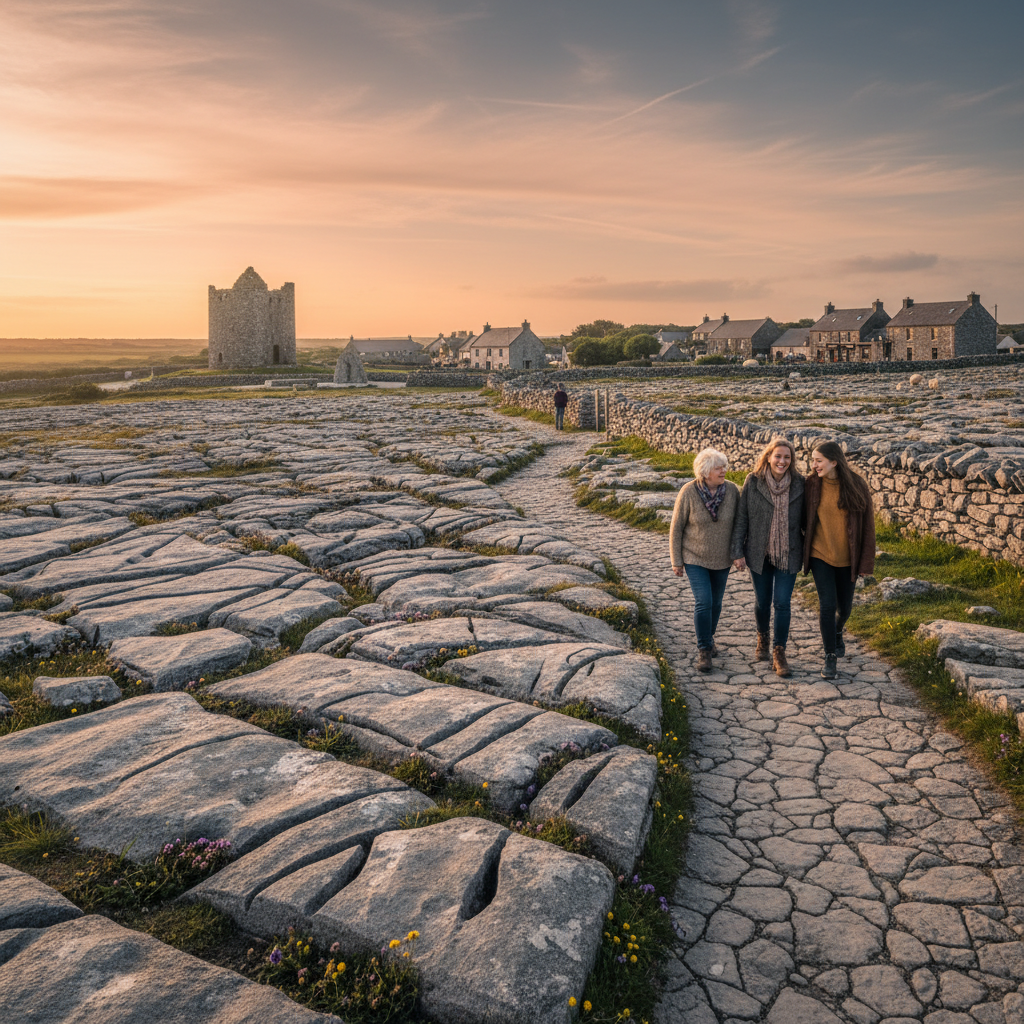
Curious about what to do in Burren for an extraordinary experience? This unique limestone landscape in Ireland, often described as lunar, is an invitation to adventure and discovery. Beyond its breathtaking panoramas and rare Arctic and Mediterranean flora, Burren is filled with ancient mysteries and hidden treasures. Immerse yourself in history by exploring the fascinating Poulnabrone Dolmen, a millennia-old testament to past civilizations, or descend into the Earth's depths at Aillwee Cave for an underground adventure. For an unusual activity, our outdoor escape game invites you to transform the vast expanses of the Burren National Park into a huge playground. Embark on a captivating treasure hunt that will lead you through iconic sites and secret nooks, solving puzzles to unveil the secrets of this mystical land. It's much more than just a scavenger hunt; it's a fun and cultural immersion, perfect for discovering the region in an original and memorable way.
Unusual things to do in Burren
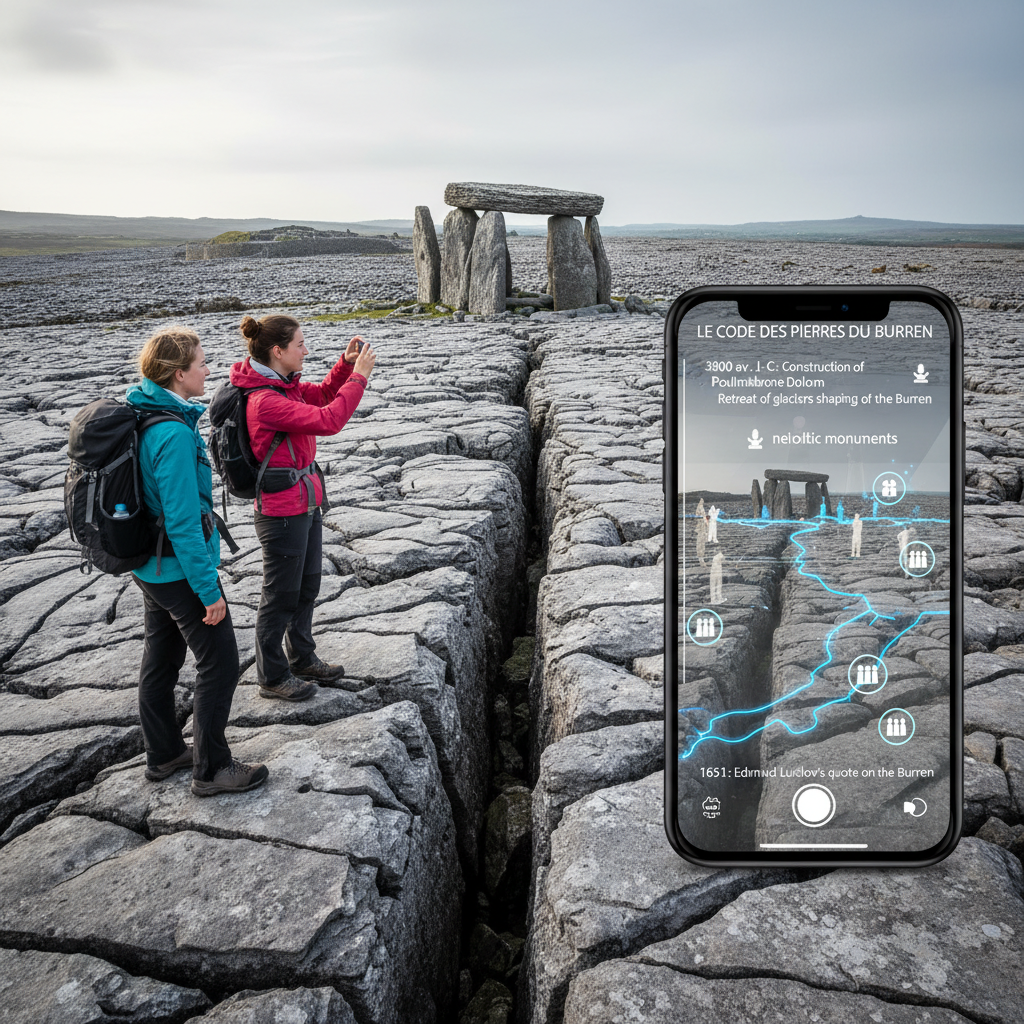
For an unusual activity in Burren, off the beaten path, let yourself be tempted by a total immersion in its unique environment. Imagine an original outing where the landscape itself becomes your guide and your challenge. Our outdoor games offer an interactive exploration of the Burren, transforming its rocky expanses and archaeological sites into a vast adventure playground. It's an opportunity to discover the region's geological and botanical richness while solving puzzles, far from traditional guided tours. A memorable experience that combines the excitement of a game with the wild and mysterious beauty of the Burren.
Things to do in Burren with kids
Looking for family-friendly activities in Burren? Our outdoor escape games are an excellent option to entertain children and teenagers aged 6 and up, accompanied by an adult. It's a fun and interactive way to explore the landscapes of the Burren National Park. Imagine your children turning every stone and every dolmen into a clue, collaborating to solve puzzles and advance in the adventure. This life-sized treasure hunt stimulates curiosity, teamwork, and observation skills, guaranteeing laughter and unforgettable memories for the whole family. An adventure where young and old alike will find joy.
Burren for couples
Discover Burren as a couple from a romantic and adventurous angle. Far from the hustle and bustle, the timeless landscapes of the Burren offer a perfect setting to reconnect. Imagine strolls hand-in-hand along winding paths, admiring breathtaking views of the Atlantic and unique karst formations. Our outdoor games are an invitation to share a unique experience, where each puzzle solved together strengthens your bond. Explore sites like Corcomroe Abbey, steeped in history, or enjoy an intimate picnic at sunset. A memorable getaway that blends adventure, culture, and special moments for two.
What to do in Burren when it rains
What to do in Burren on a rainy day? Although our outdoor escape games primarily take place outdoors and are therefore subject to the whims of Irish weather, the experience loses none of its charm for adventurers ready to brave the elements. Pack waterproof clothing and sturdy shoes to fully enjoy the mystical beauty of the Burren, even in the rain. The landscape then takes on a unique dramatic dimension. If you prefer to stay dry, Aillwee Cave offers a fascinating sheltered exploration, or the Burren National Park visitor center provides enriching exhibits. Honesty is key: our routes are not under covered passages, but adventure is guaranteed!
Where is Burren, and where do the routes start?
Starting points of our routes and the places they pass through.
Route starting points
Places in Burren
- Poulnabrone Dolmen
- A typical Burren grike
- Panoramic viewpoint over the karstic landscape
- Exterior of Caherconnell Stone Fort
- Kilfenora Cathedral
- A rock formation striated by glaciers
- Microclimate area harboring rare species
- Commemorative plaque near Burren Centre
The history of Burren
From Tropical Sea to Glacial Landscape
The Burren's geological history began over 300 million years ago in the Carboniferous period, when Ireland was near the equator. The region was submerged under a warm, tropical sea. Marine organisms accumulated and compacted, forming the thick limestone layers seen today. Fossils of corals, crinoids, and brachiopods are embedded in these rocks.
Around 300 million years ago, continental collisions tilted and folded these rock layers, creating the joints and cracks in the limestone. The most recent transformation occurred during the last Ice Age, which ended 12,000 to 15,000 years ago. Thick ice sheets scoured the land, removing soil and exposing the bare limestone pavement. As glaciers retreated, they left the 'glaciokarst' landscape of the Burren. Rainwater continues to dissolve the limestone, widening fissures and forming caves.
Ancient Inhabitants and Enduring Structures
Human habitation in the Burren dates back over 6,000 years, with evidence from the Stone Age. Around 5,500 years ago, Neolithic farmers built large stone megalithic tombs. Poulnabrone Dolmen, built between 3800 and 3200 BC, served as a collective burial site for at least 33 individuals, with grave goods including pottery, stone tools, and ornaments. The Burren has many Christian religious sites and stone forts, such as Caherconnell Stone Fort, constructed between 400 AD and 1200 AD by early farmers. Later, between 1200 and 1600 AD, over 20 tower houses and castles were built as homesteads for local families.
What to see in Burren
- Poulnabrone Dolmen — This portal tomb, older than Egypt's pyramids, has a large capstone balanced on two upright stones on the limestone pavement. Excavations in the 1980s found the remains of 33 people buried here between 3800 and 3200 BC.
- A typical Burren grike — These deep cracks in the limestone pavement create microclimates. Within them, plants from Arctic-alpine species to Mediterranean wildflowers grow side-by-side.
- Viewpoint over the karstic landscape — Elevated spots, such as Mullaghmore Hill in the Burren National Park, offer views of the terraced limestone landscape, extending towards Galway Bay and the Atlantic.
- Exterior of Caherconnell Stone Fort — This stone fort, dating from 400 AD to 1200 AD, shows early farming communities in the Burren. Sheepdog demonstrations are often held here.
- Kilfenora Cathedral, exterior Celtic crosses — The cathedral, from the late 1100s to 1200, was built on a 6th-century monastery site. Its nave is still used for worship. The grounds have ancient Celtic crosses, including the reassembled Doorty Cross.
- A rock formation striated by glaciers — Throughout the Burren, exposed limestone surfaces show marks of glacial erosion from the last Ice Age, which ended around 12,000 years ago. These striations provide evidence of geological forces that shaped the landscape.
- Microclimate area with rare species — The Burren is known for its flora, where Arctic, Alpine, and Mediterranean plants grow together. This is due to the limestone's heat retention and sheltered conditions within the grikes. Species include the blue spring gentian and various orchids.
When to visit Burren
The best time to visit the Burren is in late spring, particularly May and June. During this period, wildflowers, including Arctic-alpine and Mediterranean species, bloom across the limestone pavement. Temperatures are mild, typically 13-20°C, and crowds are smaller than in July and August. July and August offer the warmest weather, around 20°C, and longer evenings, but also the highest tourist numbers. Winter, from November to March, can be difficult due to frequent rain, strong Atlantic winds, and limited services, with temperatures around 8-9°C.
Getting around Burren
The Burren is best explored by car due to its size and limited public transport. Shannon Airport (SNN) is the nearest international airport, about a 45-minute drive. From Dublin, expect a four-hour drive. Roads in the Burren can be narrow, so allow extra time. Driving is on the left. Regional bus services connect villages like Ballyvaughan, Kilfenora, Lisdoonvarna, and Doolin, with connections from Galway, Ennis, and Limerick. The Burren National Park offers a free shuttle bus from its Information Point in Corofin to trailheads from May to September; parking is free in Corofin. Sturdy, ankle-high hiking boots are recommended for the uneven limestone terrain.
Things you probably do not know about Burren
Verified details most visitors walk straight past.
- Poulnabrone Dolmen
- What secret did the ancient builders of Poulnabrone Dolmen hide beneath its capstone? During excavations in the 1980s, archaeologists discovered the remains of 33 individuals, including adults and children, buried beneath the dolmen. They also found grave goods such as a polished stone axe head, flint arrowheads, stone beads, and even two small pieces of clear rock crystal.
- Kilfenora Cathedral
- Why is the Bishop of Kilfenora a rather unusual figure in the Catholic Church? Due to its small size and weak financial base, the Catholic Diocese of Kilfenora was eventually merged with other dioceses. A compromise was reached in the 1800s where the Bishop of Galway also serves as the Apostolic Administrator of Kilfenora, meaning the Pope is officially regarded as the Bishop of Kilfenora in perpetuity.
- Burren's microclimate areas
- How can plants from the Arctic and the Mediterranean grow side-by-side in the Burren? The unique limestone landscape creates microclimates. The exposed rock absorbs and retains heat, while the deep fissures (grikes) provide shelter and moisture. This allows species like the Mountain Avens (typically Arctic-alpine) and the Dense-flowered Orchid (Mediterranean) to thrive in close proximity.
- Burren National Park
- What geological phenomenon in the Burren National Park appears and disappears with the rain? The Burren National Park is home to 'turloughs,' which are seasonal lakes found almost exclusively in western Ireland. These lakes appear and disappear as the water levels fluctuate with rainfall, a direct result of the karst landscape where water sinks and rises through the porous limestone.
- Kilfenora
- Kilfenora is known as the 'city of the seven crosses,' but what happened to its original status as a significant religious center? Kilfenora was granted diocesan status in 1152 at the Synod of Kells, transforming it from a monastic settlement. Its cathedral, dedicated to St. Fachtna, was rebuilt multiple times after being burned and plundered in the 11th century.
Questions about visiting Burren
How much time should I allocate to visit the Burren?
Most visitors find that a full day is sufficient to experience the main attractions, including driving along the coast, hiking in the Burren National Park, and seeing some historic sites. However, two days are ideal for a less rushed experience, allowing more time for exploration and to spend a night in a local village.
What is the best way to get around the Burren?
Renting a car is the most practical way to explore the Burren due to its wide area and limited public transport. However, regional bus services connect key villages, and a free shuttle bus operates within the Burren National Park from May to September, offering a sustainable way to travel.
Is the Burren suitable for families with children?
Yes, the Burren offers various attractions suitable for families. The Burren National Park has trails of varying lengths and difficulties, some as short as 30 minutes. Attractions like Aillwee Cave and Caherconnell Stone Fort, with its sheepdog demonstrations, can also be engaging for children.
What is the typical budget for a trip to the Burren?
The cost can vary. Entry to the Burren National Park and many of its natural sites, like Poulnabrone Dolmen, is free. Paid attractions include Aillwee Cave and Caherconnell Stone Fort. Accommodation prices vary, with options from family-owned bed and breakfasts to hotels in villages like Ballyvaughan or Doolin.
Are there any specific events or festivals in the Burren?
The 'Burren in Bloom' festival, typically held in mid-May, celebrates the region's unique wildflowers with guided botanical walks. In October, the Burren Food Trail festival showcases local producers and culinary traditions.
Where should I stay when visiting the Burren?
You can choose to stay in one of the local villages within the Burren, such as Ballyvaughan, Doolin, or Kilfenora, which offer bed and breakfasts and a chance to experience local life. Alternatively, larger towns like Ennis or Galway, located on the periphery of the Burren, serve as good bases for day trips.
Frequently asked questions
How much does an outdoor escape game cost in Burren?
The OddballTrip adventure in Burren is designed to be accessible and flexible. The price is €12 per team, regardless of your group size (up to 6 people per team for a better experience). This single rate gives you access to the entire outdoor game, all the puzzles, and the captivating story we've imagined for you. It's an excellent option for a controlled budget, allowing you to enjoy an unusual activity without the per-person fees often associated with traditional attractions. Get ready for a total immersion without breaking the bank!
Is it suitable for children / families?
Absolutely! Our outdoor escape games are perfectly suited for families and groups with children. We recommend a minimum age of 6, always accompanied by an adult, so that the youngest can fully participate in solving puzzles and the treasure hunt. The playful aspect of the game stimulates curiosity, teamwork, and logic, making this activity a rewarding experience for everyone. It's a great way to spend quality time together, discover Burren from a new angle, and create memorable family memories.
How long does an escape game in Burren last?
The duration of our outdoor escape games in Burren is designed to adapt to your pace of discovery. On average, allow between 1.5 and 2.5 hours to complete the adventure, depending on how quickly your team solves the puzzles and your desire to take breaks to admire the scenery. You are free to take your time, stop for photos, or soak in the unique atmosphere of the Burren National Park. The goal is to have fun and explore, not to race against the clock. Enjoy every moment!
Do I need to book in advance?
No, one of the great advantages of our outdoor escape games is their flexibility! There's no need to book in advance. Once you've purchased the game online, you can start it whenever you want, at the time that suits you best, and even pause it if you need a quick coffee break or an unplanned visit. This freedom allows you to easily integrate the OddballTrip adventure into your Burren itinerary without constraints. It's the ultimate spontaneous activity for a successful day!
What to visit in Burren beyond the escape games?
Beyond our exciting outdoor games, Burren offers a multitude of treasures to explore. Don't miss the majestic Poulnabrone Dolmen, an impressive megalithic site that bears witness to millennia of history. The depths of Aillwee Cave hold a fascinating speleological adventure. For nature lovers, the Burren National Park is a biodiversity paradise, with hiking trails offering spectacular views and unique flora. And of course, the famous Cliffs of Moher, although slightly outside, are a must-see nearby for breathtaking Atlantic panoramas. Burren is a land of natural and historical wonders!
What is the best season to visit Burren?
Burren is beautiful in all seasons, but each offers a different experience. Spring (April-May) is ideal for admiring the unique Burren flora, where Arctic and Mediterranean species coexist. Summer (June-August) offers longer and generally sunnier days, perfect for hiking and outdoor activities. Autumn (September-October) dresses the landscape in warm colors and offers a calmer atmosphere. Even winter has its mystical charm, with dramatic landscapes and fewer crowds. Whatever the period, always pack clothes suitable for the changing Irish weather!
Other destinations in Munster
Blarney
The castle and its legendary stone
Cashel
Where Irish kings reigned and legends were born.
Cobh
Last port of Titanic, gateway to Irish emigration.
Cork
The Rebel City, between history and gastronomy
Dingle
Where the wild Atlantic meets Irish charm
Holycross
Explore a millennial Cistercian abbey's secrets
Limerick
In the heart of medieval Ireland, amidst castles and legends
Moher
Where the cliffs meet the wild Atlantic
Skellig Michael
A monastery perched between sky and sea