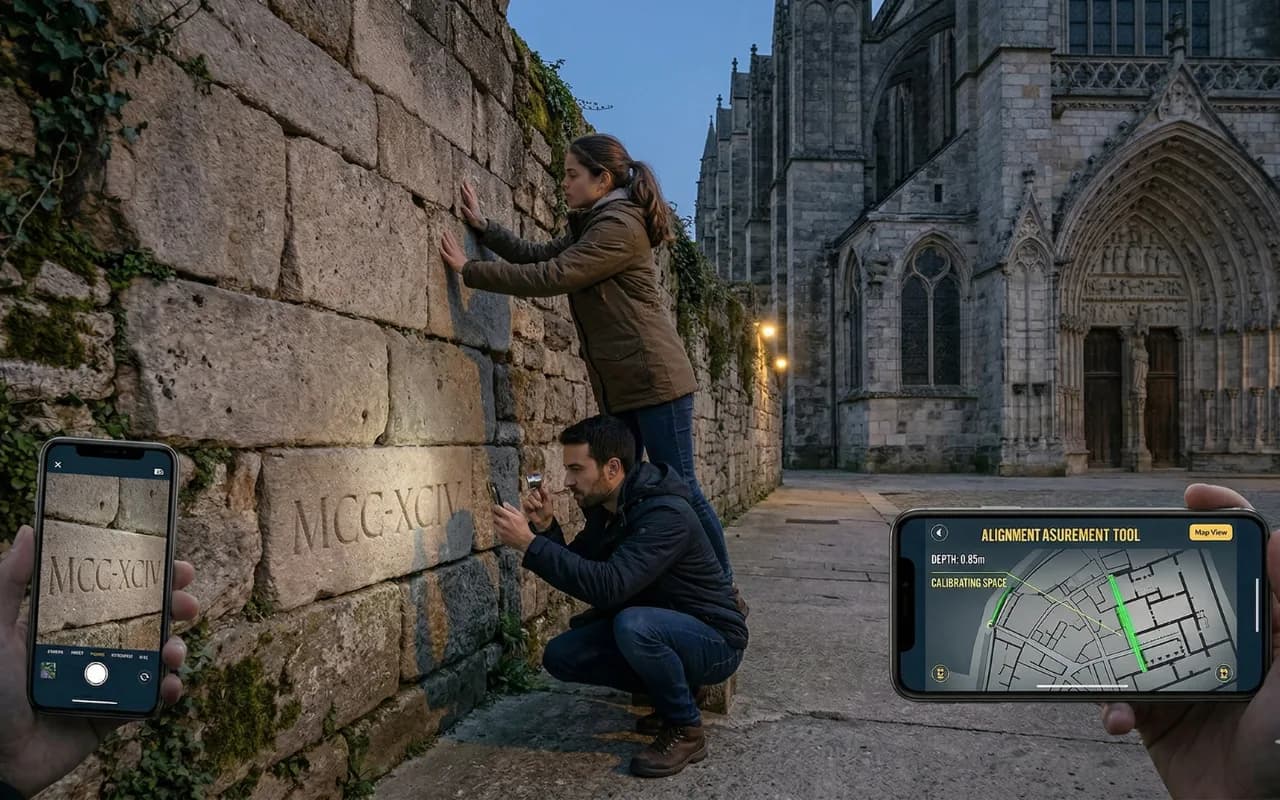
Le MansOutdoor Escape Game & Treasure Hunt
Plantagenet city and Gallo-Roman walls
Le Mans, a city of art and history, invites you on a fascinating journey between its glorious past and its current dynamism. Stroll through the magnificent Plantagenêt City, a true medieval gem with its cobbled streets and half-timbered houses, or admire the impressive Gallo-Roman wall, one of the best preserved in Europe. But Le Mans is also a city full of original activities for all tastes. If you're looking for an unusual activity to spice up your discovery, why not embark on an outdoor escape game? Imagine a life-sized treasure hunt, a captivating scavenger hunt that will lead you through the city's secrets. It's the perfect opportunity to combine tourist exploration with a fun adventure. Our courses await you to transform your visit into an unforgettable experience, where each solved riddle brings you closer to the mysteries of Le Mans. Ready to take on the challenge and discover our games?
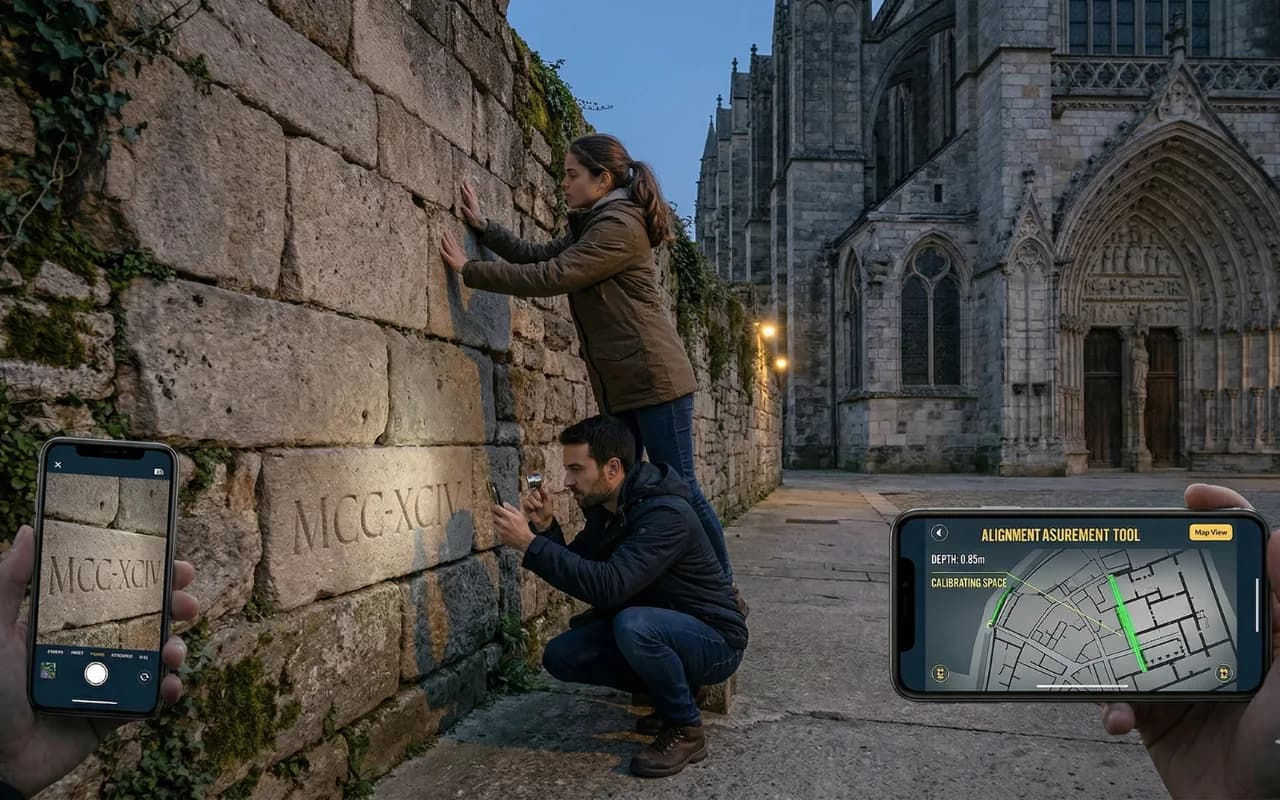
Unusual things to do in Le Mans
Le Mans abounds with opportunities for those looking to venture off the beaten path. Beyond classic visits, the city offers unique experiences. Our outdoor escape games are the perfect example of an unusual activity: a life-sized treasure hunt where you explore the Plantagenêt City or other iconic neighborhoods while solving riddles. It's an original and interactive way to discover local history and legends. Dare to embark on an adventure and transform your visit into an epic quest, far from traditional guidebooks, for a total and memorable immersion.
Things to do in Le Mans with kids
Le Mans is a fantastic destination for families, with activities that will appeal to all ages. For a memorable outing, our outdoor escape games are ideal. They transform the city's discovery into a giant scavenger hunt, where parents and children collaborate to solve riddles and uncover mysteries. It's an excellent way to learn while having fun, stimulating the curiosity of the youngest while exploring the treasures of Le Mans. A fun and educational adventure guaranteed to create unforgettable memories together.
Le Mans for couples
For a romantic getaway or an original outing for two in Le Mans, our outdoor escape games offer a unique experience. Far from classic dinners, embark hand in hand on a treasure hunt through the historic streets, solving riddles that will test your complicity. It's a fun and interactive way to share a special moment, laugh together, and create memorable souvenirs while exploring the charms of the Plantagenêt City. An adventure that strengthens bonds and spices up your visit.
What to do in Le Mans when it rains
If rain decides to join your visit to Le Mans, don't panic! Although our escape games are mostly outdoor activities, the city offers other options. You can explore the Musée de Tessé or the Saint-Julien Cathedral. For the more adventurous, know that a little rain doesn't stop the adventure of our scavenger hunts, but do bring appropriate clothing. The experience remains just as immersive, even under a gray sky, transforming the city into an even more mysterious setting.
Where is Le Mans, and where do the routes start?
Starting points of our routes and the places they pass through.
Route starting points
Places in Le Mans
- Saint-Julien Cathedral · Romanesque nave
- Plantagenet City · Half-timbered old town
- Roman wall · Southern section with polychrome patterns
- Maison de la Reine Bérengère · Rue de la Reine Bérengère
- Grande Poterne · Fortified passage to the river
The history of Le Mans
From Roman Vindinum to the Plantagenêt Dynasty
Le Mans, originally known as Vindinum, was the capital of the Aulerci Cenomani, a Gallic tribe. The Romans took the city in 47 BC, incorporating it into the Roman province of Gallia Lugdunensis. To protect itself from barbarian invasions, a stone wall was built around the city between approximately 320 and 360 AD. This Gallo-Roman wall, with its polychrome patterns of red brick, roussard stone, and pink mortar, led to Le Mans being called "the red city."
During the 11th century, Le Mans became a point of power struggles between the Counts of Anjou and the Dukes of Normandy. A key event occurred on June 17, 1128, with the marriage of Geoffrey Plantagenet, Count of Anjou and Maine, to Empress Matilda, granddaughter of William the Conqueror and heir to the English throne. Their son, Henry II Plantagenet, who became King of England and established an empire, was born in Le Mans in 1133. This connection established Le Mans' importance within the Anglo-Angevin realm. The city's Saint-Julien Cathedral, with construction beginning in the 11th century and continuing through the 14th century, shows both Romanesque and Gothic architectural styles.
Medieval Development and Modern Transformation
The medieval quarter, now known as the Cité Plantagenêt, developed around the Roman core. It has cobbled streets and half-timbered houses, some from the 15th century. The city grew, and in the 19th century, Le Mans saw industrialization, with the arrival of the railway and the development of textile and motor vehicle production. This era also brought urban transformation, with new avenues and public buildings. Le Mans gained recognition in the 20th century with the first Grand Prix motor race in 1906, and the establishment of the 24 Hours of Le Mans endurance race in 1923, placing it on the global stage.
What to see in Le Mans
- Saint-Julien Cathedral — This cathedral, built between the 6th and 14th centuries, combines Romanesque and Gothic styles. It has a Romanesque nave and a Gothic choir with chapels, including one with 47 musical angels. It also contains some of the oldest stained-glass windows in France, with the Ascension window from the late 11th century.
- Gallo-Roman Wall — This Roman wall, dating from the early 4th century, is 500 meters long. It features polychrome patterns of red brick, roussard stone, and pink mortar, creating geometric friezes.
- Cité Plantagenêt — This is the historic center of Le Mans, a 20-hectare medieval quarter with narrow cobbled streets and a hundred half-timbered houses, some from the 15th century. The Roman wall encloses this area.
- Maison de la Reine Bérengère — This medieval building, named after Berengaria of Navarre, Richard the Lionheart's widow, has exhibits from prehistory to the Renaissance.
- Abbaye Royale de l'Épau — Founded in 1229 by Berengaria of Navarre, this Cistercian abbey is located outside the city center in Yvré-l'Évêque.
- Musée des 24 Heures du Mans — This museum covers the history of the 24 Hours of Le Mans race, displaying a collection of cars and memorabilia.
When to visit Le Mans
The most comfortable time to visit Le Mans is from May to September, when the weather is mild. July and August are the warmest months, with average daytime highs around 25-26°C and fewer rainy days. Temperatures can reach or exceed 30°C in summer.
Avoid visiting in June if you are not attending the 24 Hours of Le Mans race, as the city becomes crowded and accommodation prices increase. Winter, from December to February, is cold and damp, with average daytime temperatures around 7-9°C. Some museums may have reduced hours during this period.
Getting around Le Mans
Le Mans is accessible by TGV train from Paris Montparnasse in under an hour. Regional TER trains connect Le Mans with cities in the Loire Valley such as Angers, Tours, Nantes, and Rennes. Paris airports (Charles de Gaulle or Orly) are convenient for international arrivals, with onward train travel. The city center and the Cité Plantagenêt are compact and walkable. For exploring the wider Sarthe countryside, a rental car is recommended.
Parking is available in underground garages like Jacobins and Place de la République. Le Mans has several markets. The Jacobins Market, at Place des Jacobins near the cathedral, operates on Wednesday and Sunday mornings, and all day Friday. The Pontlieue market is held on Tuesdays and Fridays, and the Sablons market on Saturdays and Thursdays.
Things you probably do not know about Le Mans
Verified details most visitors walk straight past.
- Gallo-Roman Wall
- What's unique about Le Mans' Roman wall compared to others in France? The Gallo-Roman wall of Le Mans is distinguished by its unique polychrome patterns. Contrasting colors of terracotta bricks, pink mortar, red sandstone, light sandstone, and white limestone were arranged to create chevrons, columns, X-shapes, and floral motifs, with researchers identifying 14 different designs.
- Saint-Julien Cathedral
- Beyond its impressive size, what unusual artistic detail can be found within the cathedral's Gothic choir? The Gothic choir of the Saint-Julien Cathedral features a chapel adorned with 47 painted musical angels, a notable example of Western medieval painting.
- Cité Plantagenêt (Rue du Pilier Rouge)
- Before street names were common, how did residents navigate the winding lanes of the Old Town? In the Cité Plantagenêt, particularly around Rue du Pilier Rouge, carved pillars, such as a red one on a timber-framed house and a green one diagonally opposite, served as markers for wayfinding in the Old Town before formal street names existed.
- Place Saint-Michel
- What ancient relic stands in Place Saint-Michel, and where did it come from? In Place Saint-Michel, you can find a prehistoric menhir. It was moved there in 1778 following the destruction of the Dolmen de la Pierre en Lait.
- Cité Plantagenêt (Hidden Sculptures)
- What whimsical, often overlooked, sculptures can you spot on the medieval houses? As you wander through the Cité Plantagenêt, keep an eye out for hidden sculptures on the half-timbered houses, such as a carved monkey grimacing or a sow spinning a distaff, which have been part of the city's street art since the Middle Ages.
- The Cathedral's Southern Transept
- What unexpected historical event influenced the completion of the cathedral's south transept? The construction of the south transept, designed by Jean le Maczon and begun in the 1380s, was completed in 1392 with financial aid from King Charles VI, who had been cared for by the canons of Le Mans Cathedral during one of his bouts of insanity.
Questions about visiting Le Mans
How long should I stay in Le Mans?
A stay of at least two to three days allows you to explore the Cité Plantagenêt, visit the cathedral and museums, and potentially the Abbaye Royale de l'Épau. If you are a motorsport fan or wish to explore the Sarthe countryside, allow more time.
What are the best neighborhoods to explore in Le Mans?
The **Cité Plantagenêt** (Old Town) is recommended for its medieval character and Roman walls. Other neighborhoods like the **Saint-Nicolas quarter** or the **Pontlieue quarter** offer different views of the city, and the **Jacobins** area is known for its market.
Is Le Mans a good destination for families with children?
Yes, Le Mans is family-friendly. The medieval old city is largely pedestrianized. There are parks like **L'Arche de la Nature** with an educational farm, and **Papea Parc** for amusement rides. The **Musée des 24 Heures** also appeals to children.
What is the typical budget for a trip to Le Mans?
Le Mans is a reasonably affordable city compared to Paris. Accommodation, food, and activities are available for various budgets. Prices are lower during the shoulder seasons (April-May & September-October) and higher during the 24 Hours of Le Mans race period.
How do I get around Le Mans?
The historic city center, including the Cité Plantagenêt, is walkable. Le Mans also has a public transport system with buses and trams. For exploring the surrounding Sarthe region, renting a car is recommended.
What local specialties should I try in Le Mans?
Try *rillettes*, a savory pork spread, available at local markets like the Jacobins Market. The region also offers local produce, from free-range poultry to apples and Loire Valley wines.
Frequently asked questions
How much does an outdoor escape game cost in Le Mans?
Our escape games in Le Mans are designed to be accessible and fun for everyone. The price is €12 per team, regardless of the number of participants (usually 2 to 6 players). This single price per team allows you to fully enjoy the adventure without worrying about the cost per person. It's an excellent option for an economical outing with friends, family, or as a couple, offering great value for money for a fun and immersive discovery activity in the heart of the city of Le Mans.
Is it suitable for children / families?
Absolutely! Our outdoor escape games in Le Mans are perfectly suited for families and children. The puzzles are designed to be accessible and stimulating for all ages, encouraging collaboration between young and old. It's a fantastic way to turn a simple stroll into an educational and fun adventure. Children love the "treasure hunt" aspect, and parents appreciate discovering the city from a new angle, while sharing an unforgettable moment of togetherness with their loved ones.
How long does an escape game last in Le Mans?
The duration of our escape games in Le Mans generally varies between 1h30 and 2h30, depending on the chosen route and your pace of play. This time includes solving puzzles, moving between different points of interest, and exploring the city. You have the freedom to play at your own pace, take breaks if you wish, which makes the experience flexible and enjoyable. So plan an afternoon or morning to fully enjoy your Le Mans adventure.
Do I need to book in advance?
No, one of the great advantages of our outdoor escape games in Le Mans is that booking is not necessary! You can purchase your game online at any time and start the adventure whenever you want. There is no fixed time slot. This offers you total flexibility to organize your day. Whether you decide to play on a whim or plan in advance, access to our courses is immediate after purchase. It's the freedom of adventure at your own pace!
What to visit in Le Mans beyond escape games?
Le Mans is full of treasures to explore! After our scavenger hunts, don't miss strolling through the Plantagenêt City, with its half-timbered houses and its superbly preserved Gallo-Roman wall. The majestic Saint-Julien Cathedral is a must-see. Motorsport enthusiasts can visit the 24 Hours of Le Mans Museum. For a relaxing moment, the Jardin des Plantes offers a green setting. Every street corner reveals a part of Le Mans' unique history and charm.
What is the best season to visit Le Mans?
Le Mans is pleasant to visit in all seasons, but the spring months (April to June) and autumn (September to October) are often ideal. The weather is generally mild and sunny, perfect for our outdoor escape games and for exploring the city on foot. Summer (July-August) is also very pleasant but can be hotter and busier. Winter offers a calmer atmosphere and magnificent Christmas illuminations, even if the weather can be cooler for outdoor activities.
Other destinations in Loire Valley
Nantes
Castle of the Dukes of Brittany and Jules Verne
Angers
Slate fortress and Apocalypse tapestry
Saumur
Fairytale castle and troglodyte caves
Les Epesses
Puy du Fou and the Vendée War
Laval
Medieval city, between history and mystery
Noirmoutier Island
The mimosa island, between salt, sea, and legends
More cities in France
Amboise
Leonardo da Vinci's final home
Blois
Royal castle and assassination of the Duke of Guise
Orléans
In Joan of Arc's footsteps, between Loire and history
Mont-Saint-Michel
The medieval marvel between sky and sea
Bayeux
First city liberated — from William to 1944
Arromanches
Gold Beach & Mulberry artificial harbour