DunblaneOutdoor Escape Game & Treasure Hunt
Medieval history amidst stunning Scottish landscapes
Dunblane, nestled in the heart of Scotland, is a charming destination for those looking to escape the everyday. If you're wondering what to do in Dunblane, know that the town offers a perfect blend of history and nature. Start by exploring the impressive Dunblane Cathedral, an architectural gem that tells centuries of Scottish history. Then, stroll along the Allan Water, where lush green landscapes invite serenity. For a truly unique experience, why not embark on an outdoor escape game? It's a fantastic way to discover the town from a new perspective. Imagine yourself on a treasure hunt, solving puzzles while exploring picturesque streets and iconic sites. This real-life scavenger hunt transforms your visit into a truly unusual activity, perfect for the curious and adventurous. Don't miss the Leighton Library either, Scotland's oldest private library, for a dive into the region's literary past. Dunblane promises memorable moments, combining cultural discoveries with interactive outdoor entertainment.
Unusual things to do in Dunblane
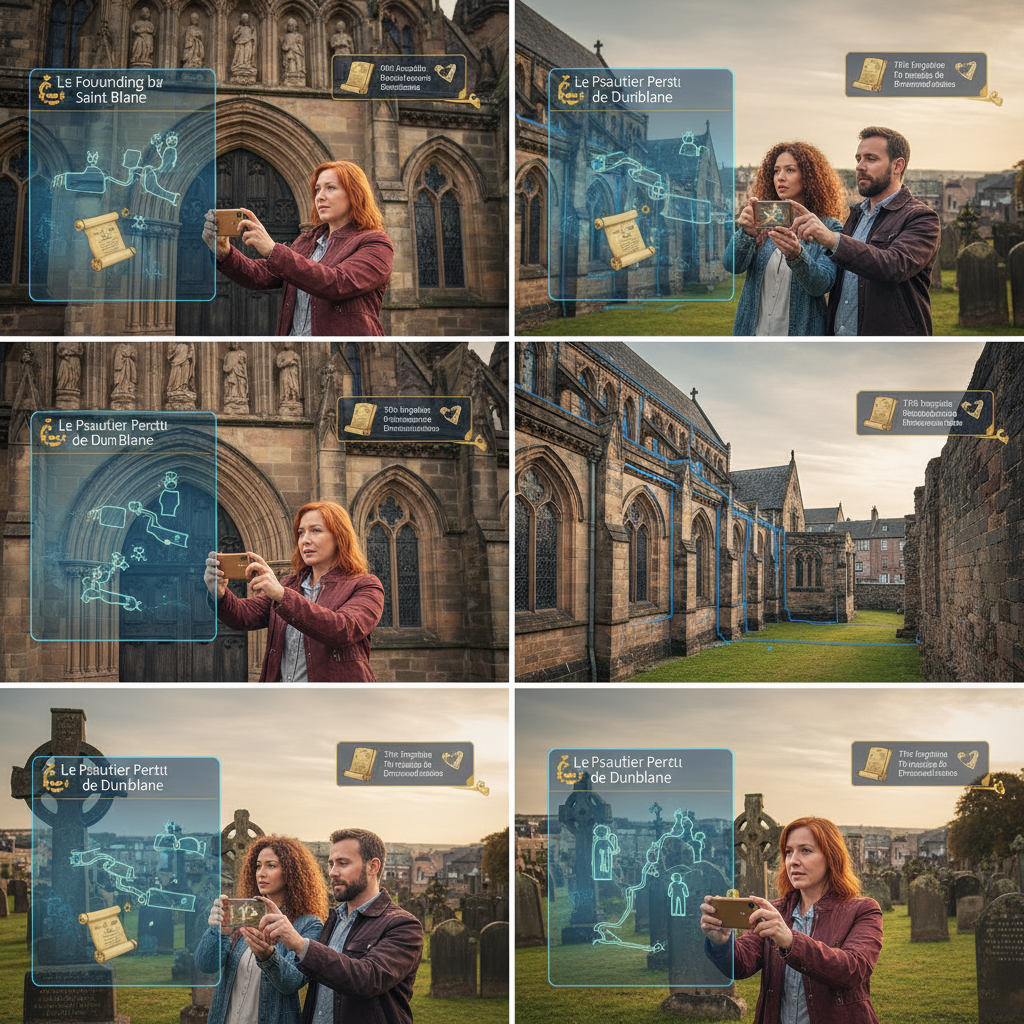
For an unusual activity in Dunblane, step off the beaten path! Beyond its historical sites, the town lends itself wonderfully to an original outing. Imagine wandering through its medieval streets, not as a mere visitor, but as the hero of an urban quest. An OddballTrip outdoor escape game invites you to solve mysteries amidst nature or within the built heritage, turning every corner into a clue. It's a fun and immersive way to discover Dunblane's secrets, far from classic tourist routes, combining reflection and exploration. An unexpected experience that will spice up your stay.
Things to do in Dunblane with kids
What to do with family in Dunblane? The town is an excellent option for families with children and teens. An outdoor escape game adventure is perfect for stimulating teamwork and curiosity in everyone. From 6-8 years old, the youngest can actively participate in the treasure hunt, looking for clues and solving simple puzzles, while teens will appreciate the challenge and playful aspect of the mission. It's an activity that guarantees laughter and bonding, transforming a simple walk into an exciting quest where every family member has a role to play, creating unforgettable memories.
Dunblane for couples
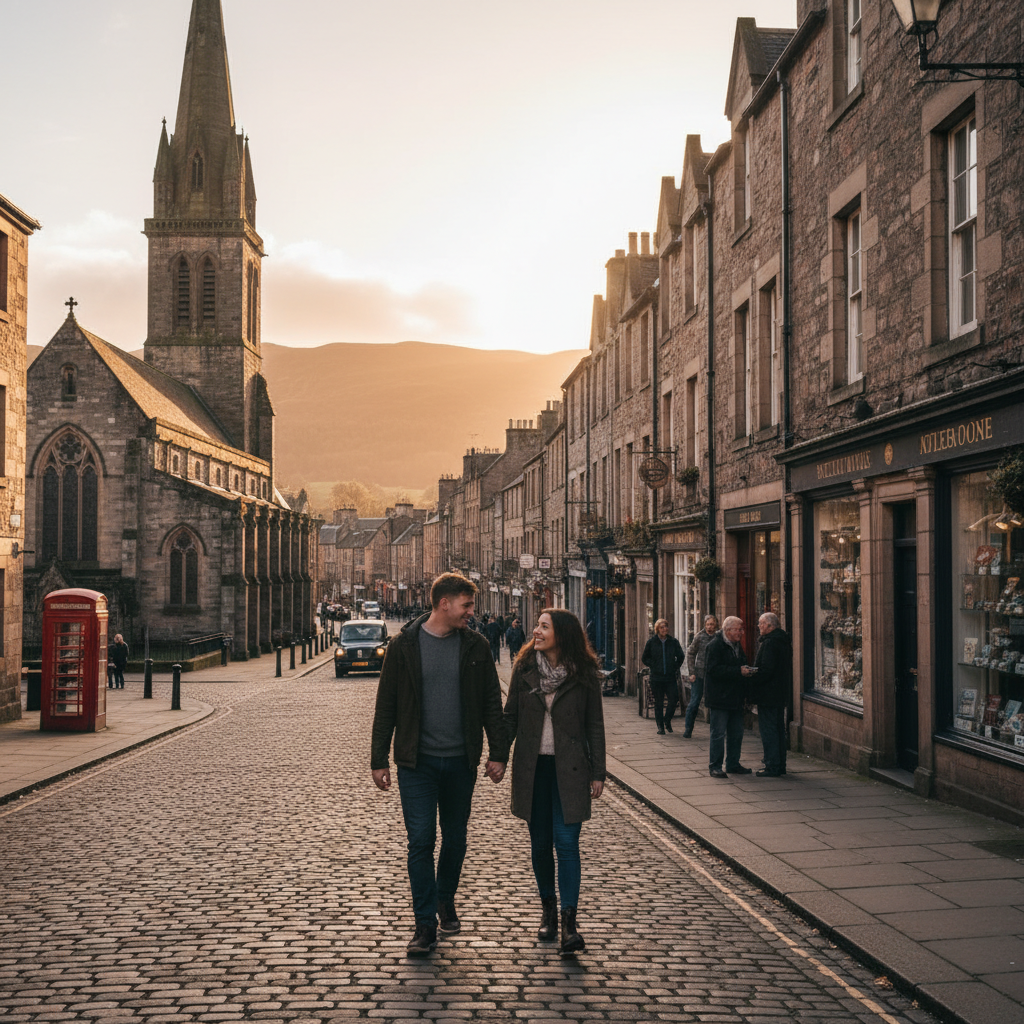
Dunblane as a couple is an invitation to romance and shared discovery. Far from the hustle and bustle, its cobbled streets and picturesque views offer an intimate setting for special moments. Imagine yourselves hand in hand, exploring the heritage of Dunblane Cathedral or strolling along the banks of the Allan Water. To spice up your getaway, an OddballTrip scavenger hunt transforms the town into your personal playground. It's an original way to strengthen your bond, solving puzzles together, discovering hidden corners, and creating unique memories in this enchanting Scottish setting.
What to do in Dunblane when it rains
What to do in Dunblane on a rainy day? No panic! Even under the Scottish drizzle, your OddballTrip adventure can continue. Designed to adapt to the whims of the weather, approximately 80% of the outdoor escape game route in Dunblane takes place under arcades, covered passages, or near shelters. You can thus solve your puzzles sheltered, while still enjoying the city's atmosphere. It's an opportunity to discover unexpected corners and immerse yourself in local history, without the weather spoiling the fun of your urban treasure hunt.
Where is Dunblane, and where do the routes start?
Starting points of our routes and the places they pass through.
Route starting points
Places in Dunblane
- West Facade of Dunblane Cathedral
- South Side of the Cathedral Nave
- Old Choir of the Cathedral (exterior view)
- Dunblane Cathedral Graveyard
- Former Scriptorium Location (exterior of Chapter House)
- Remains of the Old West Tower
- East Side of the Cathedral (near the apse)
- Main Forecourt of Dunblane Cathedral
The history of Dunblane
From Roman Outposts to Medieval See
Dunblane's origins predate its medieval cathedral. Roman legions passed through the area, leaving traces of camps, a signal station, and a small fort, along with remnants of their road north. At Ardoch in Braco, substantial defenses of a Roman fort are visible.
The town takes its name from Saint Blane, a 6th-century saint based on the Isle of Bute. The earliest written record of Dunblane, from the 10th century, refers to it as 'Dulblaan' or 'Blane's meadow'. A religious center likely existed here by the 9th century, possibly founded by monks from St Blane's who may have brought his relics to escape Viking raids on Bute.
The first stone cathedral was built around 1150, initiated by King David I. By the early 13th century, much of it was incomplete and unroofed. Bishop Clement, appointed in 1233, found the cathedral largely unbuilt. With papal authorization in 1237, he secured funding and oversaw the construction of a new cathedral, much of which stands today. This 13th-century Gothic structure incorporated the earlier 12th-century Romanesque tower, built of red sandstone, contrasting with the rest of the building.
Reformation and Revival
Following the Protestant Reformation in 1560, the Catholic cathedral's furnishings were removed. The nave, the main body of the church, fell into disuse and its roof collapsed around 1600, leaving it open to the elements for approximately 300 years. Only the chancel continued as the parish church. Dunblane's population remained around 3,000 people from 1760 to 1960. A significant restoration of the entire cathedral began in 1889 under architect Sir Robert Rowand Anderson, with the nave re-roofed and public worship restored in 1893. Further restoration of the choir was undertaken in 1914 by Sir Robert Lorimer. The arrival of the railway in 1848 increased tourism, especially after mineral wells were discovered in 1813, leading to the opening of the Dunblane Hydro health spa in 1878.
What to see in Dunblane
- Dunblane Cathedral — See the 12th-century red sandstone tower, which predates much of the 13th-century Gothic structure and stands on the south side. Inside, observe the contrast between the medieval stonework of the nave, which stood roofless for centuries, and the restored sections. The 15th-century choir stalls are examples of medieval ecclesiastical woodwork in Scotland.
- Dunblane Museum — Housed in an early 17th-century building, the museum presents Dunblane's history, with artifacts dating back 4000 years. It includes exhibits on the Cathedral and a collection of communion tokens.
- Leighton Library — Scotland's oldest purpose-built independent library, constructed in the late 1680s to house the book collection of Bishop Robert Leighton. It contains ancient volumes, including a first edition of Sir Walter Scott's Lady of the Lake, and is open to the public during summer months.
- Dunblane Old Bridge — Under the present bridge by the Stirling Arms, the yellow stonework and single arch of the original bridge, built in 1410 by Bishop Finlay Dermoch, are visible. The bridge was widened in 1849 with red stone, showing different construction phases.
- Allan Water — Walk along the banks of this river, a tributary of the River Forth, which flows through the town. The river was historically used for various mills, including wool spinning and paper mills.
- Faery Bridge — This reinforced concrete arch footbridge, built in 1911, connects parkland across the Allan Water. Its name is reportedly a corruption of "Ferro-bridge," referring to its ferro-concrete construction.
When to visit Dunblane
Dunblane is a year-round destination. The period from late June to late August offers average daily high temperatures above 16°C (60°F). July is typically the warmest month, with an average high of 18°C (64°F). Spring, particularly March and April, shows daffodils around the cathedral. Autumn brings golden leaves along the Allan Water.
The cooler season runs from November to March, with January being the coldest month, averaging a low of 1°C (33°F) and a high of 6°C (42°F). January is also the cloudiest and wettest month. Winter conditions can be cold, wet, and windy.
Getting around Dunblane
Dunblane is connected by train, with Dunblane Station offering direct services to Stirling, Edinburgh, Glasgow, and Perth. The station is less than a ten-minute walk from the town center. The A9 road bypasses the town.
For parking, a free car park is available at The Haining, less than 200 meters from Dunblane Museum and next to Dunblane Cathedral. Time-limited free on-street parking is also available outside the museum, including a disabled bay. Paid on-street parking is available near High Street, the Cathedral, and local shops, typically costing £1 to £2.50 per hour. Payment can be made via coins, card machines, or mobile apps. Scotland's Transport Act 2019 introduced a national pavement parking ban. The town center is walkable.
Things you probably do not know about Dunblane
Verified details most visitors walk straight past.
- Dunblane Cathedral Nave
- Why are the interior walls of Dunblane Cathedral's nave more weathered than its exterior walls? The nave of Dunblane Cathedral stood without a roof for over 300 years after it collapsed around 1600, leaving the interior exposed to the elements until its restoration in the late 19th century.
- Dunblane Old Bridge
- What's a subtle clue to the Dunblane Old Bridge's long history and multiple renovations? If you look closely at the Dunblane Old Bridge, you can see a distinct change in the stonework: the original single arch from 1410 is yellow sandstone, while a widening project in 1849 used red stone.
- Leighton Library
- What unusual policy did Scotland's oldest purpose-built library have for its collection? The Leighton Library, built in the late 1680s, was designed as a public lending library, allowing anyone to borrow its precious volumes, a rare concept for such a collection at the time.
- Faery Bridge
- The Faery Bridge over the Allan Water has a name that suggests a whimsical origin, but what's the more practical, less magical truth? The name "Faery Bridge" is believed to be a corruption of "Ferro-bridge," referring to its construction using ferro-concrete (reinforced concrete), a pioneering building material when it was built in 1911.
- Dunblane Railway Station
- What happened to a rare Victorian footbridge from Dunblane's railway station? A Victorian footbridge from Dunblane Railway Station, dating back to 1895, was carefully dismantled and relocated to the Caledonian Railway in Angus in 2012, where it was refurbished and given a new lease of life.
Questions about visiting Dunblane
How do I get to Dunblane?
Dunblane is accessible by train, with direct services from Stirling, Edinburgh, Glasgow, and Perth. The Dunblane railway station is less than a ten-minute walk from the town center. By road, the town is located off the A9.
How long should I stay in Dunblane?
A stay of one to two days is generally sufficient to see the main attractions of Dunblane, such as the Cathedral, Dunblane Museum, and Leighton Library. An extended visit of two to three days allows for a more relaxed pace and time to explore local dining and walks.
What are the best areas to explore in Dunblane?
The historic town center, particularly around Dunblane Cathedral and The Cross, offers a concentration of historical buildings and attractions. The banks of the Allan Water provide riverside walks, and the area around the Old Bridge is also worth exploring for its historical significance.
What is the best season to visit Dunblane?
For warm-weather activities and clearer skies, late June to late August is suitable. Spring, especially March and April, shows daffodils in bloom. Autumn offers golden foliage along the river. Winters are cold, wet, and windy.
What is the typical budget for a visit to Dunblane?
Dunblane offers free attractions like Dunblane Cathedral and Dunblane Museum. Accommodation costs vary, with hotels and guesthouses available. Dining options range from cafes to restaurants. Parking can be paid or time-limited free, with a free car park also available.
Is Dunblane suitable for visiting with children?
Dunblane offers family-friendly activities, including exploring the historic cathedral and walking along the Allan Water. The Dunblane Centre is a youth and family center. Nearby attractions like Blair Drummond Safari Park and Briarlands Farm Park also provide entertainment for children.
Frequently asked questions
How much does an outdoor escape game cost in Dunblane?
An OddballTrip outdoor escape game in Dunblane typically costs €12 per team. This price is very advantageous because it's a per-team rate, not per person! This means that if you come with several people (friends, family, colleagues), the cost per participant significantly decreases. It's an economical and fun option to discover the city. The game offers hours of entertainment and exploration, making the investment truly worthwhile for an activity that combines culture, challenge, and outdoor fun.
Is it suitable for children / families?
Absolutely! Our outdoor escape games are designed to be accessible and fun for the whole family. Children from 6-8 years old can actively participate in finding clues and solving simple puzzles, while older kids and adults will appreciate the complexity of the challenges and the immersive aspect of the adventure. It's an excellent activity to strengthen family bonds, stimulate teamwork, and provide a memorable day where everyone, from the youngest to teens, will find something to enjoy in this real-life treasure hunt in Dunblane.
How long does an escape game in Dunblane last?
An outdoor escape game in Dunblane usually lasts between 1h30 and 2h30. The exact duration depends on your pace, your observation skills, and how quickly you solve the puzzles. Some like to take their time to admire the landscapes and monuments, while others prefer to focus on the mission. The advantage is that you play at your own tempo, with no fixed time constraints. This allows you to take breaks if you wish, for a coffee or a photo, and fully enjoy your exploration of the city.
Do I need to book in advance?
Yes, it is highly recommended to book your outdoor escape game in advance, especially if you have a specific date and time in mind. Although our games are flexible and available at any time once purchased, prior booking on our OddballTrip platform ensures the best experience and allows you to plan your day calmly. It also ensures you don't miss out on the adventure, especially during peak periods. Booking is simple and quick, allowing you to focus on the excitement of the upcoming exploration.
What to visit in Dunblane beyond escape games?
Beyond our exciting escape games, Dunblane is full of treasures to discover. Don't miss the iconic Dunblane Cathedral, an architectural masterpiece and a place steeped in history. The nearby Dunblane Museum will immerse you in local history. For book lovers, the Leighton Library, Scotland's oldest private library, is a fascinating visit. You can also stroll along the Allan Water, a peaceful spot to relax and enjoy the Scottish nature. The town offers a harmonious blend of heritage, culture, and green landscapes.
What is the best season to visit Dunblane?
Dunblane is charming in all seasons, but spring (April-May) and summer (June-August) generally offer the mildest weather conditions for an outdoor escape game and exploring the town. Days are longer, temperatures are milder, and landscapes are lush green. Autumn (September-October) is also beautiful with its vibrant colors, although the weather can be more unpredictable. Winter, though colder, has its own charm, especially if you enjoy quieter atmospheres and misty landscapes. The key is to dress accordingly to fully enjoy your Scottish adventure.
Other destinations in Stirling and Clackmannanshire
More cities in Scotland
Linlithgow
Birthplace of Scotland's monarchs
Dunfermline
Scotland's ancient royal capital
Glasgow
Victorian city, cradle of Scottish art and music.
Edinburgh
Between haunted castles and medieval alleys, mystery awaits
St Andrews
Birthplace of golf and historic university town
Glencoe
In the heart of the majestic Highlands landscapes
Iona
Sacred isle, cradle of Scottish Christianity