IonaOutdoor Escape Game & Treasure Hunt
Sacred isle, cradle of Scottish Christianity
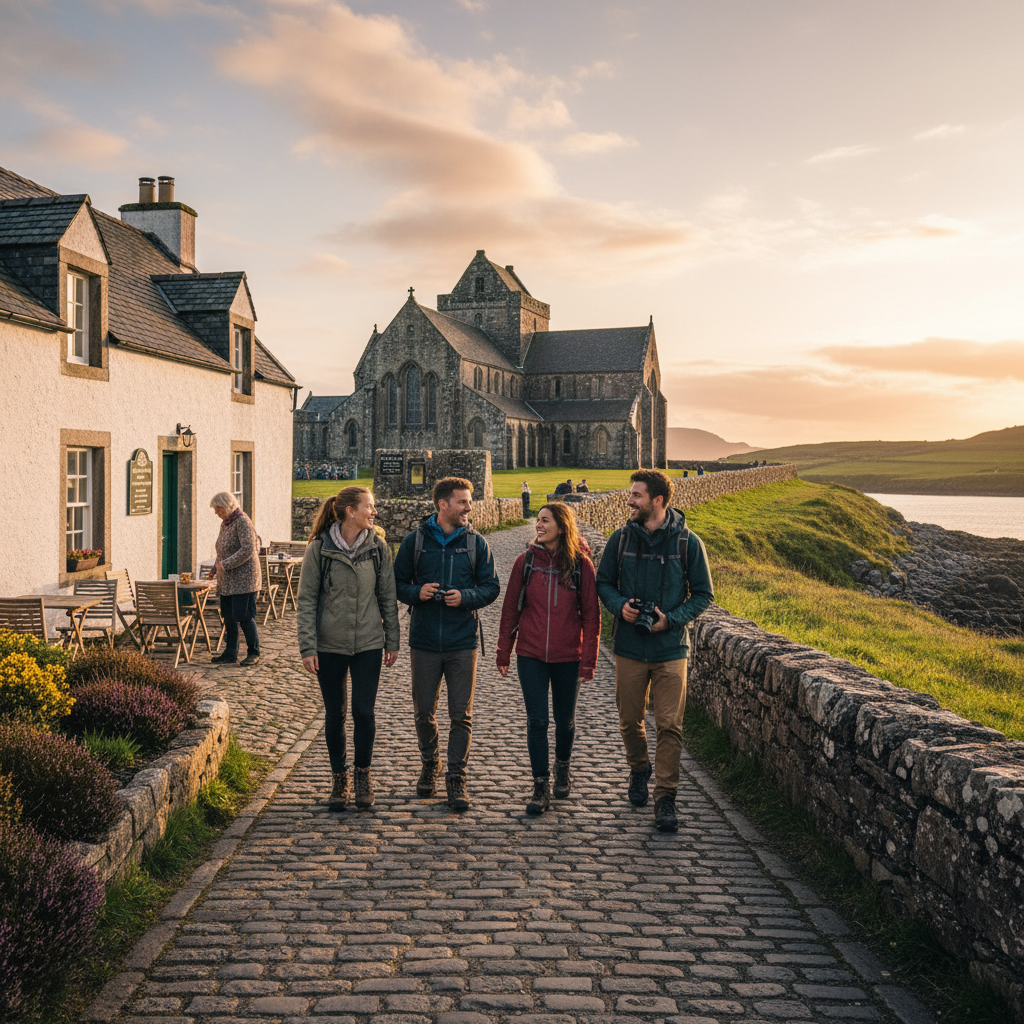
What to do on Iona, this small Scottish island off the coast of Mull, a true spiritual and historical gem? Beyond its reputation as a sacred land, Iona is a destination that invites gentle exploration and discovery. Start your day with a visit to the iconic Iona Abbey, the cradle of Scottish Christianity, where history comes alive with every stone. Then stroll towards St. Oran's Chapel and Reilig Òdhrain, the ancient burial ground of kings. For an unusual activity, delve into the island's history with an OddballTrip.com outdoor escape game. Our treasure hunts transform you into explorers, solving puzzles while discovering the island's hidden corners, from the Bay at the Back of the Ocean to the ruins of the Nunnery. It's a real-life treasure hunt that will make you see Iona from a new angle, combining culture, nature, and a touch of playful adventure.
Iona — Columba's Secret Codicil
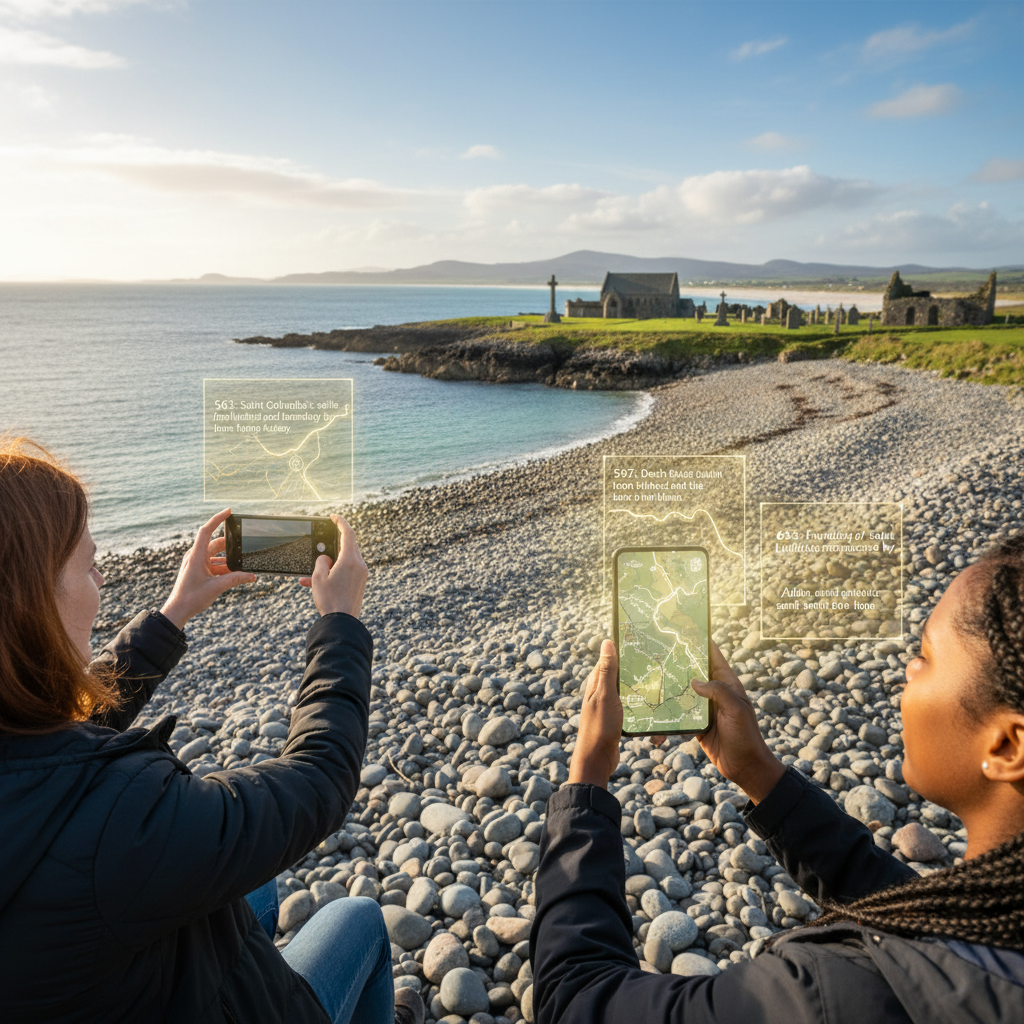
Uncover the hidden codicil of St. Columba, a secret testament buried amid Viking raids that threatens to rewrite the history of Christianity on Iona. Decipher symbols at sacred sites to reveal the truth before it's lost forever.
Iona — Shadows of the Kings
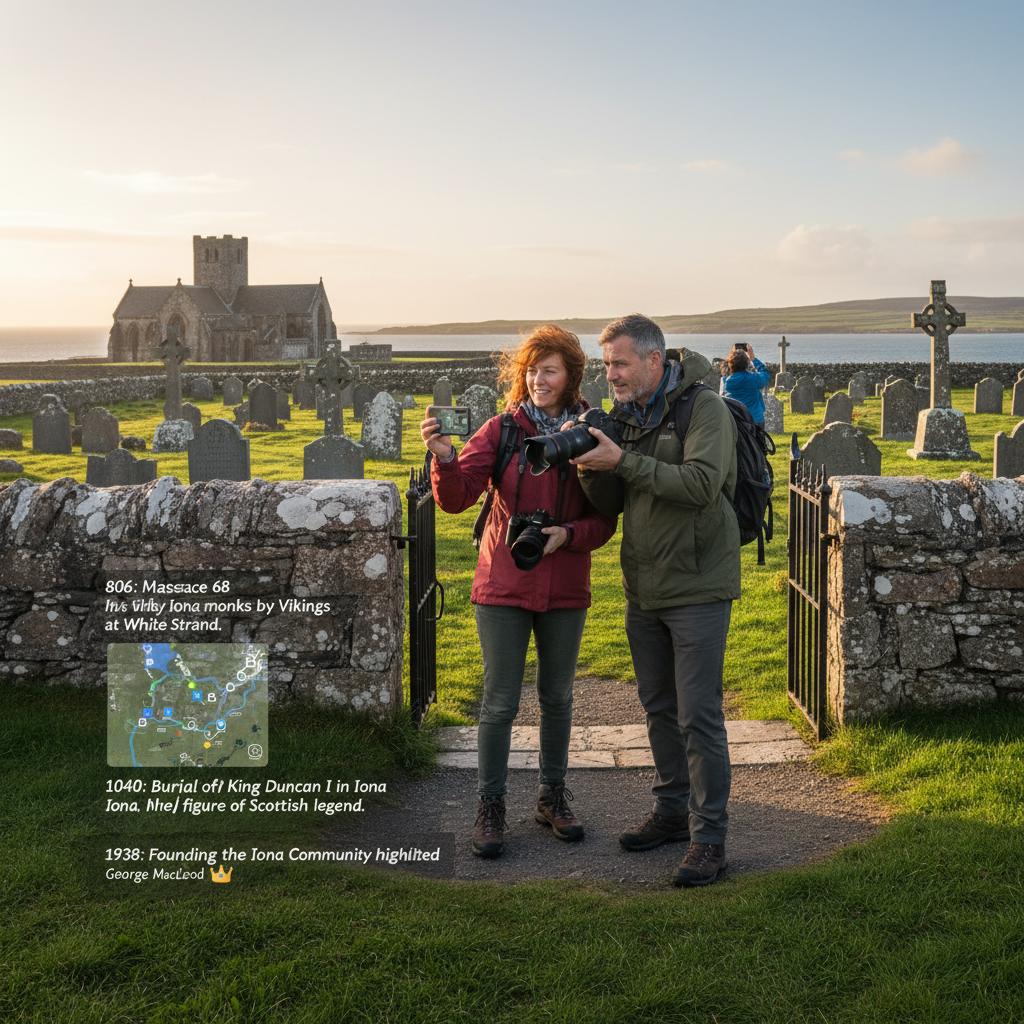
Uncover the cursed secret behind the 48 kings buried in Reilig Odhráin. Decode ancient markings along the Street of the Dead to expose a royal conspiracy that doomed their eternal rest.[1][2]
Unusual things to do in Iona
Iona, with its mystical aura and millennia-old history, is the ideal setting for an unusual activity in Iona. Imagine deciphering ancient codes and following clues carved in stone, not in a closed room, but in the very heart of the island! Our OddballTrip.com treasure hunts offer an original outing that merges the thrill of a puzzle with Iona's wild beauty and rich heritage. It's a unique way to immerse yourself in Celtic legends and monastic tales, transforming every monument into a clue and every landscape into a backdrop for your adventure.
Things to do in Iona with kids
Planning what to do with family in Iona becomes a memorable adventure with our outdoor escape games. From around 8 years old, children and teens can embark on an exciting treasure hunt, where every family member, from the youngest to grandparents, will find their role. It's a fun activity that stimulates curiosity and team spirit, while allowing you to discover the island's fascinating history in an interactive way. Imagine your children solving puzzles in front of the Abbey or searching for clues along the beaches, thus transforming the cultural visit into a great family game.
Iona for couples
For a romantic getaway, Iona as a couple offers an intimate and timeless setting. Away from the hustle and bustle, the peaceful lanes and coastal paths invite you to stroll hand in hand, offering breathtaking views of the sea and surrounding islands. Explore the Abbey's millennia-old heritage together, share a quiet moment on a secluded beach like the Bay at the Back of the Ocean, or embark on one of our OddballTrip.com treasure hunts. It's an original way to strengthen your bond, solving puzzles together while soaking in the serene beauty and deep history of this magical island.
What to do in Iona when it rains
Although Iona is an island where most activities are outdoors, Iona Abbey offers a historical and spiritual refuge in case of rain, with its rich interiors. Our treasure hunts are designed to be enjoyed in all weather, and while they are primarily outdoors, exploring the sites under a changing sky adds to Scotland's unique atmosphere. Plan appropriate clothing to fully enjoy the experience, even if some passages might offer temporary shelter along your island exploration route.
Where is Iona, and where do the routes start?
Starting points of our routes and the places they pass through.
Route starting points
Places in Iona
- Columba's Bay (Port a' Chrùin)
- Iona Abbey (exterior)
- St. Martin's Cross
- Scriptorium Remains (near the Abbey)
- Replica of St. John's Cross (Abbey)
- Along the 'Street of the Dead'
- Martyr's Bay (White Strand)
- Near Iona Community Centre
- Entrance to Reilig Odhráin
- Scottish Royal Tombs Area (Reilig Odhráin)
- MacLean's Cross
- Iona Abbey (east facade)
- Norwegian Tombs Area (Reilig Odhráin)
- The 'Street of the Dead' (Sraid nam Marbh)
- Old Cemetery Section (Reilig Odhráin)
- Outer Wall of Reilig Odhráin
The history of Iona
Early Christian Settlement
Iona's history begins in 563 AD when Saint Columba, an Irish monk, arrived on the island with twelve companions. He established a monastic community that became an influential religious center in the British Isles, spreading Christianity throughout Scotland and northern England.
During this early period, Iona was part of the Gaelic kingdom of Dál Riata, which connected western Scotland and northeastern Ireland. This facilitated the movement of people, culture, and religious ideas. The monastery on Iona was known as a center of learning and art, particularly for manuscript illumination. The Book of Kells, a decorated manuscript of the four Gospels, is believed by scholars to have originated or been started on Iona in the late 8th century.
Viking Raids and Medieval Foundations
Viking raids began in 795 AD, with subsequent attacks in 802, 806, and 825. During the 806 attack, 68 monks were massacred in Martyr's Bay, leading many Columban monks to relocate to the Columban Abbey of Kells in Ireland. Despite these events, Iona regained importance after the establishment of the Kingdom of Scotland in the later 9th century, becoming a spiritual center for the new kingdom. Many early Scottish kings were buried there.
Around 1200 AD, a Benedictine abbey and an Augustinian nunnery were founded on Iona by Raghnall, son of Somerled, King of the Isles. These institutions integrated Iona into the wider structures of the medieval Church, replacing earlier Celtic monastic traditions. The Iona Abbey church, largely restored in the 20th century, is a legacy of the 15th-century Clan Donald Lords of the Isles. The nunnery ruins, dating from the 13th century, are among the preserved medieval nunneries in Scotland. The abbey continued as a place of worship and pilgrimage until the Reformation in 1560, after which it fell into disuse. Restoration efforts began in the early 20th century. From 1938, the Iona Community revived the abbey's tradition of work, worship, and teaching.
What to see in Iona
- Iona Abbey — This reconstructed medieval abbey was founded by Saint Columba in 563 AD. Visitors can explore its grounds, the visitor center with ancient carved stones, and the site where 48 Scottish kings, including Macbeth, are said to be buried.
- Reilig Odhráin — This ancient burial ground is the resting place for local clan chieftains and 'Kings of the Isles.' It has been used as a graveyard into recent times.
- St. Martin's Cross — One of four tall, carved crosses dating from the 8th and 9th centuries, it stands near the abbey. Three of the original crosses are in the Abbey Museum.
- Iona Nunnery — Dating from around 1200 AD, the ruins of this Benedictine nunnery show medieval monastic life and are among the preserved medieval nunneries in Scotland.
- Columba's Bay (Port a' Chrùin) — This bay on the south end of the island is where Saint Columba and his twelve followers are believed to have landed in 563 AD to establish their monastery.
- Dun I — The highest point on the island, it offers views across to the islands of Tiree, Coll, Rhum, Eigg, and Skye, and Ireland on clear days.
- Bay at the Back of the Ocean — This beach has clear waters and white sand made from crushed shells and coral.
When to visit Iona
The period between May and September offers mild weather and full services. Summer months (June-August) have the warmest weather, with temperatures reaching 18-20°C (64-68°F), and the longest daylight hours. This period also has the largest crowds and highest accommodation prices.
Spring (April-May) and autumn (September-October) provide milder weather with fewer visitors and better wildlife viewing opportunities, including puffins until early August. Autumn also brings quieter roads and rich colors. Winter visits (November-March) offer solitude, but with limited ferry schedules and fewer amenities; many businesses may be closed.
Getting around Iona
Getting to Iona involves a multi-stage journey, as visitor cars are generally not permitted on the island without a special permit. Most travelers fly into Glasgow or Edinburgh, then take a train or bus to Oban. From Oban, a CalMac ferry takes about 50 minutes to Craignure on the Isle of Mull. Across Mull, drive or take a bus (West Coast Motors service coordinates with ferry times) for about 37 miles along the A849 to Fionnphort. The final leg is a 10-minute passenger ferry from Fionnphort to Iona, with sailings every 30 minutes during peak season. Parking for cars is available in Fionnphort, with both free and pay-and-display options.
Once on Iona, the island is small enough (3.2 miles long and 1.5 miles wide) to explore on foot. Bikes can be hired on the island, and a local taxi service is available for longer distances or those with heavy luggage.
Things you probably do not know about Iona
Verified details most visitors walk straight past.
- Iona Abbey
- What unusual artwork can be found within the reconstructed cloisters of Iona Abbey? The cloisters, reconstructed in the 1950s, feature a sculpture called 'Descent of the Spirit,' created by a Lithuanian Jewish artist who fled the Nazis during World War II. It is inscribed in French, expressing the artist's hope for a better understanding of the human spirit.
- Reilig Odhráin
- Beyond being a burial ground for kings, what unexpected discovery was made during an extension of Reilig Odhráin? When the graveyard was extended in the 1970s, archaeologists found important evidence of timber buildings, which were associated with Saint Columba's original monastery.
- Martyr's Bay
- Why is this tranquil bay named 'Martyr's Bay'? The bay earned its name from a tragic event in 806 AD, when Viking raiders massacred 68 monks there during one of their many attacks on Iona Abbey.
- Iona Abbey (general)
- What famous illuminated manuscript, now housed in Dublin, has strong ties to Iona? The magnificent Book of Kells, a brilliantly decorated manuscript of the four Gospels dating from about 800 AD, is widely believed to have been created or at least started on Iona before being moved for safekeeping due to Viking raids.
- Dun I
- What local legend is associated with the Well of Eternal Youth, located near the highest point of Iona? The Well of Eternal Youth, situated right next to Dun I, is reputed to have healing properties. Many people make a pilgrimage there as a way of representing a new start.
Questions about visiting Iona
How long should I plan to stay on Iona?
While a full day is sufficient to see the main sights like Iona Abbey and the beaches, many visitors recommend staying two days or more. This allows for a more relaxed pace, deeper exploration of the island's quieter corners, and the chance to experience the tranquil evening atmosphere after day-trippers have left.
Can I bring my car to Iona?
No, visitor cars are generally not permitted on Iona. The island operates under a 'Prohibition of Vehicles' Order to preserve its unique environment. You'll need to leave your car in Fionnphort on Mull, where both free and pay-and-display parking options are available, and then take the passenger ferry across.
What are the transportation options on Iona?
Iona is a small island, only about 3.2 miles long and 1.5 miles wide, making it ideal for exploring on foot. You can also hire bikes on the island, and there's a local taxi service available for those who prefer not to walk or have a lot of luggage.
What is the weather like on Iona?
Iona experiences a maritime climate with mild temperatures year-round, though the weather can change rapidly. Summers (June-August) are the warmest, with highs around 18-20°C, but also bring the most rainfall. Spring and autumn offer milder conditions with fewer crowds. Winters are quiet but can be stormy.
Is Iona suitable for families with children?
Yes, Iona can be a great destination for families. Its compact size makes it easy to explore on foot, and the beautiful white-sand beaches offer opportunities for children to play. The historical sites provide an educational experience, and the island's peaceful atmosphere can be a welcome change from busier destinations.
What is the typical budget for a visit to Iona?
Costs for visiting Iona vary. The ferry from Fionnphort to Iona is relatively inexpensive, usually under £5 for a return ticket. However, the journey to Mull from the mainland and accommodation on Iona will add to the overall expense. Booking accommodation in advance, especially during summer, is advisable.
Frequently asked questions
How much does an outdoor escape game cost in Iona?
An OddballTrip.com outdoor escape game in Iona costs €12 per team. This price is fixed, whether you are 2, 3, or 4 players, making it a very affordable option for a unique activity. There are no additional fees per person, allowing you to share the cost among your team members and enjoy a cultural and fun adventure without breaking the bank. It's excellent value for money to discover Iona in an original way.
Is it suitable for children / families?
Absolutely! Our outdoor escape games are perfectly suited for families and children from around 8 years old. The puzzles are designed to be stimulating without being too difficult, encouraging collaboration between generations. It's a great opportunity to spend quality time together, stimulate the curiosity of the youngest, and discover Iona's history in an interactive and fun way. The whole family can participate and have fun.
How long does an escape game in Iona last?
The duration of an OddballTrip.com outdoor escape game in Iona generally varies between 1h30 and 2h30. This, of course, depends on your team's pace, your ability to solve puzzles, and the time you wish to take to admire the landscapes and monuments you encounter along your way. It's a flexible activity that adapts to your desire for exploration and relaxation.
Do I need to book in advance?
No, it is not necessary to book in advance for our outdoor escape games in Iona. You can purchase the game directly on our website whenever you wish, even a few minutes before starting your adventure. Once purchased, the game is accessible via your smartphone. This flexibility allows you to spontaneously decide on your activity based on the weather or your current desires, without time slot constraints.
What to visit in Iona beyond the escape games?
Iona is full of treasures beyond our treasure hunts. The unmissable Iona Abbey is the spiritual heart of the island and should not be missed. Explore also St. Oran's Chapel and Reilig Òdhrain, the royal burial ground. Take time to walk to the Bay at the Back of the Ocean for its white sandy beaches and stunning views. The ruined Augustinian Nunnery also offers a fascinating glimpse into the island's monastic history.
What is the best season to visit Iona?
The best season to visit Iona is generally spring (May-June) and early autumn (September). During these periods, the weather is often milder and sunnier, and crowds are smaller than in mid-summer. The island is beautiful with spring blooms or autumn colors. Summer (July-August) is also very pleasant, but more crowded. Even outside these periods, Iona retains a unique charm and a peaceful atmosphere.
Other destinations in Scottish Isles
More cities in Scotland
Glencoe
In the heart of the majestic Highlands landscapes
Skye
Where fairy landscapes meet Celtic legends
Glasgow
Victorian city, cradle of Scottish art and music.
Stirling
Where Scottish history was forged, amidst castles and legends
Linlithgow
Birthplace of Scotland's monarchs
Dunfermline
Scotland's ancient royal capital
Inverness
Gateway to the Highlands, where history meets legend
Edinburgh
Between haunted castles and medieval alleys, mystery awaits
Activities to discover nearby
Guided tours, skip-the-line tickets and local experiences to book in advance.
💡 Optional booking — you can also buy on-site. All links open in a new window, your OddballTrip visit stays preserved.