AalborgOutdoor Escape Game & Treasure Hunt
Cultural capital of Northern Jutland
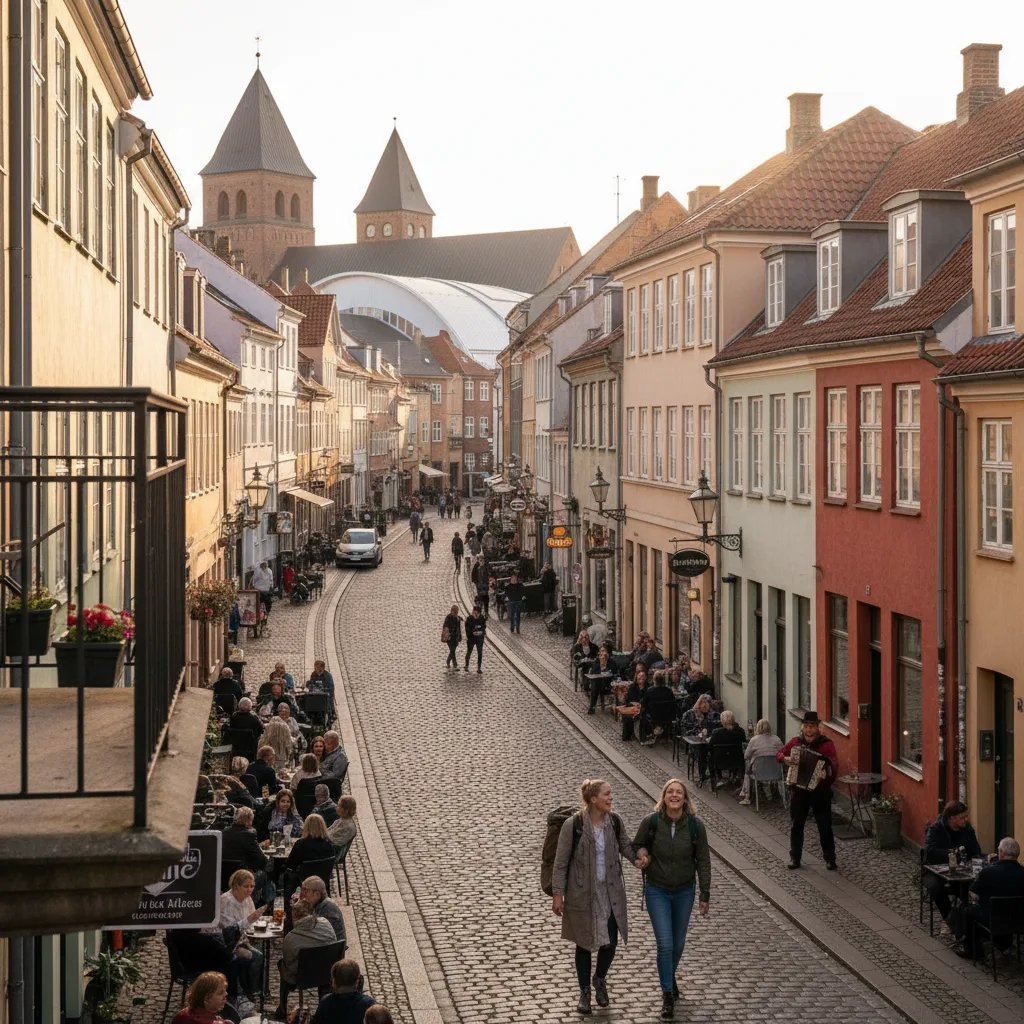
Aalborg, Denmark's fourth-largest city nestled on the shores of the Limfjord, harmoniously blends historical heritage with contemporary cultural dynamism. What to do in Aalborg? Explore this millennium-old city where the 14th-century Saint Budolfi Cathedral, the Renaissance Aalborghus Castle, and the medieval quarter with its colorful half-timbered houses stand proudly. Our outdoor escape game transforms your discovery into a captivating scavenger hunt: an urban treasure hunt leading you from the cobbled streets of the historic center to the lively fjord quays. This unusual activity reveals Aalborg's hidden secrets, from its monastic underground passages to the symbols carved on merchant facades. Discover below our trail through Aalborg's treasures.
Landmarks of Aalborg
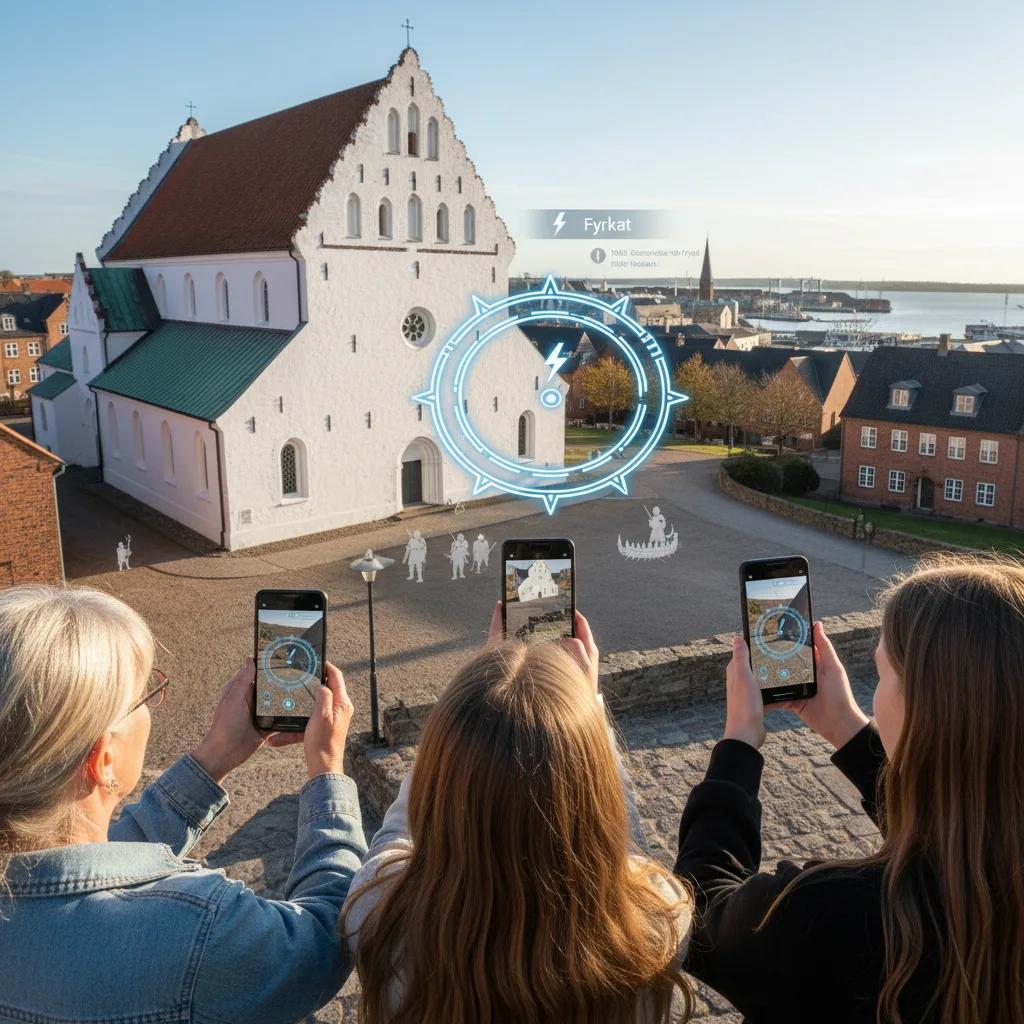
Monuments and sites covered by our escape games across the city.
Unusual things to do in Aalborg
Among the unusual things to do in Aalborg, our outdoor puzzle trail unveils the hidden mysteries of this Hanseatic city. Explore the underground passages of the Holy Spirit Monastery, discover the alchemical symbols carved on the facades of Jomfru Ane Gade, or follow the traces of Viking merchants through the winding alleys of Gamle By. The riddles reveal what traditional guides omit: faded runic inscriptions, the cathedral's grimacing gargoyles, the mysterious orientation of the old port warehouses. An original outing in Aalborg that turns every street corner into a historical puzzle.
Things to do in Aalborg with kids
What to do with the family in Aalborg? Our outdoor escape game is suitable from age 10 and turns the historic center visit into a fun adventure for the whole family. Kids enjoy hunting for clues hidden in Saint Budolfi Cathedral's sculptures, teens decipher secret codes on merchant houses, while parents discover the fascinating history of this former Viking city. The GPS-guided trail winds through safe pedestrian streets and castle gardens, perfect for an open-air kids' activity. A teen-friendly outing that combines Danish culture with modern entertainment.
Aalborg for couples
Aalborg for couples is best savored in its romantic alleys lined with colorful houses, secret terraces overlooking the Limfjord, and hidden gardens behind the castle ramparts. Our outdoor trail, perfect for a couples outing, transforms a romantic stroll into a shared investigation through a thousand years of history. The perfect romantic activity: decoding a medieval inscription together, solving a puzzle in front of Jens Bang's baroque facade, then finishing with a drink on the fjord quays at sunset. A romantic getaway that reveals Aalborg in an intimate and mysterious light.
What to do in Aalborg when it rains
What to do in Aalborg when it rains? Our outdoor escape game remains perfectly playable in light rain: 75% of the trail takes place under the covered arcades of Bispensgade, the shopping galleries of the historic center, and the vaulted passages connecting the cathedral to Aalborghus Castle. When it rains, Aalborg reveals its secret passages and cobbled inner courtyards, creating a mysterious atmosphere perfect for a wet-weather activity. Reflections on wet cobblestones reveal architectural details usually invisible.
Where is Aalborg, and where do the routes start?
Starting points of our routes and the places they pass through.
Route starting points
Places in Aalborg
- Saint Budolfi Cathedral
- Aalborg Port - Limfjord
- Aalborg Historical Museum - facade
- Old road to Fyrkat
- Fyrkat archaeological site - ramparts
- Center of Fyrkat - building foundations
- Western gate of Fyrkat
- Harald's mound - memorial site
The history of Aalborg
From Viking Settlement to Medieval Trade
Aalborg's origins date back over a thousand years, with evidence of settlements around 700 AD. The city developed as a trading post at the narrowest point of the Limfjord, a natural harbor that supported commerce. The name "Aalborg" is thought to come from Old Norse words meaning "all" and "stronghold" or "castle."
By the early 1000s, coins were minted in Aalborg, indicating its importance as a trade hub. During the Middle Ages, the city's influence grew, particularly after the western exit of the Limfjord became impassable due to silting in the 12th century. This positioned Aalborg to control traffic through the fjord's eastern route. In 1342, Aalborg was granted market town privileges by King Valdemar IV Atterdag, strengthening its economic and political standing. The city's prosperity came from a herring fishery and the export of livestock and grain, making it Denmark's second-largest city by the end of the 1600s, after Copenhagen.
Industrial Development and Modern Change
The 18th century brought a decline in Aalborg's economy as the herring trade decreased and Denmark lost Norway in 1814, affecting a key export market. However, the 19th century marked a new era with the Industrial Revolution. Factories for tobacco and spirits, including De Danske Spritfabrikker, were established in the 1830s. The discovery of chalk deposits further supported the development of the cement industry, with Aalborg Portland becoming a major producer. The construction of the first Limfjord bridge in 1865 and the arrival of the railway in 1869 connected Aalborg into broader trade networks. By 1900, Aalborg had Denmark's second-largest port. By the 1960s, nearly half its population worked in industrial sectors.
The post-industrial era began in the 1970s, leading to a shift towards a knowledge-based economy. The founding of Aalborg University in 1974 was a significant step in this transformation. Today, Aalborg has repurposed former industrial buildings into cultural centers and developed modern architecture along its waterfront.
What to see in Aalborg
- Lindholm Høje — North of the city, this is a Viking and Iron Age burial site. Visitors can walk among 682 stone graves and ship settings, dating from around 700 AD, on a hill. A museum provides exhibits on Viking life.
- Jens Bang's Stenhus — A five-story mansion completed in 1624, this Renaissance merchant's house at Østerågade shows the prosperity of Aalborg's merchant class during that period.
- Aalborghus Castle — Built by King Christian III between 1539 and 1555, this half-timbered castle by the waterfront served as a royal residence and the main seat for the king's bailiffs in Northern Jutland. Visitors can explore its park.
- Monastery of the Holy Ghost (Helligåndsklostret) — Founded in 1431, this is one of Denmark's oldest preserved social institutions. It originally served as a hospital and monastery, and now functions as a nursing home, offering guided tours.
- Utzon Center — Designed by Jørn Utzon, the architect of the Sydney Opera House, this building on the waterfront displays arts and architecture.
- Nordkraft — An old power station from 1947, this building is now a cultural center. Nordkraft houses theaters, cinemas, food stalls, exhibitions, and Denmark's highest climbing wall.
- Hjelmerstald — This street, dating back to the mid-1700s, was originally an area for horse stables. Its small, colorful, half-timbered houses are an example of urban architecture from that period.
When to visit Aalborg
The best time to visit Aalborg is from May through September, when the weather is mild for outdoor activities. July is the warmest month, with average daily highs around 22°C (72°F) and long daylight hours. Late spring (April-May) and early autumn (September-October) offer milder weather and fewer crowds.
Avoid visiting in winter (November-March) if you prefer warmer temperatures and more daylight. Winters are cold and dark, with average daytime temperatures around 3-5°C (37-41°F) and minimal sunshine. Snow is frequent.
Getting around Aalborg
Aalborg is connected by public transport, with Aalborg Station for trains and Aalborg Bus Terminal for bus routes. Aalborg Airport (AAL) is about 6 kilometers (3.7 miles) northwest of the city center. The city center is easy to explore on foot or by bike, as most attractions are centrally located. From April to November, a free bike-share system is available. For those driving, on-street parking is available.
Consider purchasing the AalborgCard for free access to many museums and attractions, as well as discounts on car parking and bus cards. Some smaller shops might have shorter opening hours on weekends. The city has a food scene with Italian and European dining options.
Things you probably do not know about Aalborg
Verified details most visitors walk straight past.
- Saint Budolfi Cathedral
- What unusual material was once used to construct the cathedral's spire? The spire of Saint Budolfi Cathedral, built in 1779, was originally made of lead, which was a common building material for church spires in Denmark due to its durability and malleability.
- Aalborghus Castle
- What unique administrative function did Aalborghus Castle serve for the Danish monarchy? Aalborghus Castle is Denmark's only preserved 'accounting castle,' meaning it primarily served as the administrative headquarters for the king's bailiffs in Northern Jutland, rather than a primary royal residence or defensive fortress.
- Monastery of the Holy Ghost
- Beyond its religious and charitable duties, what unexpected role did this medieval monastery play during World War II? During World War II, Aalborg Monastery served as a secret meeting place for the Churchill Club, a Danish resistance group composed of teenagers who carried out acts of sabotage against the German occupation.
- Hjelmerstald
- What was the original, rather mundane purpose of this street with its colorful houses? Hjelmerstald, a street with half-timbered houses dating back to the mid-1700s, was originally built to house horse stables for the city's many horses.
- Limfjord
- How did a natural phenomenon in the 12th century unexpectedly boost Aalborg's economic power? The silting of the Limfjord's western exit in the 12th century made it impassable, forcing all fjord traffic to use the eastern route through Aalborg, thus cementing the city's control over regional trade and its economic prosperity.
- Nordkraft
- What record-breaking athletic facility can be found inside this former power station? Inside Nordkraft, the former power station turned cultural center, you can find Denmark's highest climbing wall, offering a unique opportunity for active recreation within a historic industrial setting.
Questions about visiting Aalborg
How long should I plan to stay in Aalborg?
Most visitors find two to three days sufficient to explore Aalborg's main attractions, museums, and the waterfront. A longer stay of up to five days allows for more in-depth exploration, enjoying local cafés and galleries, or taking day trips to the wider North Jutland region.
What are the best ways to get around Aalborg?
Aalborg's city center is compact and easily navigable on foot or by bicycle. Public transportation includes an efficient bus and train network, with Aalborg Station and Aalborg Bus Terminal serving as central hubs. A free bike-share system is available from April to November.
Which neighborhoods are worth exploring in Aalborg?
Aalborg Centrum offers historic landmarks and a lively atmosphere. The revitalized waterfront area features modern architecture and cultural institutions. For a glimpse into the past, the medieval quarter with its half-timbered houses, such as those found in Hjelmerstald, is particularly interesting.
What is the typical budget for a trip to Aalborg?
Aalborg can be explored on various budgets. Accommodation prices tend to be higher during the peak summer season (June-August), with potential increases of 30-50%. Visiting during shoulder seasons (May, September) can offer better value. The AalborgCard provides discounts on attractions and transportation.
Is Aalborg a good destination for families with children?
Yes, Aalborg offers several attractions suitable for families. Aalborg Zoo is a popular choice. The Springeren - Marine Experience Center allows visitors to explore a submarine and learn about maritime history. Nordkraft also has activities, including a climbing wall, that can appeal to children.
What is the weather like in Aalborg throughout the year?
Aalborg experiences a cool-temperate climate with warm summers and cold winters. Summers (June-August) are mild, with average highs around 22°C (72°F). Winters (November-March) are cold and dark, with average lows around -1°C (30°F). Rain is distributed throughout the year, with October typically being the wettest month and April the driest.
Frequently asked questions
How much does an outdoor escape game in Aalborg cost?
Our outdoor escape game in Aalborg costs €12 per team (1 phone). For multiple players on the same trail, budget €19 for 2 phones and €25 for 3 phones. The price is fixed per team regardless of how many participants use the same phone, making it a very economical activity to discover Aalborg differently.
Is the Aalborg escape game suitable for children?
Yes, our Aalborg trail is suitable from age 10. The puzzles mix visual observation (perfect for kids), code-breaking (ideal for teens), and general knowledge about Danish history (for adults). The GPS system guides step-by-step through the safe pedestrian streets of the historic center, with no risk of getting lost. An excellent way to discover Aalborg as a family.
How long does the Aalborg escape game last?
Allow about 2 hours to complete the Aalborg trail, depending on your pace and time spent admiring the monuments. The game is entirely self-guided: start when you want, take breaks as needed, and finish at your own rhythm. Perfect for fitting into your city visit schedule.
Do I need to book in advance to play in Aalborg?
Booking isn't mandatory but highly recommended, especially in summer and during Aalborg's cultural festivals. After online purchase, you immediately receive your activation code by email. This code has no expiry date: use it whenever you like, even months after purchase.
What else to visit in Aalborg beyond the escape game?
Aalborg is full of treasures: Saint Budolfi Cathedral with its famous carillon, the 16th-century Aalborghus Castle, Jens Bang's House (Denmark's finest baroque facade), and the Utzon Museum dedicated to the Sydney Opera House architect. Don't miss Jomfru Ane Gade, the iconic party street, and a stroll along the Limfjord quays. Our trail naturally showcases these must-sees.
When is the best time to visit Aalborg?
Spring (May-June) and summer (July-August) are ideal with long days and pleasant weather for outdoor activities. Autumn (September-October) offers beautiful golden light on the colorful facades. Winter remains playable thanks to the many covered passages in the historic center, and Aalborg takes on authentic Nordic charm with Christmas markets and cozy cafes.