
LiverpoolOutdoor Escape Game & Treasure Hunt
Beatles' rhythms and maritime echoes
Liverpool, a vibrant city brimming with history, offers a multitude of unforgettable experiences. Beyond its legendary musical heritage, what to do in Liverpool to truly soak in its unique soul? Start by strolling along the Albert Dock, a UNESCO World Heritage site, where former warehouses now house fascinating museums, art galleries, and lively restaurants. The atmosphere there is incomparable, amidst historic ships and red-brick facades. For a complete immersion, why not embark on an outdoor escape game? Imagine solving puzzles outdoors, a true treasure hunt that will lead you through the city's iconic streets and hidden gems, like the Mathew Street quarter, birthplace of The Beatles. It's an unusual activity that transforms a visit into a thrilling adventure, a real-life scavenger hunt where every street corner reveals a secret. Whether you're a music fan, a maritime history enthusiast, or simply looking for an original outing, Liverpool promises discoveries at every turn.
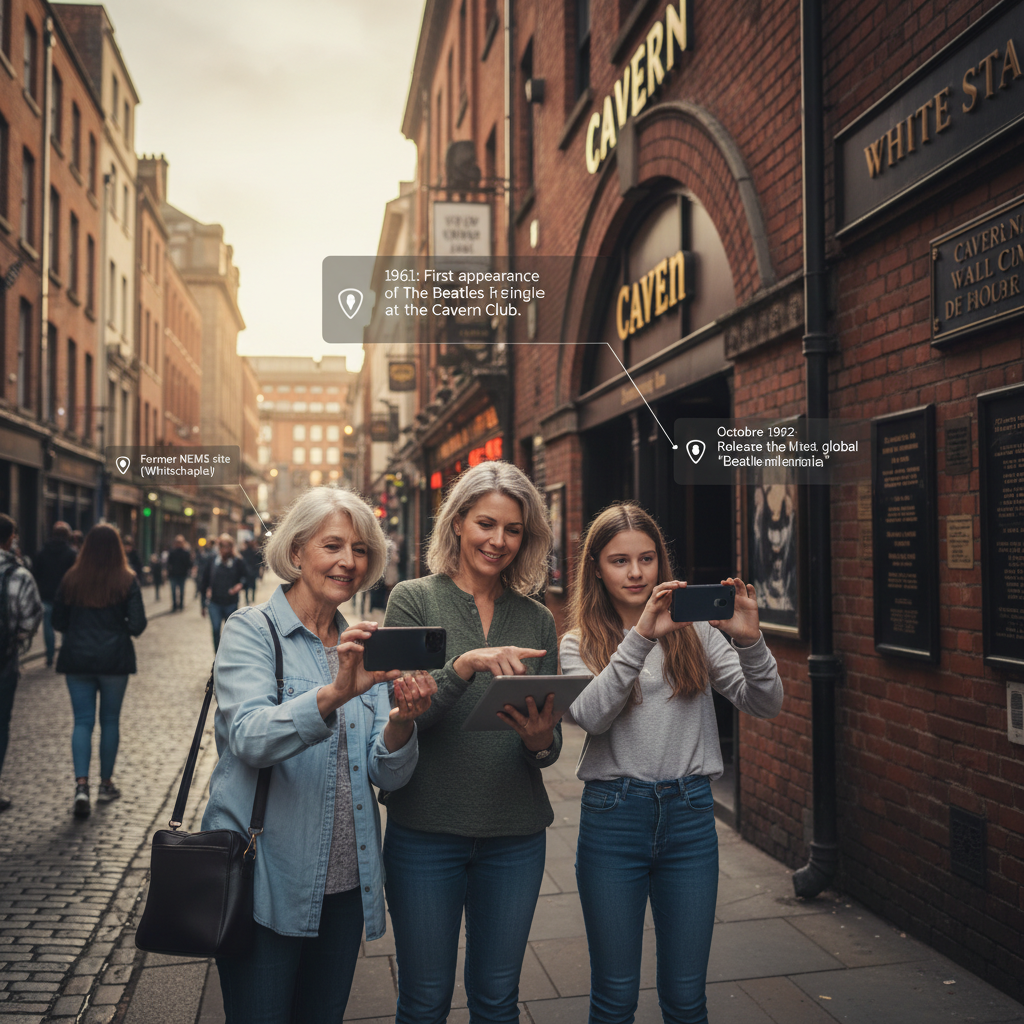
Pier Head — Uncover the Beatles' Secret Liverpool
Decipher coded messages left by the Fab Four across Liverpool's waterfront to uncover the truth behind their final performance and a hidden musical legacy.
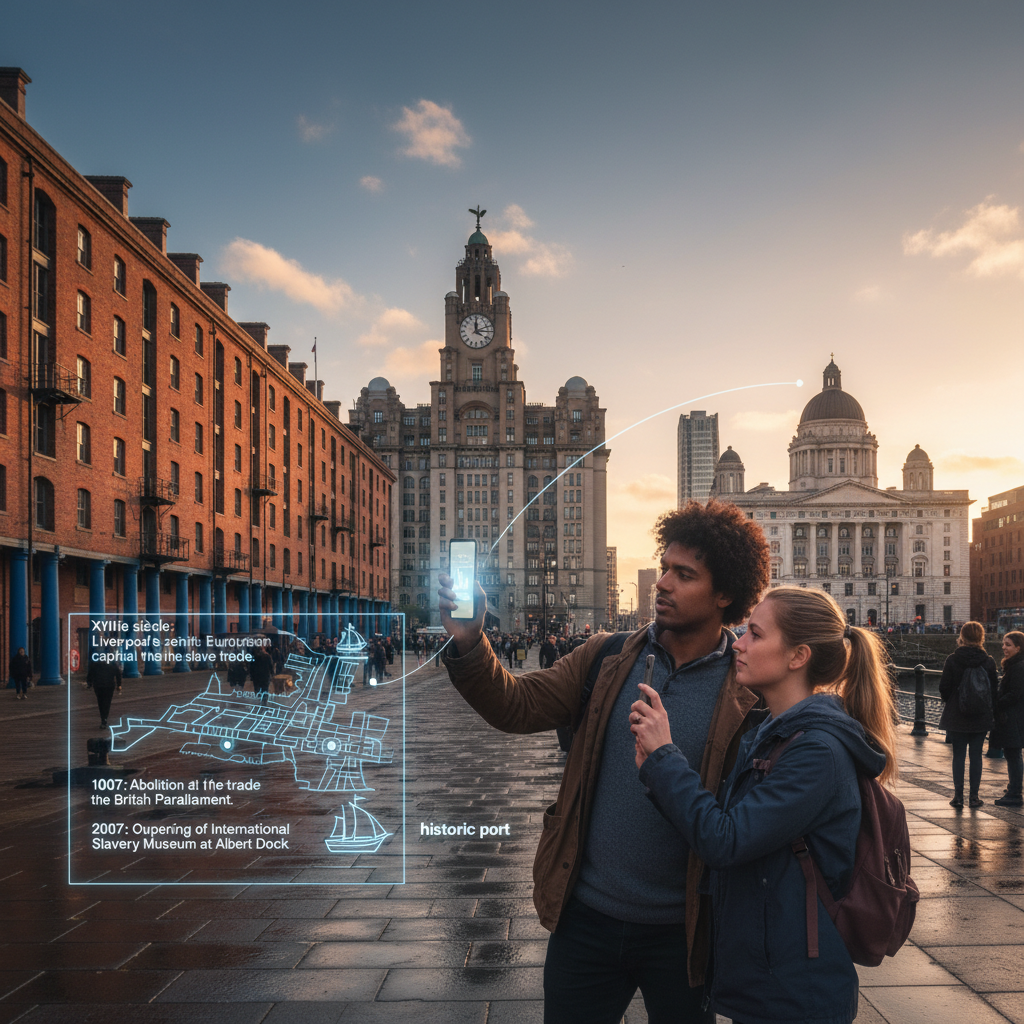
Liverpool Docks — Shadows of Mercantilism
Decipher the shadowy codes of Liverpool's mercantile elite to expose a lost conspiracy that fueled the empire's darkest trade routes.
Unusual things to do in Liverpool
For an unusual activity in Liverpool, step off the beaten path! Beyond the classic museums, explore the hidden alleys of Ropewalks, a vibrant district of street art and independent bars, or discover the "Bombed Out Church" (St Luke's Church), a poignant ruin transformed into an event space. An original outing could also be a ferry ride on the Mersey, offering breathtaking views of the skyline and the docks. But for a playful and unexpected immersion, our outdoor escape games offer a unique adventure, combining urban exploration and captivating puzzles, turning the city itself into a playground.
Things to do in Liverpool with kids
Liverpool is a fantastic destination for families! What to do in Liverpool with family to ensure both young and old have fun? The museums at Albert Dock, such as the Merseyside Maritime Museum or the Museum of Liverpool, are interactive and captivating for children and teens. For a more active outing, our outdoor escape games are perfectly suited for families with children aged 8-10 and up (accompanied by an adult). It's a playful way to discover the city: each puzzle solved as a team strengthens bonds and transforms the walk into a real adventure. Your children and teens will love this real-life treasure hunt, where exploration becomes an exciting game.
Liverpool for couples
Discovering Liverpool as a couple means treating yourselves to a romantic getaway where history and modernity meet. Stroll hand-in-hand through the cobbled streets of the Georgian Quarter, admiring the elegance of its architecture, or enjoy breathtaking city views from the Metropolitan Cathedral. For a more intimate experience, a sunset walk along the docks, with the city's twinkling lights reflecting on the Mersey, is unforgettable. Our urban scavenger hunts can also transform your visit into a shared adventure, leading you through iconic landmarks and secret corners, strengthening your connection while exploring Liverpool's rich heritage at your own pace.
What to do in Liverpool when it rains
Don't let the rain spoil your fun in Liverpool! What to do in Liverpool when it rains? The city offers plenty of sheltered options. Our outdoor escape games are an excellent solution: approximately 80% of our routes take place under arcades, covered passages, or through easily accessible sheltered areas. This way, you can continue your playful exploration without getting soaked. Otherwise, the numerous museums at Albert Dock, art galleries, or the Cavern Club provide warm and exciting havens for a rainy day.
Where is Liverpool, and where do the routes start?
Starting points of our routes and the places they pass through.
Route starting points
Places in Liverpool
- Mathew Street
- Cavern Wall of Fame (Mathew Street)
- White Star Pub (Dall Street)
- Former NEMS site (Whitechapel, Liverpool)
- Eleanor Rigby Statue (Stanley Street)
- Royal Court Theatre (Roach Place)
- Beatles Statue (Pier Head)
- Exterior of St George's Hall (St George's Place)
- Albert Dock (historic quays and buildings)
- International Slavery Museum (exterior)
- Pier Head (in front of the Three Graces)
- Old Dock (Liverpool One, exterior view)
- Rodney Street (facades of Georgian houses)
- Abercromby Square (around the square)
- Exchange Flags (site of the former Exchange)
- In front of the former Custom House (Liverpool One site, near the memorial)
The history of Liverpool
From a Royal Charter to a Global Port
Liverpool's story began in 1207 when King John granted a royal charter, establishing it as a new town. Initially known as 'Liuerpul', likely referring to a muddy pool or creek, it was a small settlement with seven streets laid out in an 'H' shape. For centuries, Liverpool remained a minor port, its trade primarily with Ireland and coastal England and Wales. The 18th century marked a shift. The city's location at the mouth of the River Mersey, meeting the Irish Sea, propelled its growth. It became a player in the transatlantic slave trade from the 1690s until its abolition in 1807, surpassing Bristol and London in the volume of human trafficking. This trade generated wealth, transforming Liverpool. In 1715, the world's first commercial wet dock, the Old Dock, opened in Liverpool, solidifying its maritime dominance.
The "Second City of the Empire" and Post-War Decline
By the early 19th century, Liverpool's docks were central to global trade, facilitating the growth of the British Empire and mass migration from Northern Europe to America. The city was a pioneer in dock technology and port management, with the Albert Dock, opened in 1846, being the first in the UK to be built without wood for structural elements, making it a non-combustible warehouse system. By 1900, Liverpool was the world's largest port, handling approximately 40% of global seaborne trade. This prosperity earned it the moniker "the second city of the Empire" and "the New York of Europe". The mid-20th century brought decline. The advent of containerisation rendered many of Liverpool's traditional docks obsolete, leading to high unemployment. Despite this economic downturn, the city gained recognition for its culture, particularly with the rise of the "Merseybeat" sound and The Beatles in the early 1960s. Regeneration efforts in recent decades, partly fueled by tourism, have revitalized the city.
What to see in Liverpool
- Royal Albert Dock — This complex, opened in 1846, was built entirely from cast iron, brick, and stone, making it fireproof. Today, its former warehouses house the Merseyside Maritime Museum and the International Slavery Museum, along with shops and restaurants.
- Pier Head — This area holds the "Three Graces" – the Royal Liver Building, the Cunard Building, and the Port of Liverpool Building – which are examples of early 20th-century architecture and symbols of Liverpool's maritime past. A Beatles Statue is also located here.
- St George's Hall — A Neoclassical building completed in 1854, it originally housed concert halls and law courts. Its architecture and the Minton tile floor (often covered but occasionally revealed) are features.
- Mathew Street — This street is known as the location of the Cavern Club, where The Beatles performed in their early career. The Cavern Wall of Fame and a statue of John Lennon are also found here.
- Royal Court Theatre — Originally opened as Cooke's New Circus in 1826, the current Art Deco building dates from 1938. It has a nautical-themed interior and has hosted many performers.
- Old Dock — This was the world's first commercial wet dock, opened in 1715. It is largely an exterior view within the Liverpool One complex and represents a site in Liverpool's rise as a global port.
When to visit Liverpool
The period from May to September offers mild to warm temperatures, with July and August averaging around 20-21°C. Daylight hours are longer, especially in June and early July, with sunsets after 9:30 PM. This period also includes various outdoor festivals. The shoulder seasons of April-May and September-October offer good weather with fewer crowds. Winters (November-March) are cold and frequently wet, with average January temperatures around 3-7°C. Outdoor activities are less appealing, and December is typically the cloudiest month. January is often the wettest month. Avoid visiting in winter if you prefer outdoor activities.
Getting around Liverpool
Liverpool John Lennon Airport (LPL) is approximately three miles from Liverpool South Parkway train station. Bus services (80A and 86A) connect the airport to Liverpool South Parkway. From Liverpool South Parkway, trains run to Liverpool Lime Street and Liverpool Central stations in the city centre, with journeys taking 10-15 minutes. Direct trains to Liverpool Lime Street from London Euston take about two and a half hours. Liverpool city centre is walkable, with many major attractions within reach. For longer distances, a public transport network of buses and trains (Merseyrail) is available. Parking is available in multi-storey car parks around the city centre, particularly near Liverpool ONE. The city does not have specific siesta times or widespread Monday closures.
Things you probably do not know about Liverpool
Verified details most visitors walk straight past.
- Mathew Street
- Before it became synonymous with The Beatles, what was Mathew Street's original name and purpose? Mathew Street was originally called Mathew Pluckington Street, named after a prominent Liverpool merchant. In the 1700s, it was a dirt track that evolved into a vital trade route and the centre of Liverpool's wholesale fruit and vegetable market.
- St George's Hall
- Beyond its grand appearance, what unusual combination of functions did St George's Hall originally serve? St George's Hall, opened in 1854, uniquely combined a concert hall, ballroom, and courthouse, possibly making it the only building of its kind in the world. It also housed prison cells and featured the world's first air-conditioning system.
- Royal Albert Dock
- What architectural feature made the Albert Dock notable when it opened in 1846? The Albert Dock was the first structure in the United Kingdom to be built from a combination of cast iron, brick, and stone without using wood for any structural element. This made it a non-combustible warehouse system.
- The White Star Pub
- What shipping company is The White Star Pub named after, and what does its backroom have to do with The Beatles? The White Star Pub, dating back to the 1880s, is named after the White Star Line, the company that owned the Titanic. The pub's backroom is where The Beatles were often paid after their performances at the nearby Cavern Club.
- Royal Court Theatre
- What nautical detail can be found inside the Royal Court Theatre, reflecting Liverpool's maritime heritage? The interior of the Royal Court Theatre, rebuilt in Art Deco style in 1938, features a nautical theme. The design of its basement lounge was based on the Cunard liner Queen Mary.
- Mathew Street (Carl Jung Bust)
- What psychoanalyst, who never visited Liverpool, has a bust on Mathew Street, and why? Swiss psychoanalyst Carl Jung had a dream in 1927 about a dirty, sooty city with a sunlit island and a magnolia tree, which he believed was Liverpool. An entrepreneur later interpreted this dream's location as Mathew Street, leading to a bust of Jung being erected there in 1987.
Questions about visiting Liverpool
How long should I stay in Liverpool to see the main sights?
To experience Liverpool's key attractions, including its maritime history, Beatles sites, and cultural institutions, a stay of 2 to 3 days is generally recommended. This allows for a good balance of sightseeing and experiencing the city's atmosphere.
What's the best way to get around Liverpool?
Liverpool city centre is compact and can be explored on foot. For longer distances, the city has a public transport system, including buses and the Merseyrail train network, which connects various neighborhoods and attractions.
Which neighborhoods are best for visitors to stay in Liverpool?
Popular areas for visitors include the city centre for access to attractions and nightlife, the Albert Dock for its historic character and museums, and the Cavern Quarter for its musical heritage. Each offers a different atmosphere and range of accommodation.
Is Liverpool a good city to visit with children?
Yes, Liverpool is family-friendly. Many museums, like the World Museum and Museum of Liverpool, offer free entry and children's programming. There are also parks, the Mersey Ferry, and attractions like the British Music Experience that cater to all ages.
What is a reasonable budget for a trip to Liverpool?
Liverpool can be visited on various budgets. Many museums offer free entry, and public transport is affordable. Accommodation and dining range from budget-friendly options to more upscale experiences, making it possible to tailor your trip to your financial plan.
What kind of weather can I expect in Liverpool?
Liverpool has a temperate maritime climate, with mild to warm summers and cool, wet winters. Summers (June-August) average around 20°C, while winters (December-February) are cooler, around 3-7°C. Rain occurs throughout the year, so be prepared for changeable weather.
Frequently asked questions
How much does an outdoor escape game cost in Liverpool?
The price for an OddballTrip outdoor escape game in Liverpool is €12 per team. Yes, you read that right, it's per team, not per person! This unique and advantageous rate allows you to fully enjoy the adventure, whether you are 2, 3, or even 4 players. It's a very economical option for an original and immersive group activity. Payment is easily made online when you book, and you immediately receive all the instructions to start your urban treasure hunt. Get ready to explore Liverpool without breaking the bank!
Is it suitable for children / families?
Absolutely! Our outdoor escape games are designed to be a fun and friendly activity for the whole family. The puzzles are cleverly thought out to stimulate logic and observation, without being overly complex. We generally recommend active participation from children aged 8-10 and up, always accompanied by an adult to guide the team. It's an excellent opportunity to share a moment of connection, solve challenges together, and discover Liverpool in an interactive and entertaining way. Your children and teens will love this real-life treasure hunt!
How long does an escape game last in Liverpool?
An OddballTrip outdoor escape game in Liverpool typically lasts between 1 hour 30 minutes and 2 hours 30 minutes. The exact duration depends on your pace of play, your ability to solve the puzzles, and the time you wish to take to admire the sites you pass through. There is no strict timer: you are free to take breaks, take photos, or even stop for a drink. The goal is to enjoy the experience at your leisure, exploring the city at your own pace. This flexibility is much appreciated for a stress-free discovery!
Do I need to book in advance?
Yes, it is highly recommended to book your outdoor escape game in advance, especially if you have a specific date and time in mind. Although our games are available 24/7 once purchased, prior booking ensures you receive all necessary information and access codes without delay. Furthermore, it allows you to plan your day calmly and ensures availability if you wish to play in a group with multiple teams. Online booking is simple and fast, you'll be ready to play in just a few clicks!
What to visit in Liverpool beyond escape games?
Liverpool is full of treasures to explore! Beyond our exciting escape games, don't miss the iconic Albert Dock, a UNESCO World Heritage site, with its museums (Merseyside Maritime Museum, The Beatles Story). Soak up musical history at the Cavern Club on Mathew Street. Admire the impressive architecture of the city's two cathedrals, the Anglican Cathedral and the Metropolitan Cathedral. For art lovers, Tate Liverpool is a must-see. And don't forget a ferry ride on the Mersey for panoramic views. Each district offers a unique atmosphere!
What is the best season to visit Liverpool?
Liverpool is a city that can be visited all year round, but each season has its charm. Spring (April-May) and autumn (September-October) offer mild temperatures and moderate tourist crowds, ideal for exploring on foot. Summer (June-August) is livelier, with many festivals and events, but also more people. Winter (November-March) can be cool and rainy, but the city is adorned with festive lights, and museums remain warm havens. Our escape games are playable in all seasons, with routes designed to minimize the impact of the weather.
More cities in England
Haworth
Home of the Brontë sisters and mysterious moors
Ironbridge
Birthplace of the Industrial Revolution
Ludlow
Medieval gem on the Welsh borders
Nottingham
On the trail of Robin Hood, between legends and mysteries
York
Roman, Viking, and medieval city, between walls and legends.
Coventry
Medieval past, modern rebirth: a city of resilience
Activities to discover nearby
Guided tours, skip-the-line tickets and local experiences to book in advance.
💡 Optional booking — you can also buy on-site. All links open in a new window, your OddballTrip visit stays preserved.