ZugOutdoor Escape Game & Treasure Hunt
Between lake and mountains, a Swiss jewel of charm.
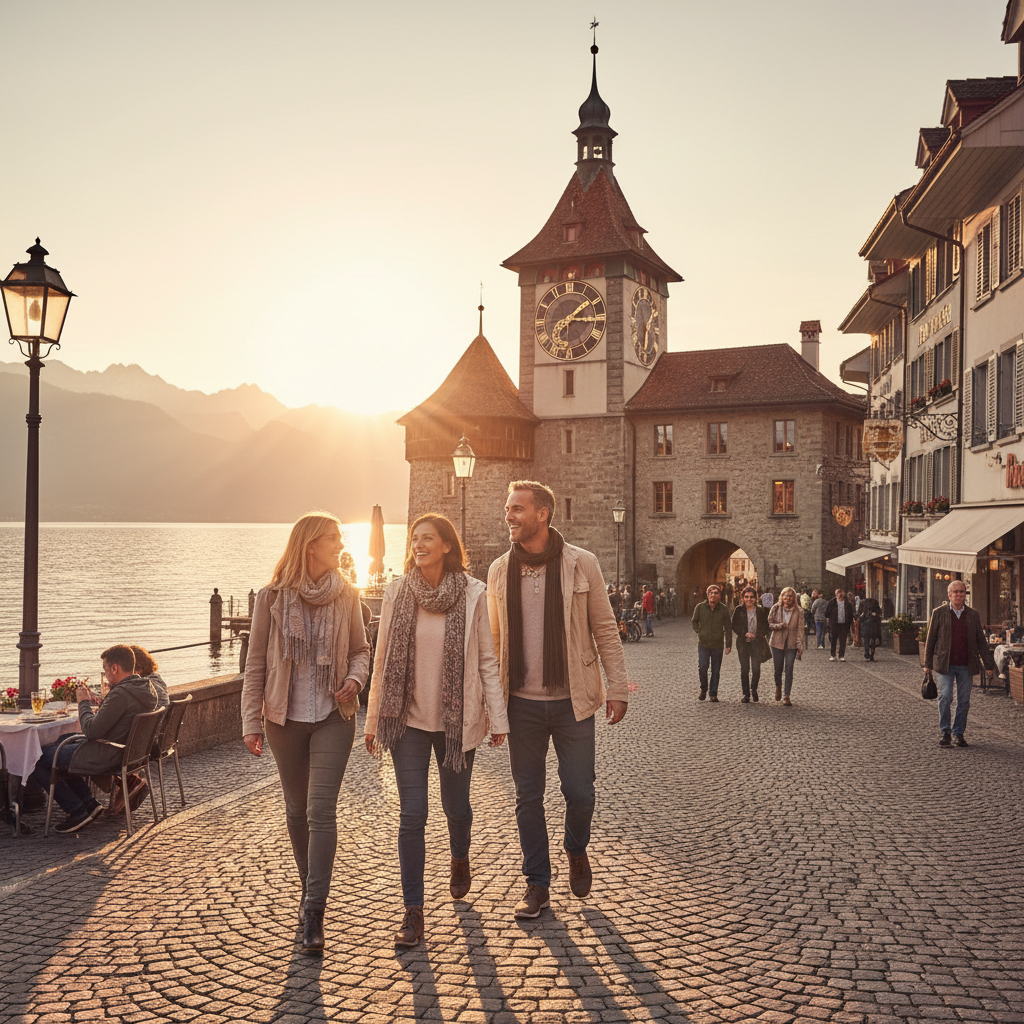
Zug, with its shimmering lake and majestic mountains in the background, is a true Swiss gem. But beyond its postcard-perfect landscapes and reputation as an economic hub, the city holds treasures and unique experiences for those who know how to seek them out. What to do in Zug for a memorable discovery? Dive into its history by strolling through the picturesque Old Town (Altstadt), where every cobblestone alley and colorful facade tells a story. Don't miss the iconic Zytturm, the clock tower, which proudly overlooks the rooftops and offers breathtaking views of the surroundings. For an unusual and surprising activity, embark on an outdoor escape game. It's much more than a simple scavenger hunt; it's a real interactive treasure hunt that will lead you through Zug's hidden corners and emblematic sites, turning every step into a thrilling adventure. An original and fun way to explore the city, from its charming lakeside quays to its historic districts.
Unusual things to do in Zug
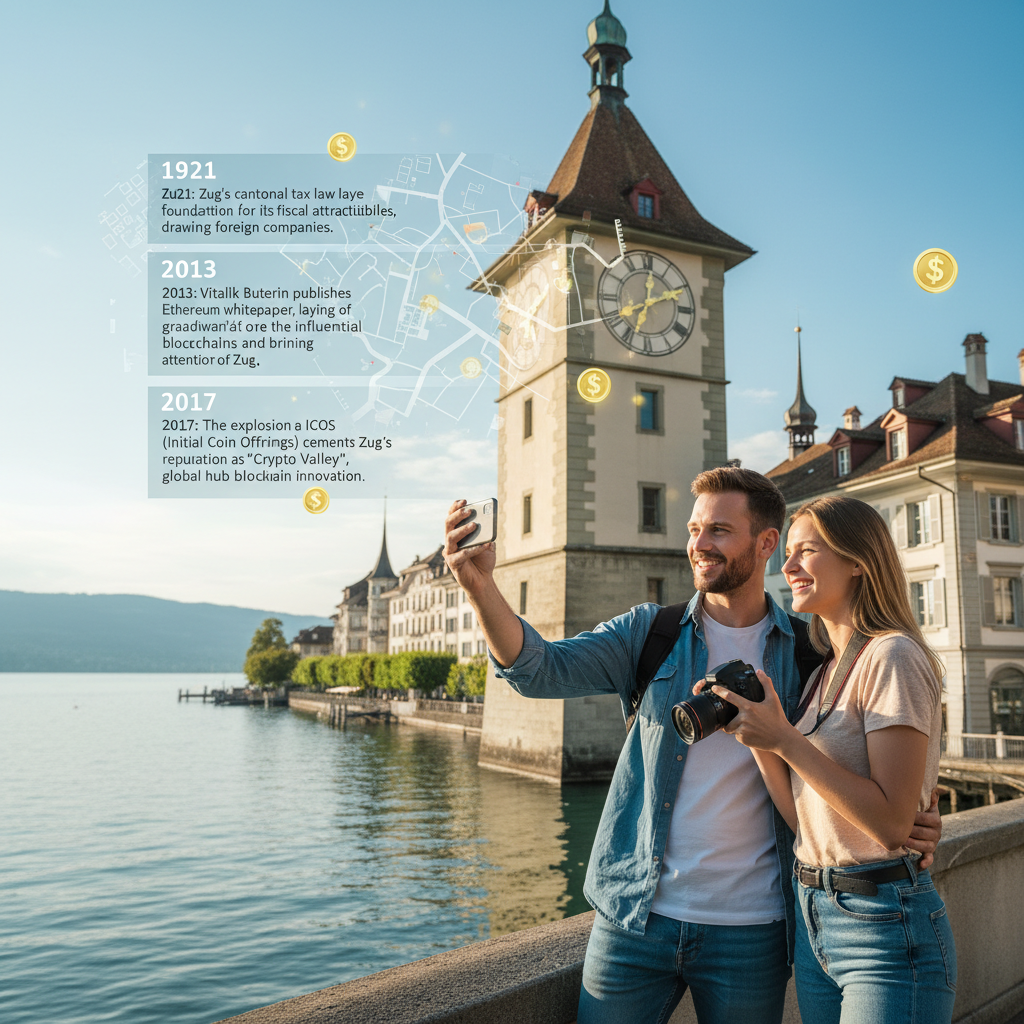
For an unusual activity in Zug, step off the beaten path and let yourself be surprised! Beyond museums and classic walks, imagine solving puzzles outdoors, with Lake Zug and the Alps as your backdrop. This is the very essence of our urban scavenger hunts. An original outing that combines heritage exploration, such as the secrets of Kolinplatz or the architectural details of Postplatz, with the thrill of an interactive quest. You'll discover local anecdotes, perhaps even some legends surrounding the famous "Zuger Kirsch," all while progressing through your adventure. It's a fun and memorable immersion.
Things to do in Zug with kids
Zug is full of activities for a memorable family outing. Our outdoor escape games are perfectly suited for children and teenagers, offering an interactive adventure where everyone, from age 8 accompanied by adults, can contribute. It's a fun way to turn a city visit into a giant treasure hunt. The younger ones will love searching for clues and solving challenges, while older kids will get caught up in the thrill of the investigation. An excellent opportunity to strengthen bonds, stimulate teamwork, and create unforgettable memories together, all while exploring the charms of Zug.
Zug for couples
Looking to discover Zug as a couple in a unique and romantic way? Our outdoor escape game routes are designed to offer you an intimate and complicit experience. Stroll hand in hand through the cobblestone alleys of the Old Town, discover breathtaking viewpoints over the lake and mountains, and share moments of reflection and laughter as you solve puzzles. It's an original way to strengthen your bond, create precious memories, and rediscover Zug's heritage from a new angle, away from the crowds. An adventure for two, blending history, nature, and mystery.
What to do in Zug when it rains
Even in rainy weather, Zug retains its charm, and our outdoor escape games remain a viable option! Let's be honest: approximately 80% of our main route takes place under arcades, covered passages, or near shelters. This allows you to continue your game without getting too wet, while still enjoying the city's unique atmosphere. The historic buildings of the Old Town offer plenty of natural protection, transforming a grey day into a cozy and intriguing adventure. Just bring an umbrella for the short transitions!
Where is Zug, and where do the routes start?
Starting points of our routes and the places they pass through.
Route starting points
Places in Zug
- Zytturm (Clock Tower)
- Landsgemeindeplatz
- Fischmarkt (Fish Market)
- Kolinplatz
- Postplatz / Bahnhofstrasse
- Kunsthaus Zug (exterior)
- Metalli
- Cemetery and St. Oswald's Church (exterior)
The history of Zug
From Fishing Settlement to Habsburg Control
Zug was founded around 1200 by the Counts of Kyburg. Its location on Lake Zug allowed control over trade routes and the shoreline. The city was first documented as a fortified town in 1242. The name "Zug" derives from an Old German word meaning "pulling nets" or "a catch," indicating the region's early reliance on fishing.
After the Kyburg line ended in 1273, Zug came under the control of the Habsburg dynasty, which reinforced its fortifications. The town became an administrative center for both Kyburg and Habsburg districts, and later a market town for transporting goods like salt and iron over the Hirzel hill towards Lucerne.
Joining the Confederation and Territorial Shifts
In 1352, Zug joined the Swiss Confederation, becoming its eighth canton. This alliance was partly a response to Zurich's siege on Zug due to its Habsburg ties. Despite initially having to acknowledge its former lords, Zug gradually became a sovereign member of the league. The 14th and 15th centuries saw Zug expand its territory, acquiring several rural areas.
A landslide occurred in 1435 on Untergasse, causing a portion of the Old Town to sink into Lake Zug. This event destroyed 26 houses and resulted in 60 deaths. During the Reformation in the 16th century, Zug remained Catholic, becoming a religious center for the region and joining the Golden League in 1586. This period, leading up to 1798, was marked by internal political rivalries. The French invasion in 1798 temporarily ended the old political order, and Zug became part of the Canton of Waldstätten. However, in 1803, under the Act of Mediation, the Canton of Zug regained its independence. The city developed into a center for trade and administration, with its position on the lake and at the foot of the Zugerberg mountain influencing its growth. The construction of the Gotthard railway in the late 19th century further connected Zug to major Swiss cities, contributing to its economic development. Today, remnants of its medieval walls and the Zytturm reflect its long history.
What to see in Zug
- Zytturm (Clock Tower) — This 13th-century tower, standing 52 meters high on Kolinplatz, was part of the city's defensive walls. It features an astronomical clock, installed in 1574, which displays the time, day of the week, moon phase, and zodiac sign, and indicates leap years.
- Landsgemeindeplatz — This square in Zug's Old Town hosts weekly markets. It is a cobbled space surrounded by restaurants and cafés, with views of Lake Zug.
- Fischmarkt (Fish Market) — This square by the lake was historically a center for city life and trade, reflecting Zug's origins as a fishing settlement.
- Kolinplatz — This square is a central point in the Old Town, overlooked by the Zytturm.
- St. Oswald's Church — This late-Gothic church, built between 1478 and 1545, is the largest sacred building in Zug's Old Town. It features vaulted ceilings, stained glass windows, and a high altar created by Jörg Lederer in 1522. Its spire is visible across the city.
- Kunsthaus Zug (exterior) — The exterior of the Kunsthaus presents a modern architectural style, contrasting with the historic Old Town.
- Metalli — This shopping center offers a contemporary architectural style and serves as a hub for shopping and dining.
- Cemetery next to St. Oswald's Church — The cemetery offers a quiet space alongside the church, providing a view into local history and traditions.
When to visit Zug
The period from late June to early September is suitable for warm-weather activities, with average daily high temperatures above 20°C (69°F), reaching up to 24°C (76°F) in July. Summers are generally comfortable, though July can have frequent, brief showers. Skies are clearest in July.
For winter sports, December to February offers snow and cold temperatures, with average highs between 2°C and 5°C (36°F and 41°F). However, some attractions may have limited hours. Spring (March to May) brings Alpine blooms. Autumn (September to November) offers foliage and fruit harvests. Avoid visiting in late autumn if you prefer warmer weather and longer daylight hours, as temperatures drop and days shorten.
Getting around Zug
Zug is accessible by train. The city's railway station is a hub for international, national, and regional train services, with frequent connections to Zurich and Lucerne. Zurich Airport (ZRH) is the closest major international airport, with direct train connections to Zug.
Within Zug, the city center and lakeside areas are walkable. The local public transport network, operated by Zugerland Transport Company (ZVB), provides bus services connecting the city center, railway station, and residential areas. Tickets for public transport must be purchased before boarding.
For those traveling by car, Zug has several parking garages, including Parkhaus Altstadt-Casino, Parkhaus Metalli, and Postplatz. Parking fees apply, and blue zones require parking cards. Free parking is available further from the center, such as near the Bossard Arena on Aabachstrasse, or near the Cantonal School on Hofstrasse, especially on Sundays.
Things you probably do not know about Zug
Verified details most visitors walk straight past.
- Zytturm (Clock Tower)
- What unusual detail can you find on Zug's Zytturm, beyond just the time? The Zytturm's astronomical clock, installed in 1574, has four hands that display not only the time but also the day of the week, the month, the phase of the moon, and even indicates whether it is a leap year.
- Old Town (Untergasse)
- What natural disaster dramatically reshaped a part of Zug's Old Town centuries ago? In 1435, a significant landslide occurred on Untergasse, causing a section of the Old Town to collapse into Lake Zug. This event destroyed 26 houses and resulted in 60 fatalities.
- St. Oswald's Church
- Who was the driving force behind the construction of St. Oswald's Church, and what unique record did he leave behind? Theologian Johannes Eberhart initiated and oversaw the building of St. Oswald's Church in 1478, documenting the entire process in two registers that still exist today, providing a rare detailed account of its construction.
- Fischmarkt
- What does the name of Zug itself reveal about its oldest economic activity, reflected in the Fischmarkt square? The name "Zug" originates from an Old German word meaning "pulling nets" or "a catch," directly referencing the region's historical fishing traditions, which centered around the Fischmarkt square.
- Kolinplatz
- What historical detail on the Zytturm, overlooking Kolinplatz, commemorates Zug's early political allegiances? On the eastern side of the Zytturm, below its famous clock, are displayed the coats of arms of the Old Eight Cantons, which comprised the Old Swiss Confederacy from 1353 to 1481, marking Zug's entry into the Confederation.
- Landsgemeindeplatz
- What tradition, now abolished, once took place in Zug's Landsgemeindeplatz? The Landsgemeindeplatz was historically the site of public assemblies (Landsgemeinde) where citizens gathered to vote on laws and elect officials, a tradition that existed in the canton since 1376 but was abolished in 1848.
Questions about visiting Zug
What is the best way to get around Zug?
Zug is a compact city. Its Old Town and lakeside areas are easily navigated on foot. For longer distances or to reach areas outside the city center, the local public transport network, operated by Zugerland Transport Company (ZVB), offers frequent bus services.
How many days should I spend in Zug?
Zug can be explored as a day trip or a longer stay. A day allows for exploring the Old Town and lakeside. A visit of two to three days provides time to venture to Zugerberg, take a boat trip on Lake Zug, or explore nearby areas.
What is the best season to visit Zug?
The best time for outdoor activities and enjoying Lake Zug is from late June to early September, when temperatures are warm. For winter sports, December to March is suitable for snow. Spring and autumn offer conditions for exploring the Old Town and surrounding countryside.
What are the main neighborhoods or areas to explore in Zug?
The primary area to explore is the Old Town (Altstadt) with its historic buildings and squares like Kolinplatz and Landsgemeindeplatz. The lakeside promenade along Lake Zug is also a central feature. Beyond the immediate city center, the Zugerberg mountain offers natural areas.
What is the typical budget for a day in Zug?
Zug is an affluent area in Switzerland. Expect higher costs for accommodation, dining, and activities compared to some other European destinations. Public transport is efficient, and walking is free for exploring the main sights.
Is Zug a good destination for families with children?
Yes, Zug offers family-friendly activities. The lake provides opportunities for boat trips and walks, and the Zugerberg offers outdoor activities. The city's compact size makes it manageable for families to explore. The Winter Market Weekend often includes activities like candle making and face painting for children.
Frequently asked questions
How much does an outdoor escape game cost in Zug?
An outdoor escape game in Zug is an activity designed to be accessible and offer excellent value for your team. The cost is €12 per team, regardless of the number of participants (typically 2 to 6 players). This single price allows everyone to fully enjoy the adventure without worrying about the price per person. It's a great option for an outing with friends, family, or colleagues, guaranteeing hours of entertainment and interactive discovery of the city of Zug at a very affordable price.
Is it suitable for children / families?
Absolutely! Our outdoor escape games are perfectly suitable for children and families. We recommend a minimum age of 8 for children to actively participate in solving puzzles, always accompanied by an adult. Teenagers, on the other hand, can play more independently. It's a fun and educational activity that stimulates logic, observation, and teamwork. The whole family will enjoy this giant treasure hunt through the streets of Zug, creating memorable experiences together.
How long does an escape game in Zug last?
The duration of an outdoor escape game in Zug is flexible and depends on your team's pace. On average, allow between 1.5 and 2.5 hours to complete the route. Some faster groups can finish in 1h15, while others prefer to take their time to admire the scenery, take breaks, or explore the surroundings further, and can spend up to 3 hours. There is no strict time limit once the game starts, so you are free to enjoy the experience at your leisure, without pressure.
Do I need to book in advance?
While our outdoor escape games in Zug are designed for great flexibility, we strongly recommend booking in advance, especially if you plan to play on weekends, during school holidays, or in a group. Booking guarantees the availability of the route at your preferred time and allows us to prepare optimally. However, if the urge strikes you spontaneously, it is often possible to book and start the game immediately, subject to availability. Feel free to check our website for available slots.
What to visit in Zug beyond escape games?
Zug is full of fascinating sites to discover once your escape game mission is complete! Don't miss the Old Town (Altstadt) with its colorful houses and the iconic Zytturm (clock tower), from where you'll have a panoramic view. Stroll along Lake Zug, especially beautiful at sunset. The Kunsthaus Zug offers contemporary art exhibitions, while the Museum Burg Zug will immerse you in regional history. For nature lovers, an excursion to the Zugerberg offers magnificent landscapes and hiking trails.
What is the best season to visit Zug?
Zug is charming in every season, but each offers a different experience for an outdoor escape game. Spring (April-May) and autumn (September-October) are ideal with mild temperatures and beautiful colors, perfect for strolling. Summer (June-August) is excellent for enjoying the lake and long sunny days, although it can be warm. Winter (November-March) transforms Zug into a magical city, especially with its Christmas markets; the game remains playable and offers a unique atmosphere, although warm clothing is advisable.
More cities in Switzerland
Rutli
Switzerland's legendary birthplace
Lucerne
Between lake and mountains, a Swiss medieval jewel
Zurich
Where a sparkling lake meets charming old town and vibrant modernity.
Altdorf
In the footsteps of William Tell, a legendary hero
St. Gallen
UNESCO heritage and textile treasures
Basel
European crossroads, city of art and culture on the Rhine.
Bern
Medieval city and federal capital, guardian of the bear
Bellinzona
City of three castles, guardian of the Alps.