Great St Bernard PassOutdoor Escape Game & Treasure Hunt
In the Alps, following monks and legendary dogs
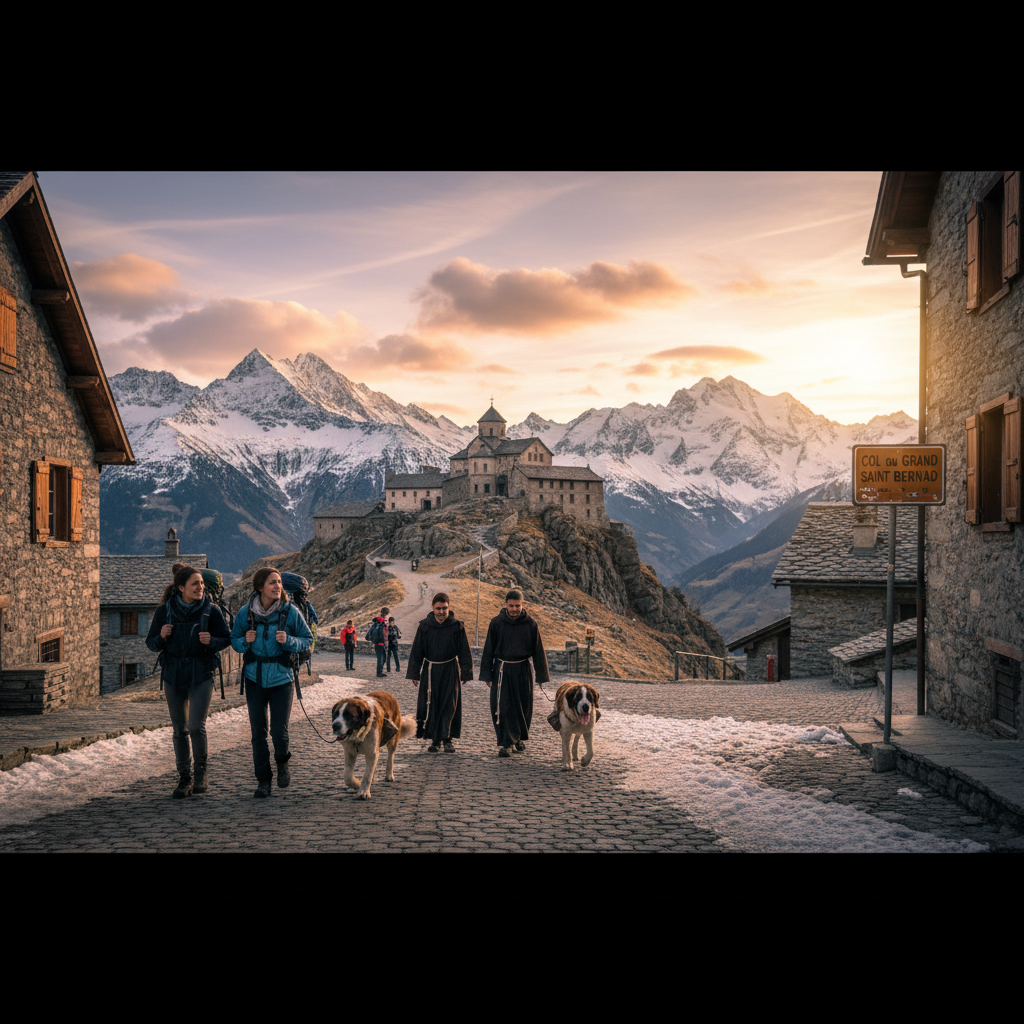
The Great St. Bernard Pass is not just a simple alpine crossing; it's an immersion into a thousand years of history in the heart of the Swiss Valais. If you're wondering what to do at the Great St. Bernard Pass, prepare for an adventure where every step echoes with the past. Beyond the magnificent landscapes, this mythical place invites you to explore its unique heritage. Discover the Great St. Bernard Hospice, a testament to centuries of hospitality, and meet the famous St. Bernard dogs at their kennel, true living legends. For an unusual activity, our outdoor escape game offers a captivating treasure hunt that will transform your visit into a genuine quest. You'll explore the surroundings of the Hospice and the lake, solving puzzles while soaking in the singular atmosphere of this historic site. It's an original and fun way to uncover the secrets of the Pass, far from the beaten path. Whether you're seeking nature, history, or an interactive experience, the Great St. Bernard Pass promises unforgettable memories, blending heritage with breathtaking scenery.
Unusual things to do in Great St Bernard Pass
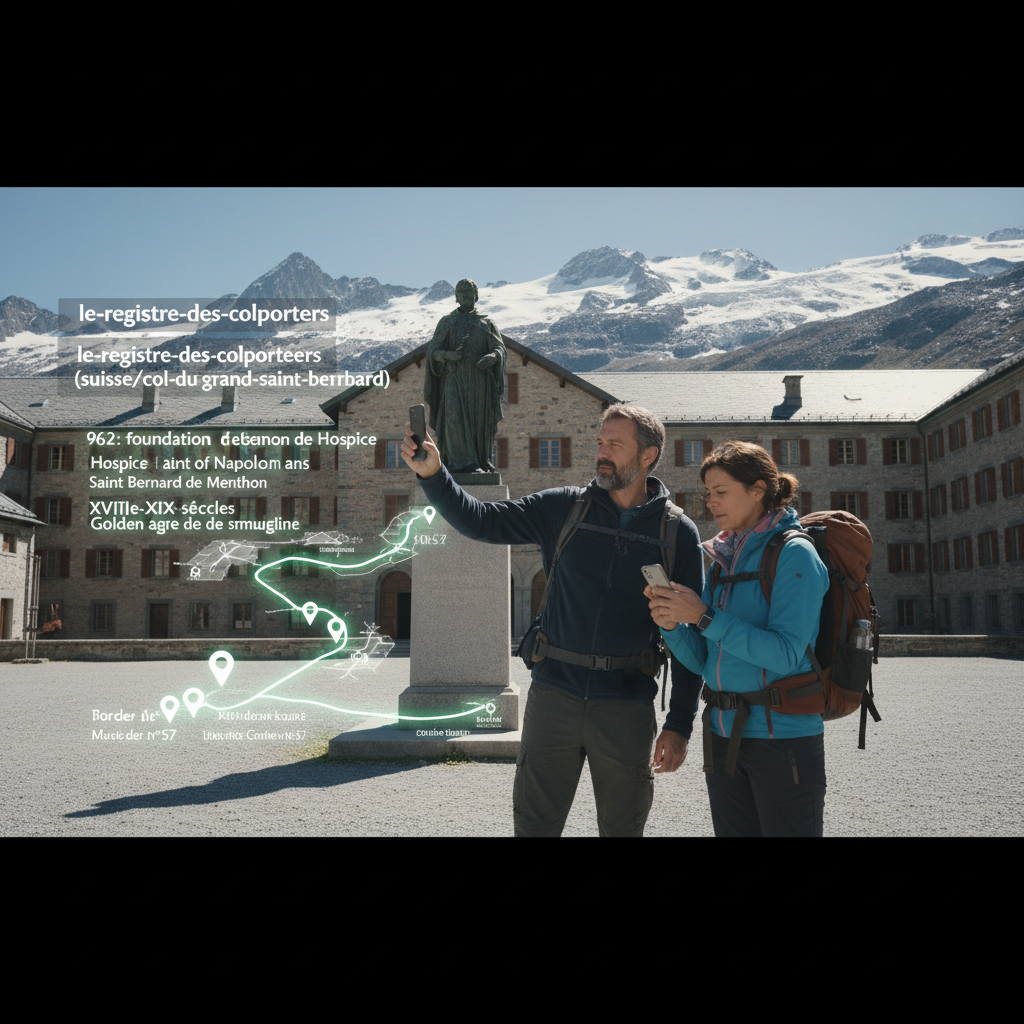
For an unusual activity at the Great St. Bernard Pass, let yourself be surprised by the altitude and history. Imagine solving puzzles outdoors, where monks and travelers once braved the elements. Our outdoor escape game immerses you in an original outing, utilizing the unique setting of the pass, between Switzerland and Italy. It's a playful way to discover the tales of this legendary crossing, far beyond traditional tours. The "border" and "rescue" aspects of the Hospice offer a fascinating narrative angle for a truly memorable and extraordinary experience.
Things to do in Great St Bernard Pass with kids
What to do with family at the Great St. Bernard Pass? Adventure awaits both young and old! Our outdoor escape game is perfectly suited for families with children and teens from 8 years old, thanks to puzzles designed to be accessible and stimulating. It's a unique opportunity to share a fun time in nature, while learning about the history of the pass. Beyond the game, meeting the St. Bernard dogs at the kennel is always a highlight for children. The pass offers a safe and inspiring setting for a memorable day where exploration and discovery are guaranteed.
Great St Bernard Pass for couples
For a romantic getaway, the Great St. Bernard Pass as a couple offers an exceptional setting. Far from the hustle and bustle, this mythical pass invites contemplation and shared moments. Imagine a hand-in-hand stroll around the glacial lake, with breathtaking views of the alpine peaks. The heritage of the Hospice, steeped in stories of dedication, adds a profound dimension to your visit. Our escape game can also become a complicit activity, a treasure hunt for two to discover the secrets of the pass in an original and intimate way, strengthening your bond amidst majestic landscapes.
What to do in Great St Bernard Pass when it rains
What to do at the Great St. Bernard Pass in rainy weather? While the alpine experience is primarily outdoors, our outdoor escape game has been designed for comfort. The game route includes sheltered sections, particularly around the Hospice. Approximately 80% of our treasure hunt takes place in areas offering partial or total protection, such as under arcades or covered passages. This allows you to enjoy the adventure and discover the pass, even if the weather is capricious.
Where is Great St Bernard Pass, and where do the routes start?
Starting points of our routes and the places they pass through.
Route starting points
Places in Great St Bernard Pass
- Main facade of the Great St. Bernard Hospice
- Statue of Saint Bernard of Menthon
- Archaeological site of the Temple of Jupiter
- Border marker n°57
- South shore of the Great St. Bernard Lake
- Visible section of the ancient Via Francigena
- Facade of the St. Bernard Dogs' Kennel
- Base of the Great St. Bernard Hospice Bell Tower
The history of Great St Bernard Pass
From Roman Road to Medieval Pilgrimage
The Great St. Bernard Pass, at 2,469 meters (8,100 ft), is an ancient route through the Western Alps, with evidence of use from the Bronze Age. The Romans developed it into a road under Emperor Claudius around 54 A.D. This Roman road, Via Alpis Poenina, connected Augusta Praetoria (Aosta, Italy) with Forum Claudii Vallensium-Octodurus (Martigny, Switzerland). At the summit, a temple for Jupiter Poeninus, protector of travelers, once stood. This temple gave the pass its Roman name, Mons Jovis, or "Mount Jupiter." Remains of this Roman road, approximately 3.7 meters (12 feet) wide, are visible, cut into the rock near the lake at the pass summit.
In the Middle Ages, the pass became part of the Via Francigena, the pilgrimage route from Canterbury to Rome. Around 1050, Bernard of Menthon, Archdeacon of Aosta, founded a hospice at the pass to provide shelter and assistance to travelers and pilgrims facing alpine conditions and banditry. The hospice, initially dedicated to St. Nicholas, took Bernard's name in the 16th century. The Augustinian canons have maintained this tradition of hospitality for nearly a thousand years.
Napoleon's Crossing and Modern Development
The Great St. Bernard Pass holds a place in military history. In May 1800, Napoleon Bonaparte led his army of 40,000 men and heavy arms across the snow-covered pass to enter Italy and confront Austrian troops. This crossing is depicted in paintings like Jacques-Louis David's "Napoleon at the Saint-Bernard Pass." A carriage road across the pass was completed in 1905, due to disagreements and technical challenges. In 1964, the Great St. Bernard Tunnel opened, providing a year-round route and diverting most traffic from the pass itself, leaving it for historical and recreational use.
What to see in Great St Bernard Pass
- Great St. Bernard Hospice — This thousand-year-old institution, founded around 1050, continues to offer shelter. You can visit its Baroque church and the Treasury Chamber, which houses sacred objects belonging to the congregation.
- Statue of Saint Bernard of Menthon — A bronze statue of the saint, erected in 1905, stands on a pedestal above the road on the Italian side, marking the site of a Roman mansio.
- Archaeological site of the Temple of Jupiter — Near the hospice, on a knoll known as the Plan de Jupiter, you can see the remains of a Roman temple dedicated to Jupiter Poeninus. Coins and votive tablets found here date Roman control of the pass up to the 5th century.
- Border marker n°57 — This marker indicates the border between Switzerland and Italy at the highest point of the pass.
- Great St. Bernard Lake — This alpine lake, straddling the Italian-Swiss border, reflects the surrounding mountains. In summer, its waters are clear; in winter and early spring, it may be frozen.
- Ancient Via Francigena — Visible sections of the ancient Roman road and later pilgrim path can be found, particularly east of the pass. This offers a connection to centuries of travelers.
- St. Bernard Dogs' Kennel — During the summer months (June to September), the St. Bernard dogs of the Fondation Barry return to their place of origin at the pass. Visitors can tour the kennels and learn about the care given to these rescue dogs.
- Great St. Bernard Hospice Museum — Within the hospice complex, this museum presents the history of the pass, the high-mountain environment, and the tradition of hospitality, displaying artifacts from the Roman era and objects left by travelers.
When to visit Great St Bernard Pass
The Great St. Bernard Pass is seasonal. The road pass is typically open from mid-June to September or early October, depending on snowfall. Even in August, expect cold mornings, sudden fog, and afternoon storms. For flora, late June to July is the best time, as most flowers will have wilted by late August.
Avoid visiting from late October to early June, as the pass road is closed by deep snow. During winter, the hospice is only accessible on cross-country skis or snowshoes, and the crossing becomes a winter mountain route.
Getting around Great St Bernard Pass
To reach the Great St. Bernard Pass by car from Italy, take the A5 Turin-Aosta highway, exit at Aosta Est, and follow State Road 27 towards the pass for about 20 kilometers. From Switzerland, drive from Martigny. Parking is available at the pass.
Public buses also serve the pass during the summer. From Aosta, SAVDA buses go to Gran San Bernardo. From the Swiss side, bus 210 connects Orsières to Bourg-Saint-Bernard. The Great St. Bernard Tunnel, open year-round, offers an alternative for vehicular traffic, but you cannot walk or cycle through it. Walking on the old tarmac road is an option, but some sections between Bourg-Saint-Pierre and Bourg-Saint-Bernard involve galleries where walking is not permitted, requiring a bus or lift.
At the pass, walking is the primary way to explore the sites. Prepare for high-mountain terrain with uneven stone paths.
Things you probably do not know about Great St Bernard Pass
Verified details most visitors walk straight past.
- Great St. Bernard Hospice
- What surprising detail about the hospice's location is linked to ancient Roman beliefs? The hospice was founded on the site where the Romans had erected a temple to Jupiter Poeninus, their supreme deity, giving the pass its original name, Mons Jovis, or "Mount Jupiter."
- St. Bernard Dogs' Kennel
- The famous St. Bernard dogs were not always known by that name. What was their earlier role? The St. Bernard dog breed was developed at the hospice from the 17th century, initially as guard dogs before they became renowned for mountain rescue operations.
- Great St. Bernard Lake
- What unique characteristic does the Great St. Bernard Lake possess that reflects its location? The small glacial lake at the pass is literally bisected by the Italian-Swiss border, with its waters reflecting the surrounding mountains of both nations.
- Ancient Via Francigena
- What unexpected mode of transport did Napoleon, a figure often depicted heroically on horseback, actually use to cross the pass? Despite grand paintings showing him on a white steed, Napoleon Bonaparte actually rode a donkey when he crossed the Great St. Bernard Pass with his army in May 1800.
- Great St. Bernard Hospice Bell Tower
- The hospice's bell tower stands as a beacon, but what significant change in the pass's infrastructure made its original purpose less critical? The opening of the Great St. Bernard Tunnel in 1964 significantly reduced traffic over the pass, diminishing the need for the bell tower to guide travelers in difficult conditions, as year-round travel became possible through the tunnel.
Questions about visiting Great St Bernard Pass
How do I get to the Great St. Bernard Pass?
You can reach the pass by car via State Road 27 from Aosta, Italy, or from Martigny, Switzerland. During summer, public buses also run from Aosta and Orsières. The Great St. Bernard Tunnel offers a year-round alternative for vehicles, but it's not for pedestrians or cyclists.
How long should I plan to stay at the Great St. Bernard Pass?
A visit to the main attractions like the Hospice, Museum, and kennels can take 1-2 hours. If you plan to hike around the lake or explore the ancient Roman road, allow for more time, potentially a full day. Overnight stays at the hospice are also possible.
What is the best time of year to visit the Great St. Bernard Pass?
The best time to visit is from mid-June to mid-September when the pass road is open and free of snow. July and August offer the warmest temperatures, though alpine weather can change quickly, so always be prepared for colder conditions.
Is the Great St. Bernard Pass suitable for children?
Yes, it can be. Children will likely enjoy seeing the St. Bernard dogs at the kennel. The walks around the lake are generally manageable, but be mindful of the high altitude and rapidly changing weather conditions.
What kind of budget should I expect for a visit?
Access to the pass itself is free. Costs will include transportation, food, and any museum entry fees. The Hospice Museum ticket often includes a visit to the dog kennels. Staying overnight at the hospice will incur accommodation costs.
Are there any specific safety considerations for visiting the pass?
Yes, as it's a high-altitude alpine environment (2,469 meters), weather can change rapidly, with snow possible even in summer. Always carry warm and waterproof layers, wear suitable footwear, and stick to marked paths. Check weather and avalanche reports before hiking, especially outside peak summer.
Frequently asked questions
How much does an outdoor escape game cost at the Great St. Bernard Pass?
An outdoor escape game at the Great St. Bernard Pass typically costs €12 per team. This pricing is designed to be accessible, allowing your group to enjoy a unique adventure without breaking the bank. The price is fixed per team, regardless of the number of participants (within the recommended limit for a better experience, often 2 to 6 players). It's excellent value for money for an activity that combines historical discovery, a treasure hunt, and immersion in the magnificent landscapes of the pass. Get ready for a memorable and affordable experience!
Is it suitable for children / families?
Absolutely! Our outdoor escape games are perfectly suited for families and children from 8 years old. The puzzles are designed to be logical and accessible, stimulating the curiosity of the youngest while entertaining adults. It's a fantastic activity for spending quality time together, where everyone can contribute to solving the mysteries. The natural and historical setting of the Great St. Bernard Pass adds an educational and playful dimension, making this treasure hunt a memorable experience for the entire family.
How long does an escape game last at the Great St. Bernard Pass?
An outdoor escape game at the Great St. Bernard Pass typically lasts between 1h30 and 2h30. The exact duration can vary slightly depending on your pace, team size, and puzzle-solving ability. Take your time to explore the surroundings, admire the landscapes, and fully immerse yourself in the history of the pass. It's an adventure to be savored, not a race against the clock. So, plan for a good half-day to fully enjoy the experience and discoveries around the Hospice.
Do I need to book in advance?
For our outdoor escape games at the Great St. Bernard Pass, booking is generally not mandatory. Our games are designed to be playable at any time, without needing a fixed time slot. You can simply purchase the game online and start your adventure whenever you wish. However, we recommend checking specific information on our website before your visit, especially during peak periods or for special editions. This ensures a smooth and hassle-free experience.
What to visit at the Great St. Bernard Pass beyond escape games?
Beyond the excitement of our escape games, the Great St. Bernard Pass is full of treasures to explore. Don't miss the iconic Great St. Bernard Hospice, a place rich in history and rescue stories. Also, visit the kennel to meet the legendary St. Bernard dogs, true icons of the pass. The Hospice Museum offers a fascinating glimpse into monastic life and alpine traditions. And of course, enjoy a contemplative stroll around the magnificent Great St. Bernard Lake, offering breathtaking views of the surrounding alpine landscapes.
What is the best season to visit the Great St. Bernard Pass?
The best season to visit the Great St. Bernard Pass depends on the experience you're seeking. Summer (June to September) is ideal for fully enjoying outdoor activities, like our escape games and hikes, with pleasant temperatures and clear access. It's also when the lake is most accessible and the landscapes are green. The pass is generally closed to traffic in winter, but the Hospice remains accessible by certain means. If you love snow and pristine landscapes, a winter visit can be magical but requires specific preparation.
More cities in Switzerland
Geneva
Between Lake Geneva and mountains, a cosmopolitan and historic city.
Bern
Medieval city and federal capital, guardian of the bear
Neuchâtel
Between lake and mountains, the pearl of the Swiss Jura.
Lugano
Where alpine lake meets Mediterranean palms
La Chaux-de-Fonds
UNESCO watchmaking city, between art and precision
Bellinzona
City of three castles, guardian of the Alps.
Lucerne
Between lake and mountains, a Swiss medieval jewel