PortmeirionOutdoor Escape Game & Treasure Hunt
The unexpected Italianate village in the heart of Wales
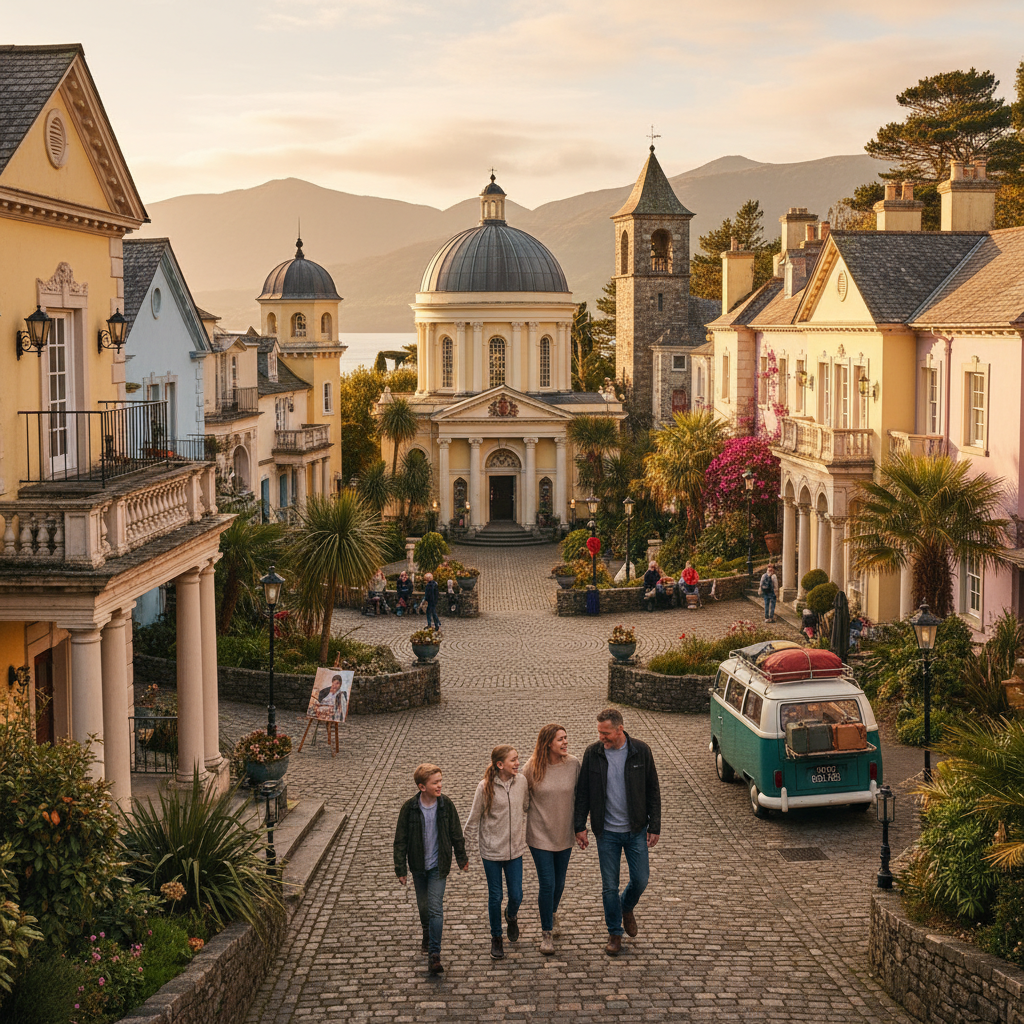
Portmeirion, this dreamy village nestled on the Welsh coast, is a true gem inviting escape. Far from the beaten path, what to do in Portmeirion for a memorable experience? Beyond its Italian-inspired architectural beauty, you can stroll through the colorful streets of the Central Piazza, admire the breathtaking view from The Dôme, or explore the exotic gardens of The Gwyllt. But for a truly unique adventure, embark on an outdoor escape game. It's a fantastic way to discover the village's secrets while solving puzzles. This real-life treasure hunt transforms every street corner into a clue, every monument, like The Bell Tower, into a step of a captivating scavenger hunt. It's an unusual activity that promises laughter and discoveries, perfect for exploring this magical place in an interactive and fun way. Get ready to be amazed!
Unusual things to do in Portmeirion
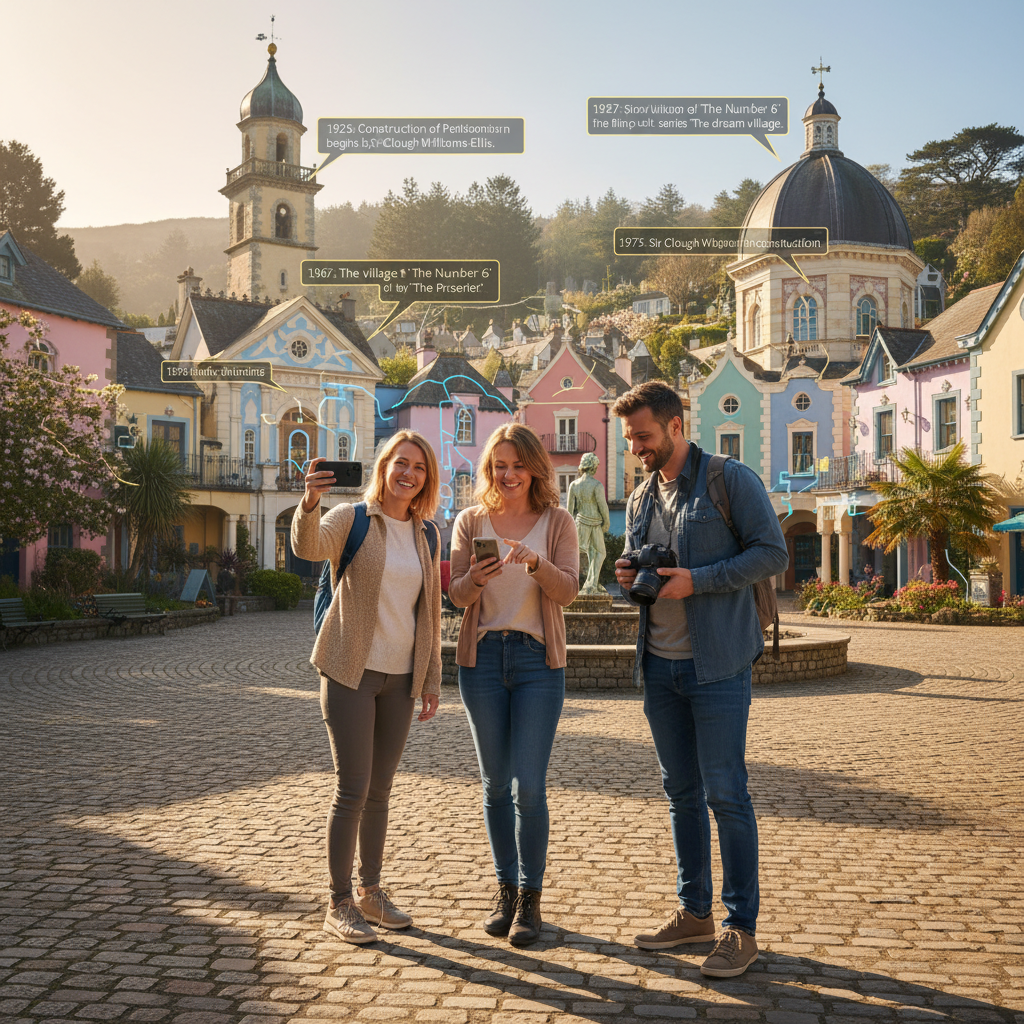
For an unusual activity in Portmeirion, beyond classic admiration, why not delve into the village's history and legends in an interactive way? Our scavenger hunt invites you to decipher the mysteries hidden behind the baroque facades and eccentric statues. It's an original outing that encourages you to observe every architectural detail of the Central Piazza, search for hidden clues in the lush gardens of The Gwyllt, and fully immerse yourself in the unique atmosphere of this timeless place. You'll discover Portmeirion from a new angle, far from a simple visit.
Things to do in Portmeirion with kids
In Portmeirion, families will find a multitude of activities to entertain both young and old. What to do with family in Portmeirion? Our outdoor escape game is a fantastic option, suitable for children aged 8 and up, and teenagers, who love the playful side of the treasure hunt. It's an excellent way to stimulate their curiosity and team spirit while exploring the village's nooks and crannies. Between puzzles, children will enjoy running in the gardens, looking for fish in the ponds, or imagining themselves in "The Prisoner" TV series universe. A day full of adventure and discovery for the whole family!
Portmeirion for couples
Portmeirion for couples is a romantic experience par excellence. Imagine yourselves hand in hand, wandering through the winding, colorful streets of this unexpected Italian village. Every corner offers a new perspective, a breathtaking view of the Dwyryd estuary, perfect for a souvenir photo. The unique architectural heritage, with its pastel buildings and classical statues, creates an almost cinematic atmosphere. Enjoy a moment of tranquility in the exotic gardens of The Gwyllt or share a coffee on the Central Piazza, watching the world go by. It's the ideal setting for unforgettable memories, blending discovery and intimacy.
What to do in Portmeirion when it rains
Even in rainy weather, Portmeirion retains its charm and offers options. What to do in Portmeirion when it rains? The good news is that our outdoor escape game is designed to minimize inconvenience: about 80% of the route takes place under arcades, covered passages, or porches. You can thus continue your treasure hunt sheltered, while enjoying the unique atmosphere of the village. Between game stages, the village's shops and art galleries also offer a warm refuge.
Where is Portmeirion, and where do the routes start?
Starting points of our routes and the places they pass through.
Route starting points
Places in Portmeirion
- Piazza
- Near Castell Deudraeth
- The Dome
- Campanile
- Battery Cave
- The Gwyllt
- Neptune
- Buddha
The history of Portmeirion
The Vision of Sir Clough Williams-Ellis
Portmeirion's character comes from the vision of Welsh architect Sir Clough Williams-Ellis, who acquired the Aber Iâ estate in 1925. His goal was to show that a naturally beautiful site could be developed without being damaged. Williams-Ellis spent 50 years, from 1925 to 1975, designing and building this Italianate village on a private peninsula overlooking the Dwyryd estuary in North Wales.
The construction of Portmeirion happened in two main phases. The first phase, from 1925 to 1939, saw the erection of the village's most distinctive Arts and Crafts-style buildings, including the Campanile and parts of Hotel Portmeirion. After a pause during World War II, work restarted in 1954 and continued until 1976. This second phase added more classical and Palladian-style structures, deliberately contrasting with the earlier designs. Williams-Ellis often used salvaged architectural elements from demolition sites, referring to Portmeirion as a "home for fallen buildings."
A Place Shaped by Time and Purpose
The history of the site predates Williams-Ellis's arrival. Within the estate is the site of Castell Aber Iâ, a castle thought to date back to the late 12th century and associated with the Princes of Gwynedd. By the early 19th century, the foreshore below what is now Hotel Portmeirion supported a small hamlet with a slate quay and a foundry, though these industrial ventures were short-lived. A Victorian mansion and gardens were later established, forming the groundwork for the village seen today. Portmeirion was always planned as a visitor site and a "faux village," not a traditional residential one. The buildings function as hotel rooms, suites, and self-catering holiday rentals, along with shops, cafes, and restaurants. In 2001, 23 years after Williams-Ellis's death, Castell Deudraeth opened as an 11-bedroom hotel and restaurant, completing a long-held part of his vision.
What to see in Portmeirion
- The Piazza — This central open space is the core of Portmeirion, surrounded by pastel-coloured buildings with classical and Baroque architectural details. It includes subtropical plants and a fountain pool.
- The Dome — At the top of the village, this domed structure provides views of the estuary and the surrounding architecture.
- Campanile — This bell tower, built in 1928, is one of the village's prominent features and an early example of Williams-Ellis's architectural style.
- Battery Cave — Along the coastal path, this cave is part of the walks around the village, offering views of the Dwyryd estuary. The Battery was a small hamlet with a slate quay in the early 19th century.
- The Gwyllt — These exotic woodlands, formerly the grounds of the Aber Iâ Mansion, were transformed by Williams-Ellis into a botanical display. Visitors can follow woodland trails and coastal walks, finding rare plant species that grow in Portmeirion's mild microclimate.
- Castell Deudraeth — This Gothic-style Victorian mansion, dating back to the late 12th century, was incorporated into the Portmeirion complex and now operates as a hotel and restaurant.
- Neptune — A statue in the village, contributing to the classical atmosphere Williams-Ellis created. It is one of several artistic elements placed throughout Portmeirion.
- Buddha — This statue adds to the mix of architectural and decorative styles found in Portmeirion, reflecting Williams-Ellis's global inspirations.
When to visit Portmeirion
The best time to visit Portmeirion is from May to September, when the weather is most suitable for exploring the village and its gardens. During these months, the subtropical gardens of The Gwyllt are in bloom, and outdoor facilities like the hotel's swimming pool are open. This is also peak season, meaning more visitors.
For a quieter experience, the off-season from November to March offers fewer visitors and a cooler visit. While some cafes and facilities might have reduced hours, the village remains open daily, except for Christmas Day.
Avoid December, October, and November if you prefer to minimise rain, as these are typically the months with the most rainfall.
Getting around Portmeirion
Portmeirion is in Gwynedd, North Wales, off the A487 road. The postcode for GPS is LL48 6ER. Free parking is available at the village entrance, with a disabled car park closer to the main entrance.
For public transport, the closest local railway station is Minffordd, on the Cambrian Coast Line and the Ffestiniog Railway. From Minffordd, Portmeirion is about a mile walk. Local bus services run from Porthmadog directly to the Portmeirion entrance, especially during peak season. For mainline trains, passengers typically arrive via Bangor or Llandudno Junction and take a connecting bus or taxi.
Within the village, exploration is on foot. The main access route is a sloped tarmac road, but many areas have varied terrain including cobbles, steps, grass, and sand. Wheelchairs are available for hire, and assistance dogs are welcome. The village is generally open from 9:30 AM to 5:30 PM (or dusk in winter), with shops and cafes having similar hours.
Things you probably do not know about Portmeirion
Verified details most visitors walk straight past.
- The Piazza
- Why does a Welsh village feature a large, brightly painted piazza that feels straight out of the Mediterranean? Sir Clough Williams-Ellis, the architect of Portmeirion, was inspired by the atmosphere of the Italian Riviera, particularly the village of Portofino. He wanted to recreate that feeling in Wales, believing that architecture could enhance a natural landscape.
- Castell Deudraeth
- This imposing Gothic-style castle on the Portmeirion estate was envisioned as part of the village's accommodation, but its completion took much longer than expected. Why? Williams-Ellis purchased Castell Deudraeth in 1931 with the intention of incorporating it into the hotel complex. However, World War II and other challenges delayed its development. It wasn't until 2001, 23 years after Williams-Ellis's death, that the Castell finally opened as an 11-bedroom hotel and restaurant, fulfilling his original vision.
- Various Buildings
- Many of Portmeirion's buildings seem to be a patchwork of different styles and eras. Is there a reason for this architectural eclecticism? Williams-Ellis referred to Portmeirion as a "home for fallen buildings." He incorporated numerous salvaged architectural elements from demolition sites across Britain into his designs, blending them with purpose-built follies to create a varied aesthetic.
- The Gwyllt
- The exotic gardens of The Gwyllt seem unusually lush for North Wales. How do these plants thrive in an otherwise temperate climate? Portmeirion benefits from a unique microclimate on its private peninsula, allowing a wide variety of exotic and subtropical plants to flourish in The Gwyllt. Williams-Ellis transformed these former pleasure grounds into a botanical showcase.
- Portmeirion Pottery
- The village shares its name with a famous pottery brand. Is there a direct connection between the two? Yes, Portmeirion Pottery was founded by Susan Williams-Ellis, the daughter of Sir Clough Williams-Ellis. She began by creating ceramic gifts for the village's shop in the 1950s, which eventually led to the establishment of the internationally renowned pottery company in 1960.
- The entire village
- Portmeirion became globally famous for its role in a cult 1960s television series. Which one, and what was its significance? Portmeirion served as the primary filming location for the surreal 1960s British television series *The Prisoner*, where it was known as "The Village." This role cemented its status as a cultural landmark and continues to draw fans from around the world.
Questions about visiting Portmeirion
How much time should I allocate for a visit to Portmeirion?
Most visitors find that spending a minimum of 2 hours is sufficient to explore the village itself. However, to fully appreciate the architectural details, the Gwyllt gardens, and the coastal paths, budgeting 3 to 4 hours or even a full day is recommended.
Is Portmeirion suitable for visitors with mobility issues?
Portmeirion has made efforts to be accessible, but the village features many slopes and steps, and some areas have uneven terrain including cobbles, grass, and sand. While lifts are available in Hotel Portmeirion and Castell Deudraeth, and wheelchairs can be hired, some paths may be challenging for mobility aids.
Are there dining options available within Portmeirion?
Yes, Portmeirion offers several dining options to suit different tastes and budgets. These include cafes for casual dining, a tea-room, and more upscale experiences at the Hotel Portmeirion Restaurant and Castell Deudraeth Brasserie. Many of these have outdoor seating during warmer months.
Can I visit Portmeirion with children?
Portmeirion is a family-friendly destination. Children under 5 typically have free admission. The village's unique architecture, colourful buildings, and extensive gardens with woodland trails offer plenty to explore and capture the imagination of younger visitors.
What is the typical budget for a day trip to Portmeirion?
Admission fees apply to enter Portmeirion, with varying rates for adults, children, students, and seniors. Parking is free. You can also save on entry by booking a three-course lunch at Castell Deudraeth Brasserie or Sunday lunch/afternoon tea at Hotel Portmeirion. Dining costs vary depending on your choice of cafe or restaurant.
Are dogs allowed in Portmeirion?
No, dogs are generally not permitted within Portmeirion Village, with the exception of registered guide dogs and assistance animals, which must be clearly identifiable. If you are visiting with a pet, you will need to make alternative arrangements.
Frequently asked questions
How much does an outdoor escape game cost in Portmeirion?
An outdoor escape game in Portmeirion costs €12 per team. This is a single price, regardless of the number of players in your group (we recommend 2 to 6 people for an optimal experience). This rate makes the activity very accessible and is an excellent option for an original and affordable outing. There are no hidden fees, and you have access to the game for an unlimited duration once you've started it. Get ready for a memorable adventure without breaking the bank!
Is it suitable for children / families?
Absolutely! Our outdoor escape games are perfectly suited for families and children aged 8 and up. The puzzles are designed to be stimulating without being too difficult, encouraging collaboration and critical thinking from all team members. It's a fun activity that allows children to discover the village of Portmeirion in an interactive and exciting way. Teens love the challenge and the "treasure hunt" aspect. It's a great way to spend quality time together and create unforgettable family memories.
How long does an escape game last in Portmeirion?
The duration of an escape game in Portmeirion typically ranges between 1.5 to 2.5 hours, depending on your team's pace and your ability to solve the puzzles. However, there are no time constraints! You are free to take breaks, grab a coffee, visit shops, or simply admire the scenery. The game is flexible and adapts to your desire to explore. You can even split it over several hours if you wish, to fully enjoy everything Portmeirion has to offer.
Do I need to book in advance?
No, it is not necessary to book in advance for our outdoor escape games in Portmeirion. You can purchase your game directly on our website or via the app on the day of your visit, or even a few minutes before starting. Once purchased, you will instantly receive instructions to begin your adventure. This flexibility allows you to spontaneously decide on your activity, without planning constraints. It's ideal for a last-minute outing or to adapt to unexpected weather changes.
What to visit in Portmeirion beyond escape games?
Portmeirion is full of treasures to explore beyond our escape games! Don't miss strolling through the magnificent Central Piazza with its colorful buildings and unique architecture. The Gwyllt, an enchanted forest with exotic gardens and winding paths, is perfect for a relaxing walk. Admire The Bell Tower, The Dôme, and the statues scattered everywhere, creating a surreal atmosphere. The local craft shops and charming cafes add to the experience. It's a place where every corner reveals a new wonder, inviting discovery and amazement.
What is the best season to visit Portmeirion?
Portmeirion is beautiful in every season, but each offers a different experience. Spring (April-May) and autumn (September-October) are often considered the best times, with pleasant temperatures, fewer crowds, and vibrant landscapes (flowers in spring, foliage in autumn). Summer (June-August) is ideal for fully enjoying terraces and long sunny days, although there may be more visitors. Even winter has its charm, with a more intimate and mysterious atmosphere. The village is designed to be enjoyed regardless of the weather.
Other destinations in North Wales
Anglesey
The island of enchanting coastal landscapes
Beaumaris
Royal castle and coastal charm on Anglesey
Caernarfon
Royal fortress and gem of Wales
Conwy
Medieval town with majestic walls
Llangollen
Between canal, railway, and international festival
Snowdonia
The majestic peaks of Wales