ViennaOutdoor Escape Game & Treasure Hunt
Imperial capital, where waltzes meet grand palaces
Vienna, the imperial capital, is a city that invites discovery, harmoniously blending its rich past with a vibrant contemporary life. If you're wondering what to do in Vienna, prepare for an immersion between waltzes and grandiose palaces. Stroll through the gardens of Schönbrunn, marvel at the majesty of the Hofburg Palace, or let yourself be charmed by the Gothic architecture of St. Stephen's Cathedral. But Vienna is also an ideal destination for those seeking an unusual activity. Imagine yourself in the heart of the city, solving puzzles during an outdoor escape game that will lead you through historic districts and hidden alleys. It's a unique way to transform your visit into a real treasure hunt or a city-wide scavenger hunt, offering a playful and memorable perspective on this fascinating city.
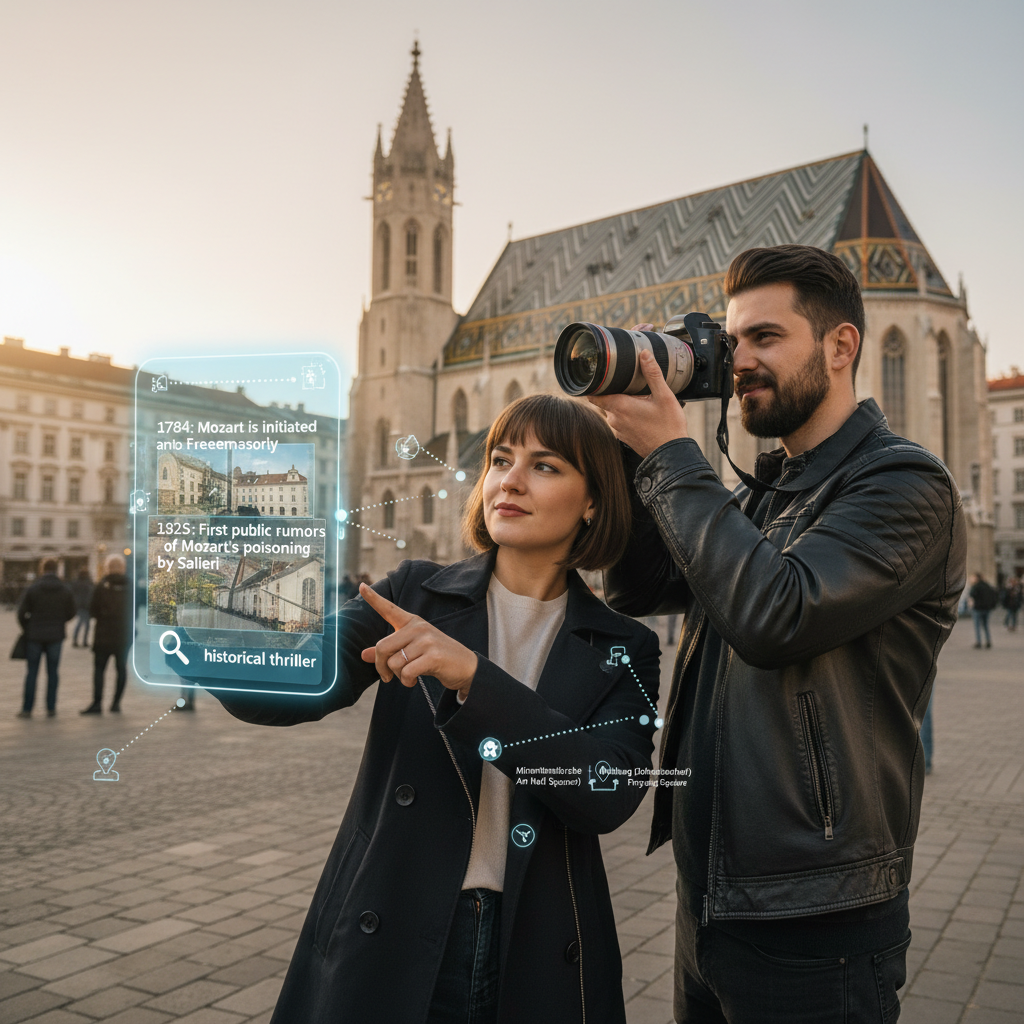
Innere Stadt — Unmasking Mozart's Final Conspiracy
Decipher the shadowy circumstances surrounding Mozart's mysterious death in 1791. Uncover hidden letters, rival intrigues, and the truth buried beneath Vienna's baroque silence.
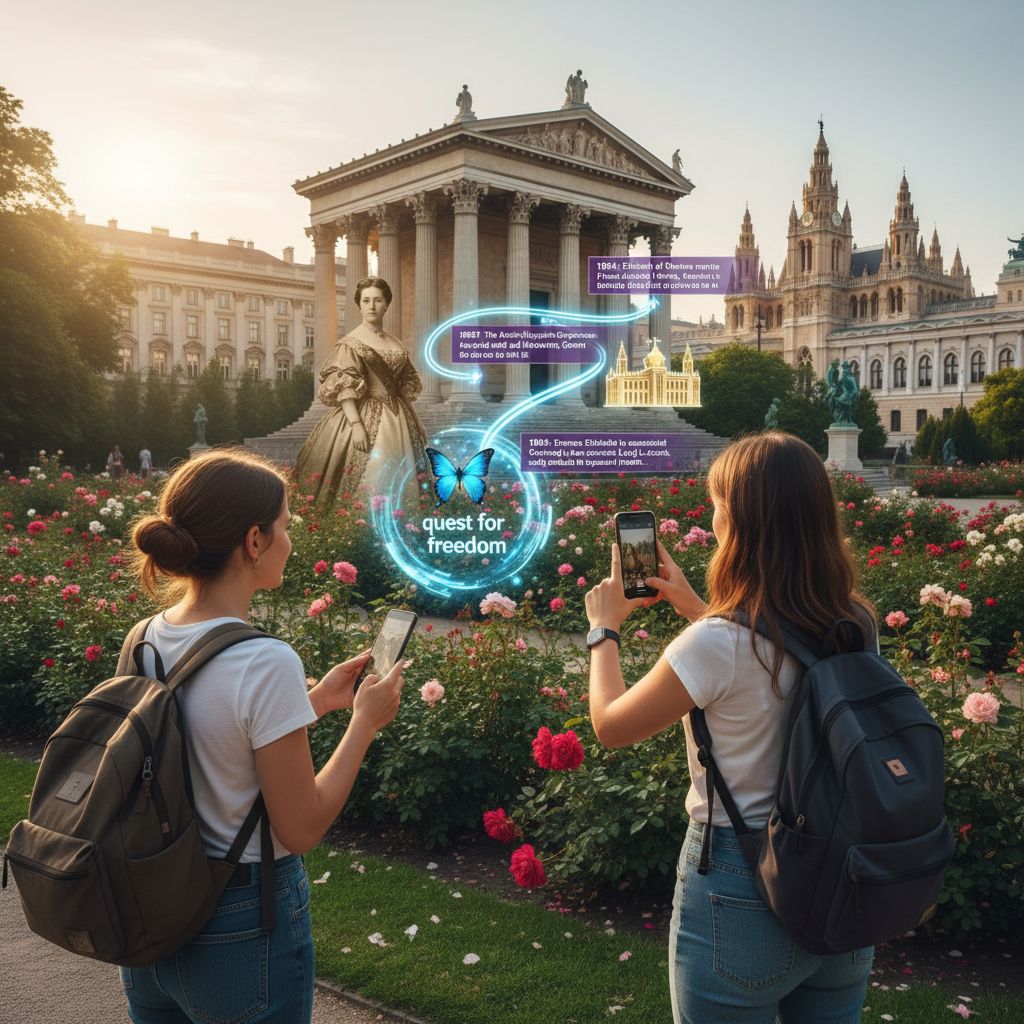
Vienna — Sisi's Shadow
Uncover the hidden intrigues and secrets of Empress Elisabeth's court as you follow a trail of clues through Vienna's imperial heart.
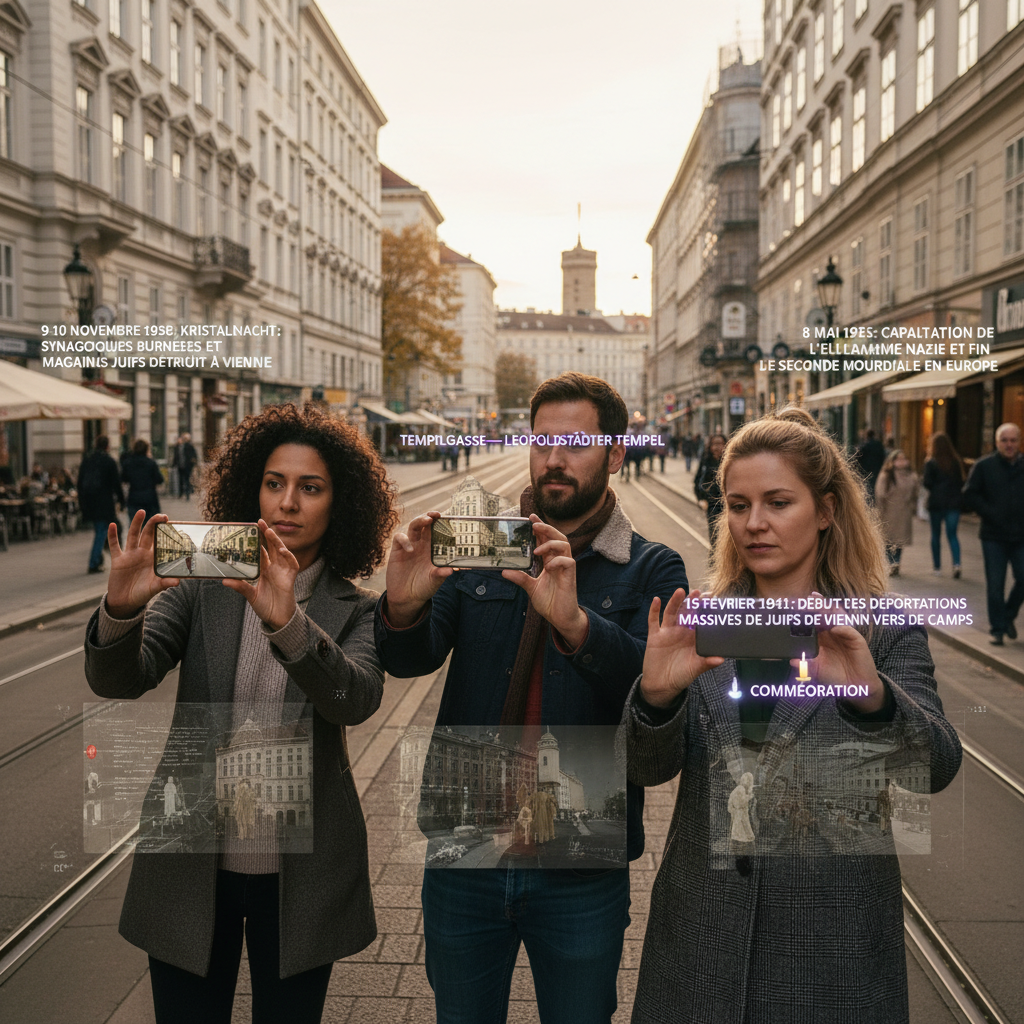
Leopoldstadt — Reconstruct the Lost Voices
Vienna, 1938: Decode the hidden testament of Leopoldstadt's vanished voices. Uncover coded messages in synagogues, parks, and streets to reconstruct their final warnings before the shadows fell.
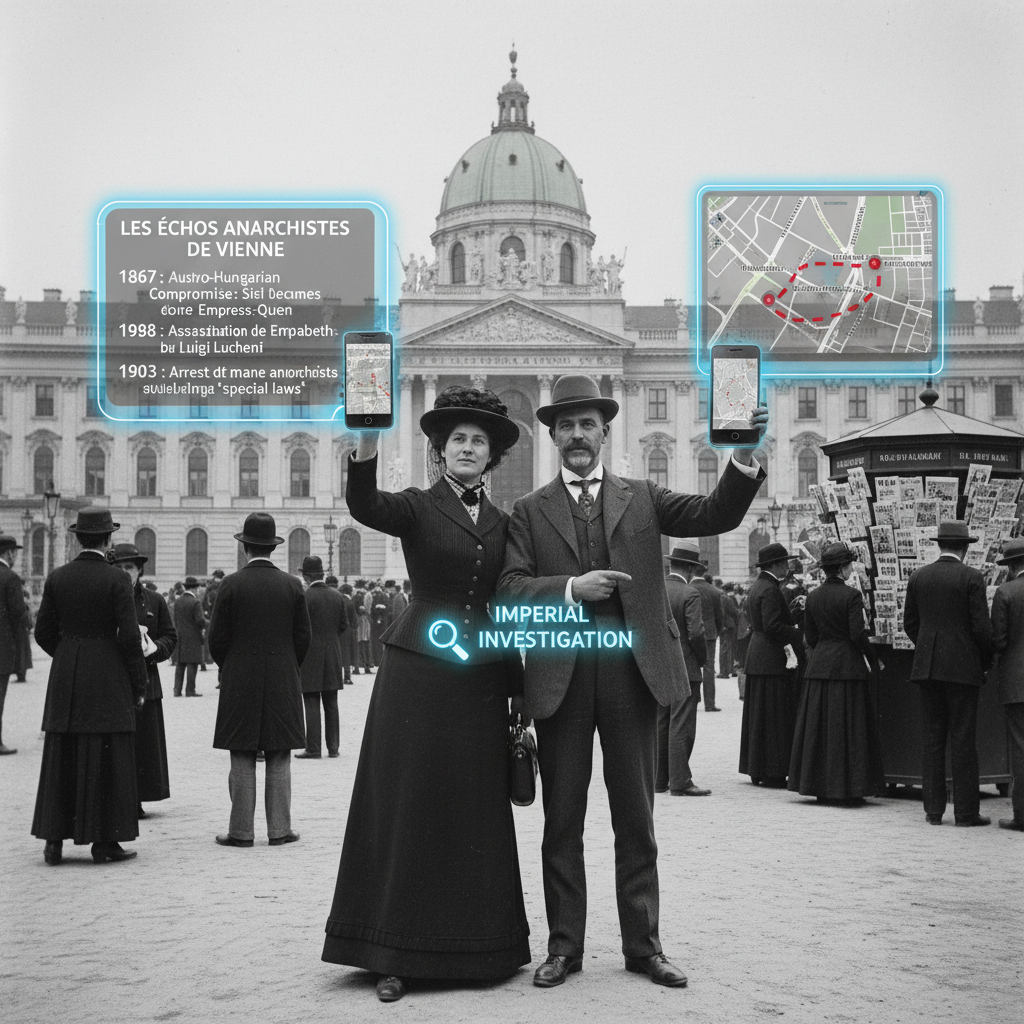
Vienna's Anarchist Echoes — Sisi's Assassination Plot
Uncover the anarchist conspiracy behind Empress Sisi's assassination in a tense, walkable mystery through Vienna's historic center.
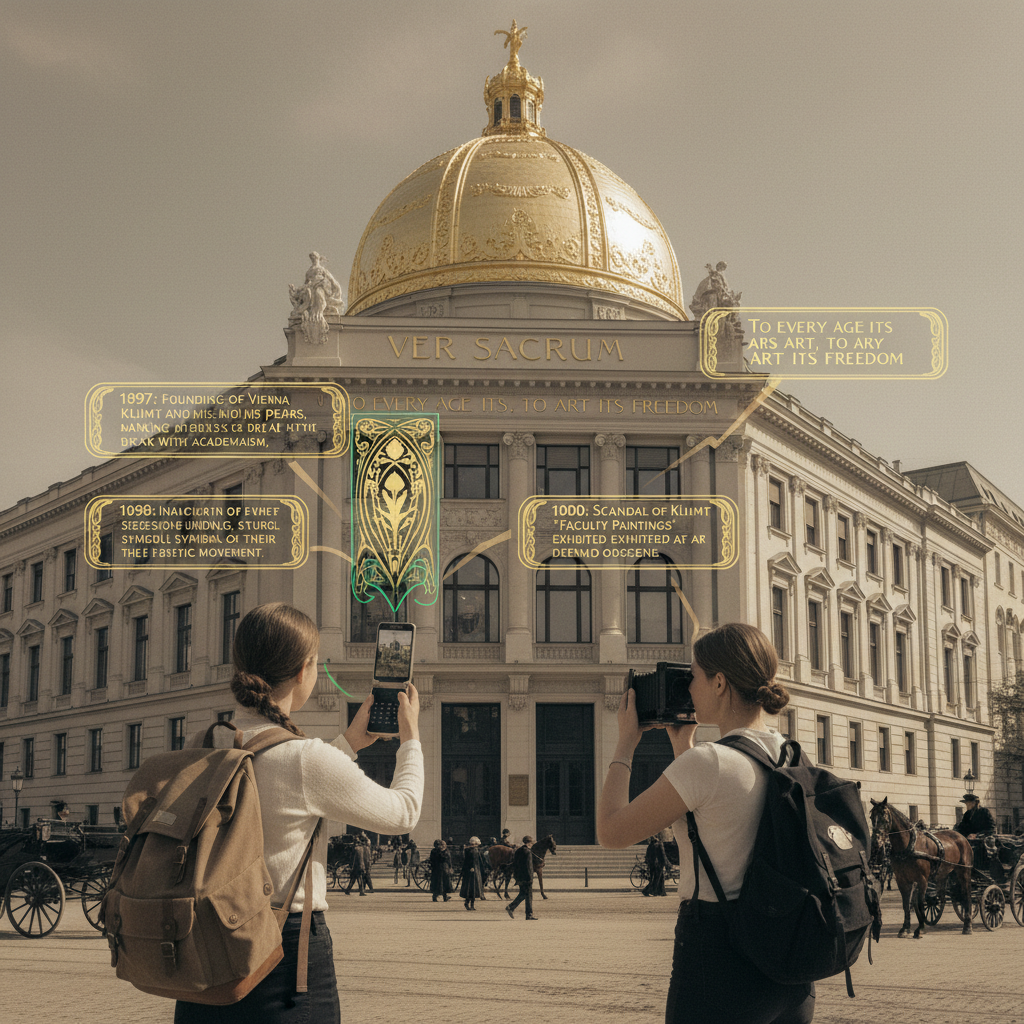
Karlsplatz — Klimt's Golden Manifesto
Uncover the conspiracy behind Klimt's stolen golden manifesto at the Secession! Decode clues across Karlsplatz to expose the scandal that rocked Vienna's art world and reclaim the lost secrets of the Secession.

Danube Canal — Double Agent Whispers
Uncover the coded whispers of a WWII double agent along Vienna's Danube Canal. Decipher clues hidden at key landmarks to expose his secret betrayal before his network vanishes forever.
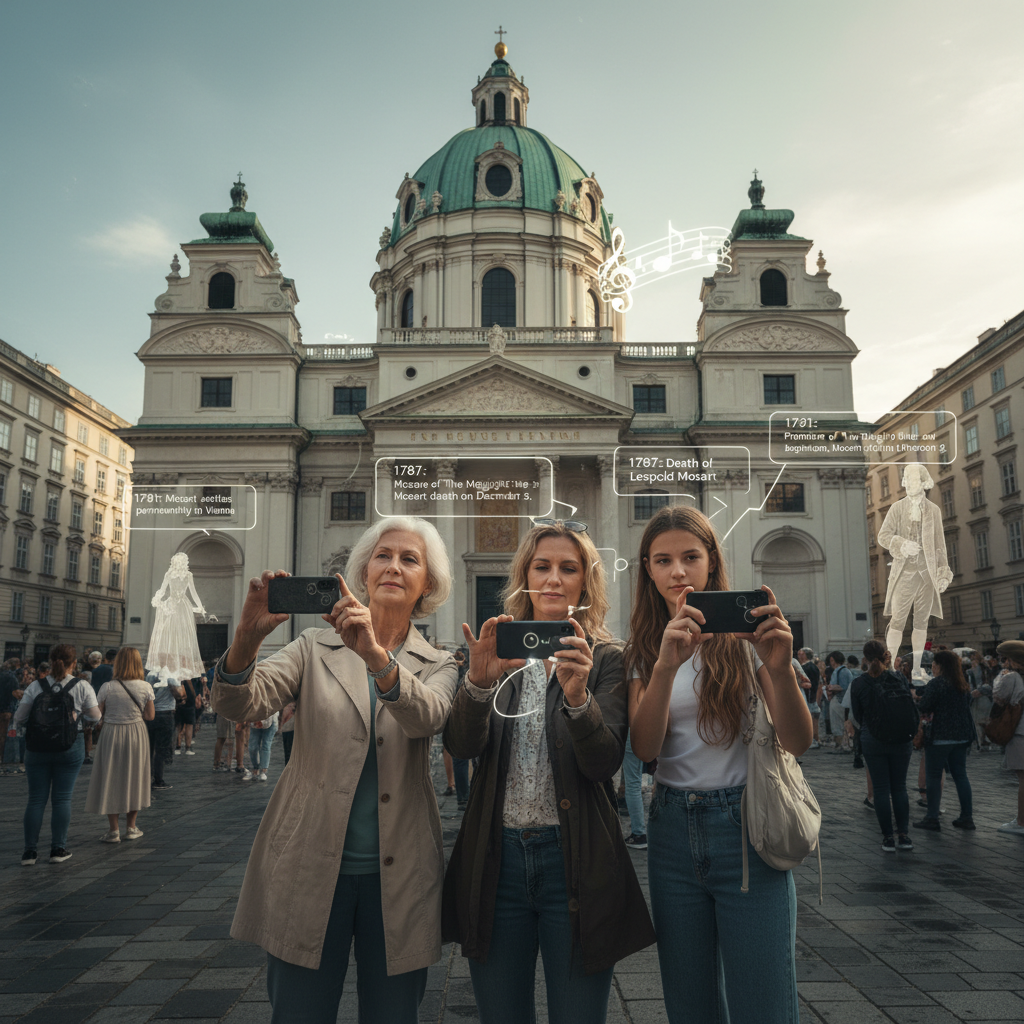
Mozart's Final Secret — Decode the Requiem
Uncover the mystery behind Mozart's unfinished Requiem. A secret commission, a hidden patron, and a race against death—decipher the coded messages woven into Vienna's sacred heart.
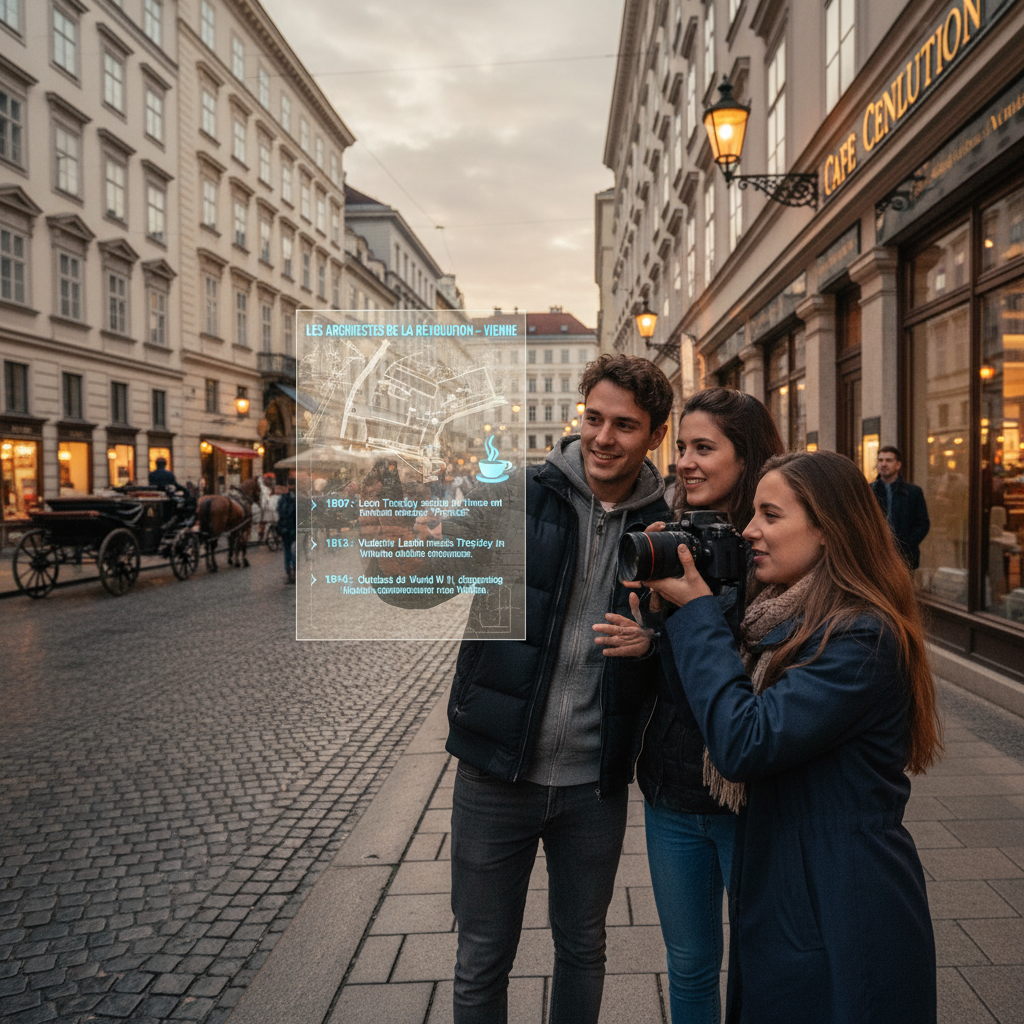
Vienna — Architects' Revolution Secrets
Uncover the hidden conspiracy among Vienna's revolutionary architects. Decode their coded manifestos etched in facades to expose the plot that shook the empire in 1913.
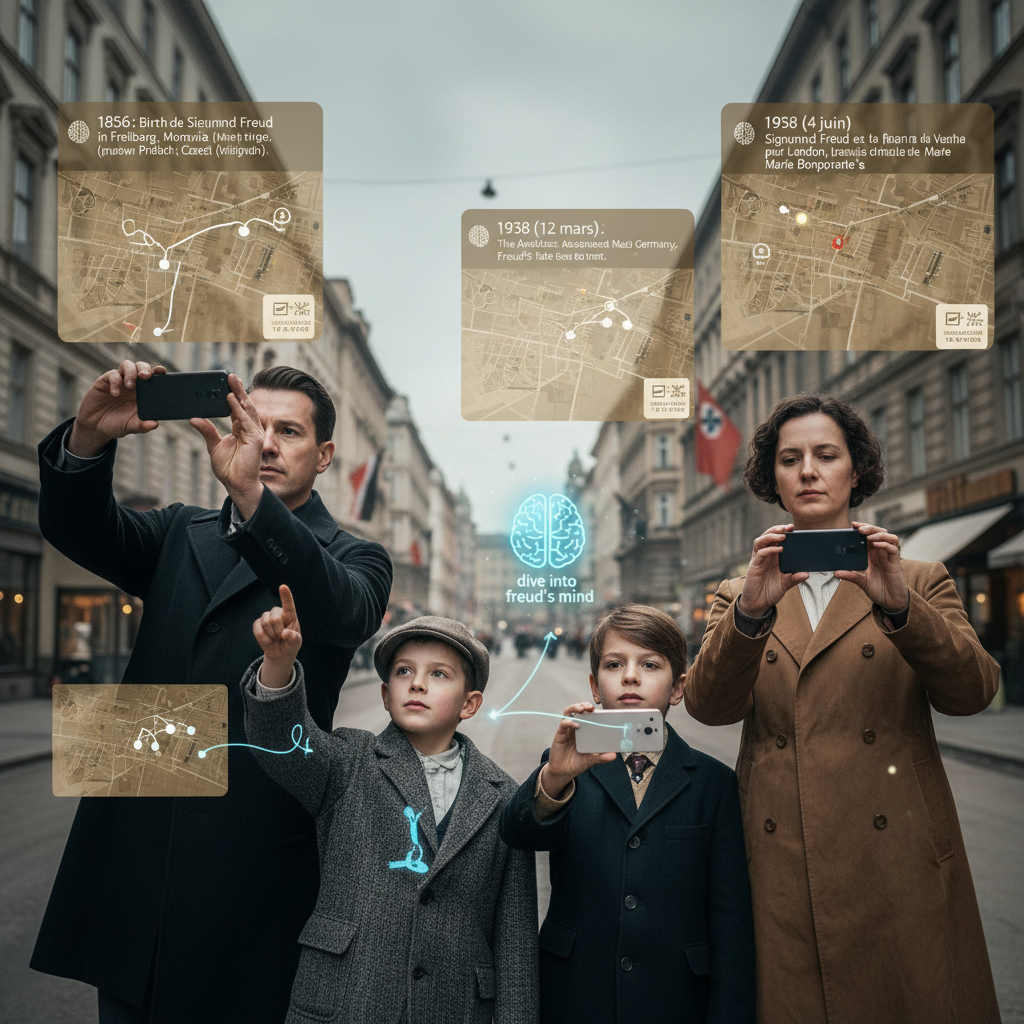
The Couch Conspiracy — Freud's Final Secret
Decipher Freud's hidden case notes before his 1938 exile. Uncover the psychological conspiracy that forced Vienna's greatest mind to flee.
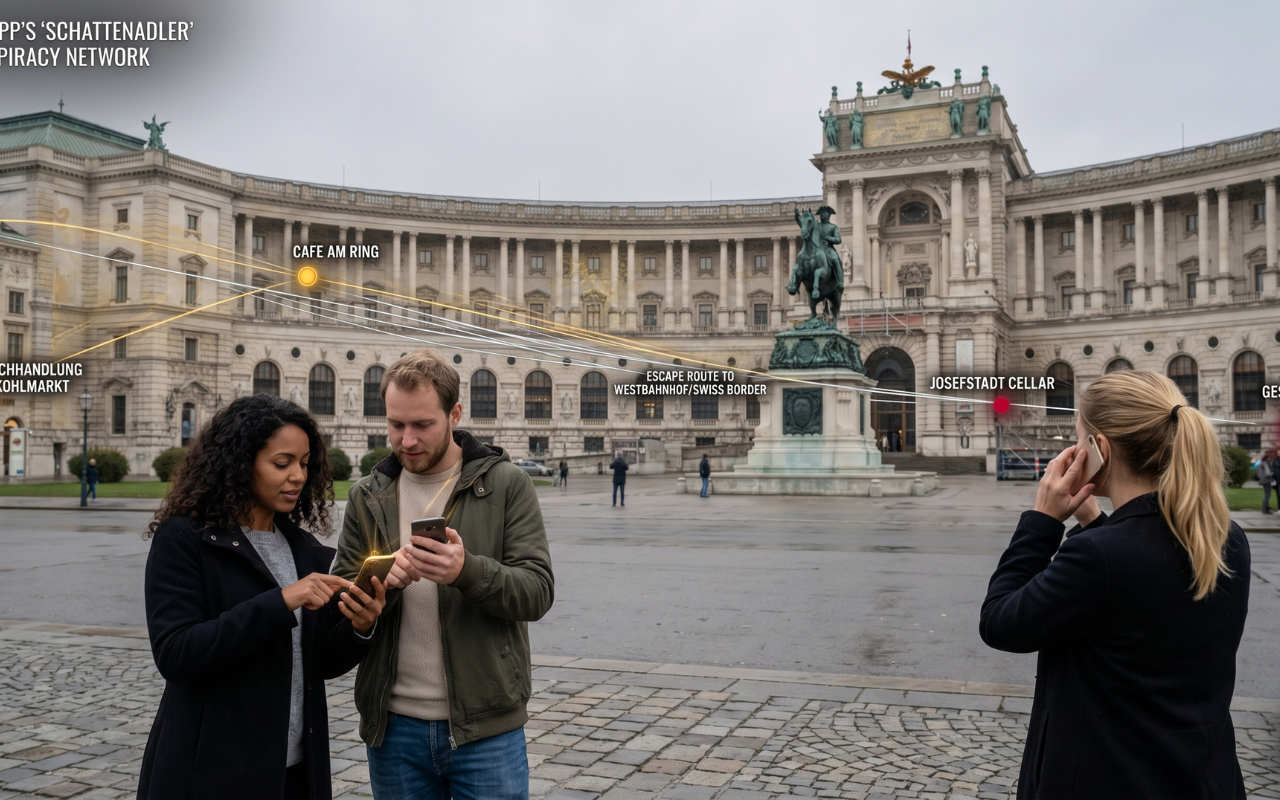
Vienna — Shadow Eagle's Treason
Vienna, 1938: Uncover the Shadow Eagle's treasonous plot. Decode clues across hidden landmarks to expose the Nazi spy ring before their sabotage strikes the heart of the city.
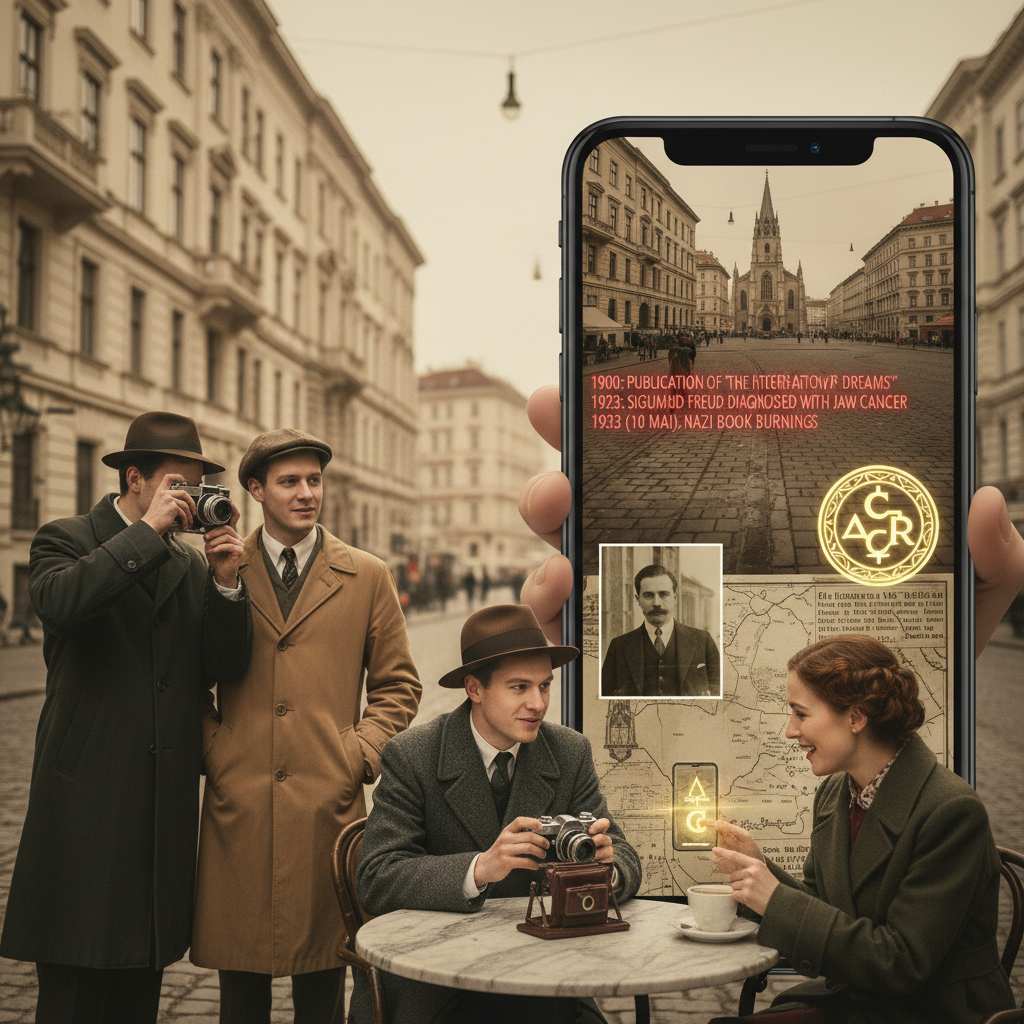
Berggasse — Freud's Shadow Secrets
Vienna 1938: Uncover the hidden codes in Freud's manuscripts before Nazis seize them forever. Decode clues across Alsergrund to save psychoanalysis' forbidden legacy.
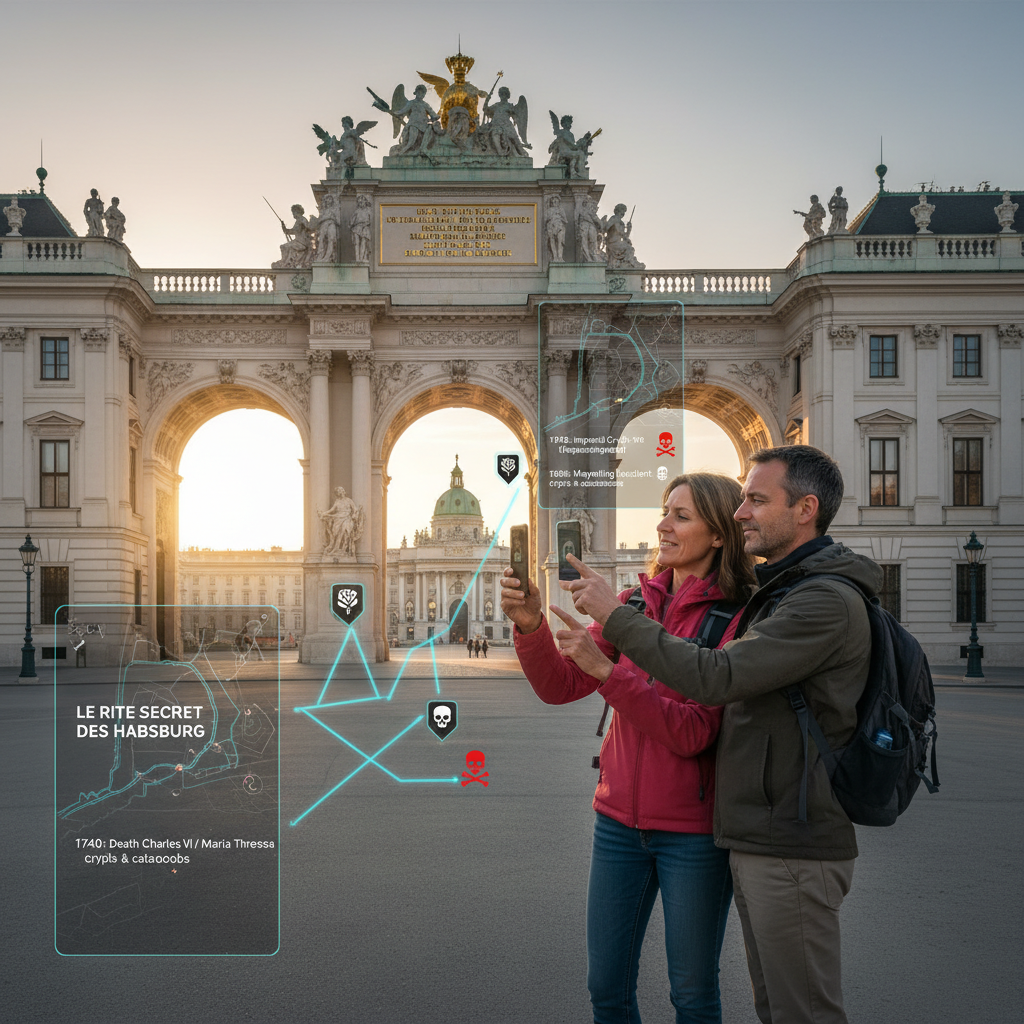
The Habsburg Sepulcher — Uncover the Dynasty's Final Secrets
Decipher the cryptic rituals and hidden conspiracies buried beneath Vienna's imperial churches. Solve the mystery of the fragmented Habsburg dynasty—bodies, hearts, and entrails scattered across three sacred vaults.
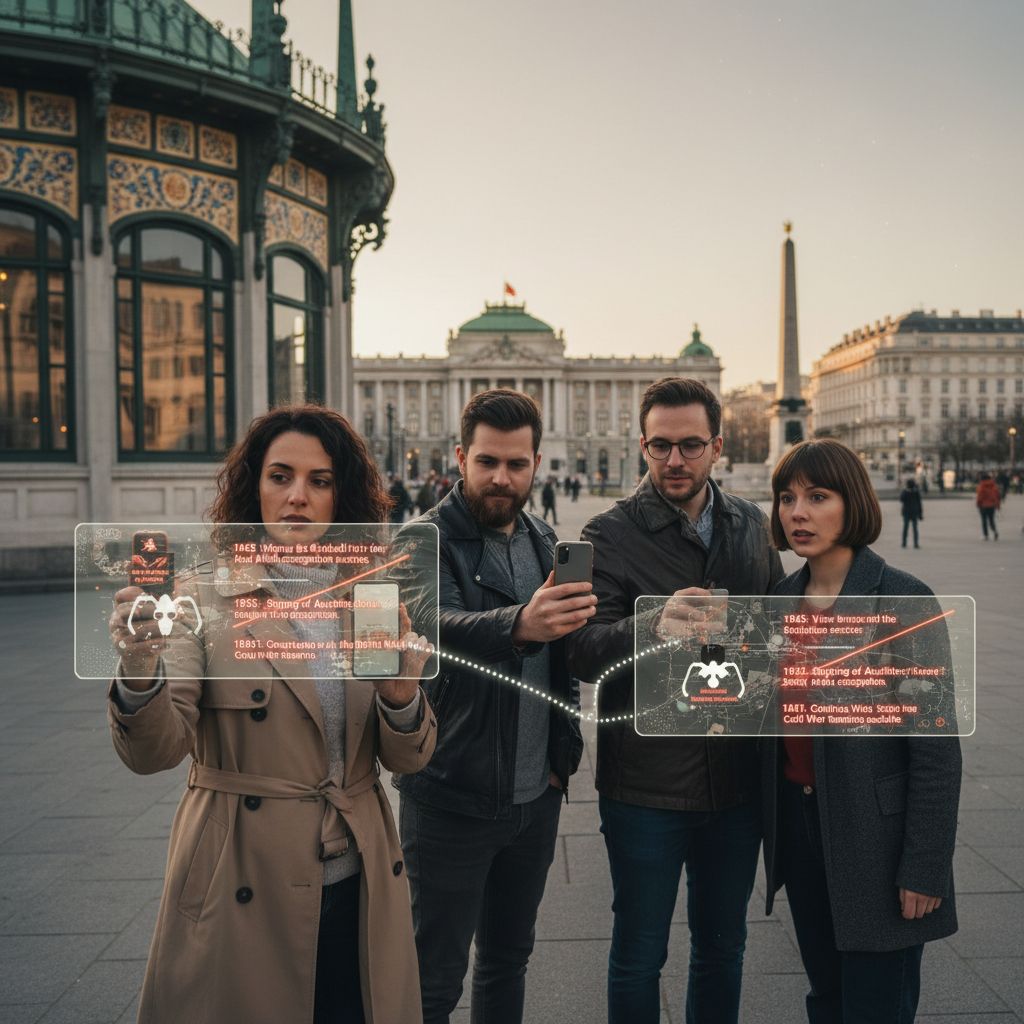
Vienna's Third Man — Shadow of the Black Market
Track down a hidden black‑market network in post‑war Vienna by solving clues tied to the real locations of 'The Third Man'.
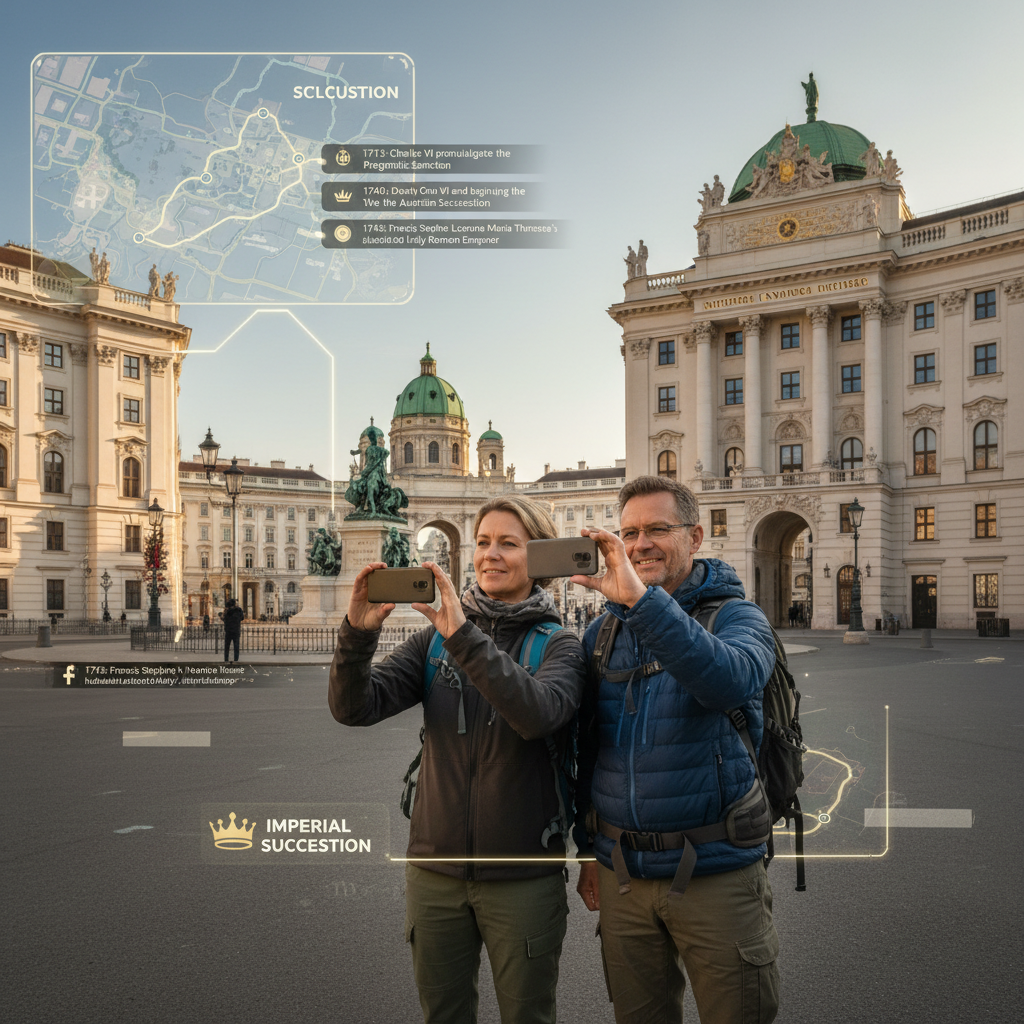
The Imperial Cipher — Decode the Habsburg Crown's Secret
Decipher the hidden codes embedded in the Imperial Treasury's most guarded artifacts. Uncover the cryptographic system Maria Theresa used to protect the Pragmatic Sanction and expose a centuries-old Habsburg conspiracy.
Unusual things to do in Vienna
For an unusual activity in Vienna, step off the beaten path and explore the city from a new angle. Beyond the classic museums, discover secret passages and unsuspected inner courtyards, witnesses to Viennese history. An original outing could be to embark on a thematic scavenger hunt that will lead you through artists' quarters or in the footsteps of famous composers, revealing anecdotes and little-known places. Or why not a visit to Vienna's urban vineyards, offering breathtaking views of the city and a local tasting away from the crowds. Vienna is full of gems for the curious seeking unique experiences.
Things to do in Vienna with kids
Vienna is a fantastic destination for a family outing, offering a multitude of activities for children and teens. Beyond amusement parks, interactive museums like the ZOOM Kindermuseum or the Technisches Museum Wien captivate young minds. But for a truly playful experience, an outdoor escape game is a formidable option. Suitable for children from 8-10 years old (accompanied), it transforms the city into a huge playground where everyone, from the youngest to the oldest, contributes to solving the puzzles. It's a fun and educational way to discover Viennese heritage while strengthening family bonds.
Vienna for couples
Vienna as a couple is a romantic experience par excellence. Imagine yourselves hand in hand, getting lost in the cobbled streets of the historic center, discovering secret passages and flowery inner courtyards. Panoramic views from Kahlenberg or the Prater Ferris Wheel offer unforgettable moments at sunset. Share a Viennese coffee in a historic establishment, attend a classical music concert, or let yourselves be carried away by the magic of a ball. For a touch of adventure, a two-person scavenger hunt will allow you to explore the city's rich heritage intimately and interactively, creating precious memories around every corner.
What to do in Vienna when it rains
If rain invites itself during your stay in Vienna, don't panic! The city is perfectly adapted for grey days. Our outdoor escape games in Vienna are designed so you can enjoy the adventure even in the rain, as approximately 80% of the route takes place under arcades, covered passages, or sheltered by buildings. You stay dry while solving puzzles. Beyond our games, the numerous museums, historic cafes where you can savor a pastry and hot chocolate, or the imperial palaces offer warm and exciting refuges to continue your Viennese exploration indoors.
Where is Vienna, and where do the routes start?
Starting points of our routes and the places they pass through.
Route starting points
- 1Minoritenplatz, Vienna
- 2Volksgarten, Vienna
- 3Taborstraße, near Taborstraße metro station
- 4Hofburg, Michaelerplatz
- 5Secession Building
- 6United Nations Plaza (UNO City)
- 7Michaelerplatz, Vienna
- 8Cafe Central, Herrengasse 14
- 9Berggasse 19, 1090 Vienna
- 10Heldenplatz, in front of the Neue Burg
- 11Berggasse 19, 1090 Vienna
- 12Hofburg, Michaelerplatz
- 13Otto Wagner Pavilion, Karlsplatz
- 14Michaelerplatz, Vienna
Places in Vienna
- Minoritenkirche
- Hofburg (Schweizerhof)
- Am Hof Square
- Freyung Square
- Schönlaterngasse
- Peterskirche
- Palais Ferstel (Herrengasse)
- St. Marx Cemetery
- Volksgarten (Theseus Temple and rose garden)
- Burgtheater (main facade)
- Rathausplatz (City Hall facade)
- Austrian Parliament (facade with Pallas Athena)
- Maria-Theresien-Platz (Maria Theresa Monument)
- Burggarten (Palmenhaus and Mozart statue)
- Augustinerkirche (facade and courtyard)
- Hofburg Palace (Sisi Museum, exterior facade)
- Taborstraße
- Tempelgasse (site of the former Leopoldstädter Tempel synagogue)
The history of Vienna
From Roman Camp to Imperial Capital
Vienna's story begins with soldiers. Around 97 AD, the Roman Empire established a military camp called Vindobona in the area that is now Vienna's city center. This camp, occupied by Legio X Gemina, guarded the Danube frontier and grew into a municipium by 212 AD. The layout of the First District's streets still shows traces of the original Roman encampment's walls and moats.
After the Romans departed in the 5th century, the region transitioned through various Germanic and Slavic tribes until the Babenberg dynasty took control of the Margraviate of Austria in 976 AD. In 1155, Vienna became the capital of this province, transforming from a frontier settlement into a ducal seat under Duke Henry II Jasomirgott. The city's location near the Austrian-Hungarian border helped it develop as a trading hub around the year 1000.
The Habsburg Legacy and Modern Transformation
The Habsburg dynasty ascended to power after the Battle of Marchfeld in 1278, ruling from Vienna for over 600 years. They shaped European politics through strategic marriages, wars, and diplomacy. By 1683, Vienna had become the capital of the Habsburg Empire and developed into a Baroque city, characterized by palace layouts like the Belvedere Palace. Many medieval buildings and churches were transformed with Baroque features during this period.
A significant transformation occurred in the mid-19th century under Emperor Franz Joseph I. In 1857, the city's inner ramparts were razed, and the Ringstraße boulevard was built in their place, completed in 1865. This avenue became lined with public buildings and parks, establishing the "Ringstraße Style" or Historicism that defines much of Vienna's architecture today. By 1910, Vienna's population had grown to over 2 million. After World War I, Vienna became the capital of the Republic of Austria, and despite damage during World War II, much of its historic core was reconstructed, preserving its imperial appearance.
What to see in Vienna
- Minoritenkirche — This early Gothic church, dating back to the 13th century, has an unfinished tower and houses a mosaic copy of Leonardo da Vinci's "The Last Supper."
- Hofburg (Schweizerhof) — The oldest part of the Hofburg Palace complex, the Schweizerhof (Swiss Courtyard) dates back to the 13th century and contains the Imperial Treasury, which displays the crown jewels of the Holy Roman Empire and the Austrian Empire.
- Am Hof Square — One of Vienna's oldest squares, it was once a Roman military camp and later the residence of Babenberg dukes. It features the Baroque Kirche am Hof, from whose balcony the end of the Holy Roman Empire was declared in 1806, and a Marian Column erected in gratitude for Vienna being spared during the Thirty Years' War.
- Freyung Square — This triangular public square, historically known as "Bei den Schotten" (at the Scots) due to the Schottenstift monastery founded by Irish monks in 1155, was once a market square and a place of asylum. It is bordered by several palaces, including Palais Ferstel, and features the Austriabrunnen, a fountain with allegorical statues of the Habsburg Empire's four main rivers.
- Schönlaterngasse — A winding alley with medieval character and old houses.
- Peterskirche — This Baroque church, completed in 1733, has a dome with frescoes and stucco work.
- Palais Ferstel (Herrengasse) — Constructed between 1856 and 1860 in Neo-Renaissance style, this building originally housed the Austrian National Bank and stock exchange. It also contains Café Central.
- St. Marx Cemetery — This cemetery, open since 1784, is the burial place of Wolfgang Amadeus Mozart, though his exact grave location is unknown. It is a site with Biedermeier-era gravestones.
- Volksgarten (Theseus Temple and rose garden) — A public park created between 1820 and 1823, it features a rose garden with over 3,000 rose bushes. The Theseus Temple, a replica of the Temple of Hephaestus in Athens, was built to house Antonio Canova's statue "Theseus Slaying the Centaur," which is now in the Kunsthistorisches Museum.
- Burgtheater (main facade) — One of the largest and oldest theaters in the world, the Burgtheater was built between 1874 and 1888 in Neo-Renaissance style. Its facade on the Ringstraße features sculptures representing the arts, including Apollo and the muses of Tragedy and Comedy.
- Rathausplatz (City Hall facade) — The Rathaus, Vienna's City Hall, is a Neo-Gothic building completed in 1883. Its facade and spire are a feature of the Ringstraße, and the square hosts events and markets.
- Austrian Parliament (facade with Pallas Athena) — Designed in the Greek Revival style, the Parliament building evokes ancient Greek democracy. The Pallas Athena Fountain, completed in 1902, stands in front, depicting the goddess of wisdom, Pallas Athena, with the goddess of victory, Nike.
When to visit Vienna
The best times to visit Vienna are late April to early June and September to mid-October. During these periods, temperatures are mild (11-20°C), gardens are in bloom or displaying autumn colors, and the cultural calendar is active. May and September offer comfortable weather and fewer crowds than summer.
Avoid late July to mid-August if possible, as it is often hot, crowded, and expensive, with some major cultural institutions on summer break. November, before the Christmas markets open, can be gloomy but is also one of the cheapest times to visit.
Getting around Vienna
Vienna International Airport (VIE) is 18 kilometers (11 miles) southeast of the city center. You can reach the city via the City Airport Train (CAT), express trains (S-Bahn), or buses.
Vienna's historic center is compact and pedestrian-friendly, suitable for exploring on foot. For longer distances or to reach attractions outside the First District, Vienna has a public transport system, including trams, buses, and the U-Bahn (subway). Tickets can be purchased at stations or from vending machines.
Parking in the city center can be difficult and expensive. It is often recommended to use public transport or park at a Park & Ride facility on the outskirts of the city and then take public transport in. Many areas in the city center are pedestrian zones.
Vienna hosts various markets, including seasonal Christmas and Easter markets on squares like Am Hof and Freyung. Organic food and local produce markets can also be found on Freyung.
Things you probably do not know about Vienna
Verified details most visitors walk straight past.
- Am Hof Square
- What momentous historical declaration was made from a balcony on Am Hof Square? In 1806, after Napoleon's occupation of Vienna, the end of the Holy Roman Empire was officially declared from the balcony of the Kirche am Hof.
- Freyung Square
- Why is Freyung Square sometimes called the 'freeing' square? The name Freyung comes from the Old German word "frey," meaning "free." This is because the Schottenstift monastery, founded there in the 12th century by Irish monks, had the privilege of granting asylum to fugitives, making the square a sanctuary.
- Palais Ferstel (Herrengasse)
- What unusual feature did Palais Ferstel boast when it was first built in the mid-17th century? When the original building that would become Palais Ferstel was constructed in the mid-17th century, it caused a sensation by being the first private Viennese house to have an installed water pipe.
- Volksgarten (Theseus Temple)
- What was the original purpose of the Theseus Temple in the Volksgarten, and where is its main artwork now? The Theseus Temple, built between 1820 and 1823, was specifically designed to house Antonio Canova's marble sculpture "Theseus Slaying the Centaur." However, the statue was moved to the Kunsthistorisches Museum in 1890 due to dampness in the temple's crypt.
- Burgtheater (main facade)
- Despite its grand design, what significant flaw did the Burgtheater initially have after its 1888 opening? Less than ten years after its grand opening in 1888, the Burgtheater had to be temporarily closed because its acoustics were dreadful, and many seats offered no view of the stage.
- Austrian Parliament (Pallas Athena Fountain)
- What humorous local interpretation exists regarding the Pallas Athena statue in front of the Parliament? A popular, humorous anecdote claims that the Pallas Athena statue turns her back on the Parliament, which is often interpreted as a commentary on political decision-making.
Questions about visiting Vienna
How many days are enough to visit Vienna?
For first-time visitors, three days in Vienna is generally considered ideal to see the main landmarks, visit key museums like the Kunsthistorisches Museum and Belvedere Palace, and experience the city's café culture without rushing. A two-day trip covers the imperial core and major sights, while four to five days allow for deeper exploration and day trips.
What are the best ways to get around Vienna?
Vienna has an excellent public transport system, including the U-Bahn (subway), trams, and buses, which are fast and efficient for navigating the city. The historic center is very walkable. For attractions further afield, public transport is recommended, or you can consider using Park & Ride facilities if arriving by car.
Which neighborhoods are best to explore in Vienna?
The Innere Stadt (First District) is Vienna's historic core, home to many major sights. Beyond that, areas like MuseumsQuartier offer cultural institutions, while Neubau is known for its concept stores and boutiques. Exploring districts outside the center by tram can reveal the city's true scale and unique character.
What is the typical budget for a trip to Vienna?
Vienna can suit various budgets. Accommodation rates are highest during peak season (July, August, December) and major trade fairs. Prices are generally lower in the low shoulder seasons (April, mid-October to mid-November, mid-January to February) and lowest in early to mid-November and late January. Expect to pay more for cultural events and dining in central tourist areas.
Is Vienna a good destination for families with children?
Vienna is a family-friendly city. June or September offer a good mix of outdoor activity weather and manageable crowds for families. The city has parks like the Prater with its amusement park, Schönbrunn Palace with its gardens and zoo, and various museums that cater to younger visitors.
What is Vienna like in winter?
Winter in Vienna, from December to February, transforms the city, especially with its Christmas markets from mid-November to December 23rd. January and February are colder but offer the lowest prices for hotels, uncrowded museums, and the peak of the legendary Ball Season. While cold, the indoor cultural scene is active.
Frequently asked questions
How much does an outdoor escape game cost in Vienna?
The price of an outdoor escape game in Vienna is very affordable and designed to be shared. Expect to pay around €12 per team for the entire game. This single price covers access to the scenario and all puzzles, regardless of your group size (usually 2 to 6 people). It's an excellent alternative to more expensive activities, offering hours of entertainment and city discovery at a fixed price. Be sure to check the specific details of each game to confirm the exact price and booking conditions, but the base remains excellent value for money for a group activity.
Is it suitable for children / families?
Absolutely! Outdoor escape games are a fantastic activity for families in Vienna. Most of our scenarios are designed to be accessible and fun for all ages. We generally recommend participation from 8-10 years old, with at least one adult present to guide the younger ones. It's a playful and interactive way to discover the city, where each family member can contribute to solving the puzzles. Children love the treasure hunt aspect, and parents appreciate the cultural side and the walk. It's a great way to create memories together.
How long does an escape game in Vienna last?
The duration of an outdoor escape game in Vienna generally varies between 1h30 and 2h30. This depends on the chosen scenario, your team's speed in solving puzzles, and, of course, your desire to take breaks to admire monuments or enjoy a Viennese coffee along the way! The advantage of our games is that you manage your time. There's no strict time constraint; you can progress at your own pace, make stops, and even resume the game later if you wish. It's ideal for a flexible and personalized discovery of the city.
Do I need to book in advance?
No, one of the great advantages of our outdoor escape games in Vienna is that it's generally not necessary to book in advance. You can start your adventure whenever you want, directly from your smartphone. Simply go to our website, choose the scenario you like, pay the amount (around €12 per team), and you'll instantly receive the instructions to start the game. This flexibility is perfect for spontaneous travelers or those who prefer to organize their day at the last minute. It's total freedom to explore Vienna at your leisure!
What to visit in Vienna beyond escape games?
Vienna is full of treasures to explore beyond our games. Don't miss the majestic Schönbrunn Palace and its imperial gardens, the Hofburg residence with the Sisi Museum, and the impressive St. Stephen's Cathedral in the heart of the city. Stroll along the Ringstrasse to admire grandiose buildings like the State Opera or the Parliament. For art lovers, the Belvedere houses Klimt's famous 'Kiss,' while the MuseumsQuartier offers a concentration of modern museums. And of course, savor a traditional Viennese coffee in one of the city's many historic cafes.
What is the best season to visit Vienna?
Vienna is beautiful in every season, but each offers a different experience. Spring (April-May) and autumn (September-October) are often considered the best periods, with pleasant temperatures, fewer crowds, and parks in bloom or adorned with shimmering colors. Summer (June-August) is ideal for enjoying terraces and outdoor events, although it can be hot. Winter (November-March) is magical with its glittering Christmas markets and the city's enchanting atmosphere under the snow. Our escape games are playable all year round, although rainy weather can make some puzzles more challenging to handle.
More cities in Austria
Mayerling
The tragic secret of the Habsburg empire
Eisenstadt
Esterházy Palace, jewel of Burgenland
Melk
The baroque abbey, jewel of the Wachau
Mauthausen
On the Danube's banks, where history meets stone.
Graz
UNESCO city, where medieval history meets modern design
Linz
Between Danube, modern art and Austrian history
Admont
In the heart of the Alps, discover an ancient abbey and its library
Friesach
In the heart of medieval Carinthia
Activities to discover nearby
Guided tours, skip-the-line tickets and local experiences to book in advance.
💡 Optional booking — you can also buy on-site. All links open in a new window, your OddballTrip visit stays preserved.