St AlbansOutdoor Escape Game & Treasure Hunt
Roman heritage and majestic abbey
How about discovering St Albans in a completely new and immersive way? This charming city, steeped in fascinating Roman history and dominated by its majestic Cathedral, offers much more than just traditional visits. For an unusual and memorable activity, embark on an outdoor escape game! Imagine transforming the historic streets into a giant playground, where every corner, from the ancient Roman Theatre of Verulamium to the cobbled alleys leading to the famous Clock Tower, becomes a clue. It's a true life-sized treasure hunt, a captivating scavenger hunt that invites you to solve puzzles while exploring the city's rich heritage. Whether you're with family, friends, or as a couple, this adventure promises laughter, discoveries, and a unique perspective on St Albans, far from the beaten path.
Unusual things to do in St Albans
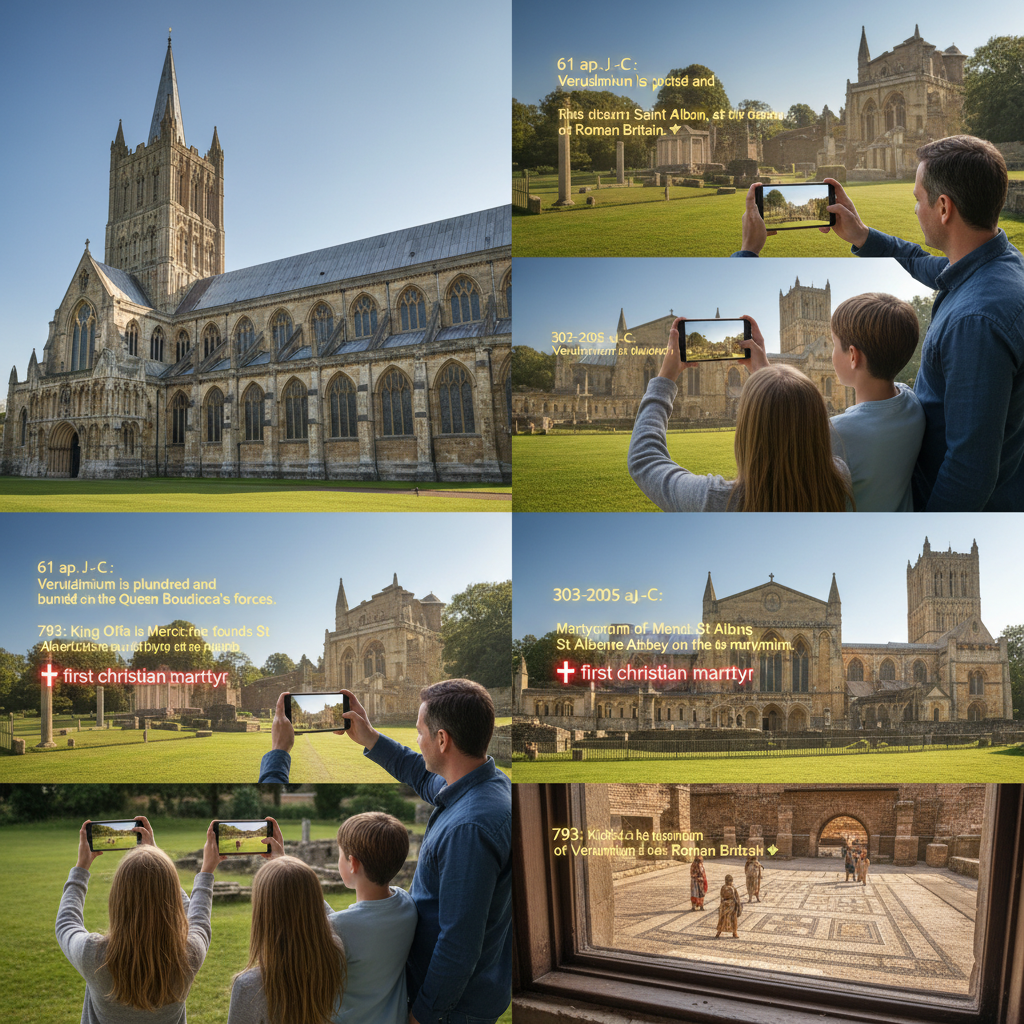
For an unusual activity in St Albans, step off the beaten path and dive into the city's Roman history in a unique way. Beyond museums, imagine solving outdoor mysteries right where the Romans once walked. It's an original outing that combines urban exploration and puzzle-solving. For example, you could decipher codes inspired by local legends while admiring the remains of Verulamium, or follow a trail that leads you to hidden anecdotes around the magnificent St Albans Cathedral. A fun and surprising way to rediscover the city.
Things to do in St Albans with kids
St Albans is full of activities for a memorable family day out. Forget screens and embark on an adventure that will delight young and old alike. A scavenger hunt or treasure hunt through the historic streets is an excellent option for children and teens to have fun while learning. Imagine exploring Verulamium Park, solving puzzles, and discovering fun facts about the Romans, all as a team. It's a playful activity that stimulates curiosity and teamwork, suitable for children aged 8 and up, where everyone can contribute to the success of the mission.
St Albans for couples
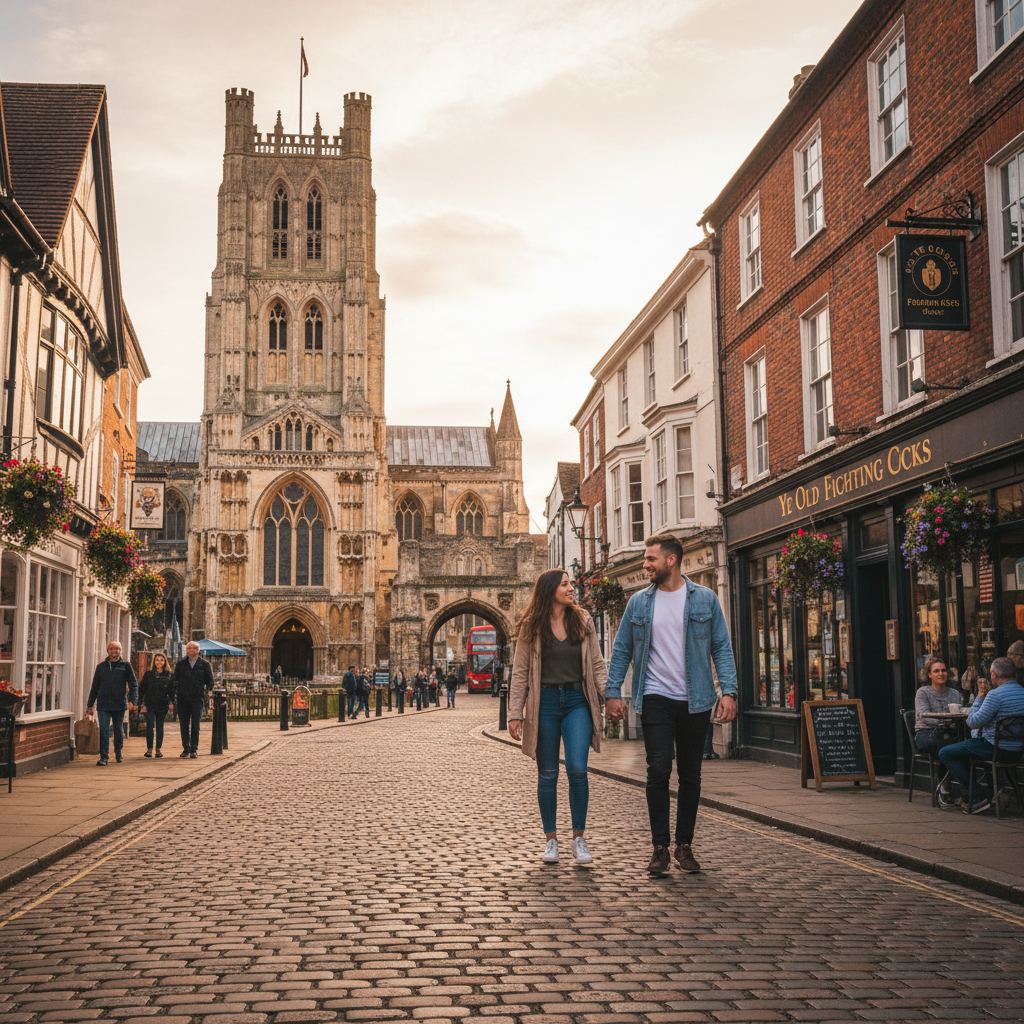
For a romantic getaway in St Albans, let yourself be charmed by its timeless atmosphere. Stroll hand-in-hand through the cobbled streets, discover the city's well-kept secrets, and admire the historic architecture. An outdoor escape game for couples is an original way to share a special moment, solving puzzles that will lead you from the majestic Cathedral gardens to breathtaking views from the Clock Tower. It's an experience that combines cultural discovery and intimacy, perfect for creating unique memories and strengthening your bond, away from the daily hustle and bustle.
What to do in St Albans when it rains
Even if the weather in St Albans is unpredictable, don't worry! Our outdoor escape game is designed to minimize the inconvenience of rain. Approximately 80% of the route takes place under arcades, covered passages, or near shelters, allowing you to play comfortably without getting soaked. Think of the mysterious atmosphere that rain can add to your treasure hunt! It's a perfect opportunity to enjoy a fun activity while staying relatively dry and exploring the city from a different angle.
Where is St Albans, and where do the routes start?
Starting points of our routes and the places they pass through.
Route starting points
Places in St Albans
- West Front of St Albans Cathedral
- Remains of Verulamium's defensive walls (near St Michael's Bridge)
- Roman Theatre of Verulamium (exterior, public viewing area)
- Hypocaust Mosaic site in Verulamium Park (visible from outside)
- Former Roman Forum area
- Abbey Gateway
- St Albans Clock Tower
- Abbey Gardens (viewpoint towards the Cathedral)
The history of St Albans
From Roman Verulamium to Medieval Powerhouse
St Albans began as Verlamion, a Celtic settlement of the Catuvellauni tribe. The Romans established Verulamium around 50 AD. It became a significant town, granted the rank of municipium and one of the largest in Roman Britain. In 61 AD, Boudicca's revolt led to Verulamium being sacked and burned. The city recovered, doubling in size by 140 AD, and featured a forum, basilica, public baths, temples, and a theatre. City walls, enclosing 80 hectares, were built around 275 AD.
The city is named after Saint Alban, believed to be Britain's first Christian martyr, executed in the 3rd or 4th century during the Roman period for sheltering a Christian priest. A monastery was founded on the hill where he was thought to have died, which became St Albans Abbey. After the Norman Conquest in 1066, Paul of Caen, the first Norman abbot, began rebuilding the Abbey in 1077. He used bricks and tiles salvaged from the ruins of Roman Verulamium. This project was completed in 1115.
Civic Independence and Conflict
During the medieval period, St Albans Abbey became England's premier Benedictine abbey and a center of learning. The townspeople sought independence from the Abbey's control. This tension is evident in the construction of the St Albans Clock Tower between 1403 and 1412. This Grade I listed belfry was built by the townspeople as a symbol of civic pride and a protest against the Abbey's power to regulate time-keeping. The Clock Tower's bell, Gabriel, rang for the First Battle of St Albans in 1455, a key event in the Wars of the Roses. St Albans was the site of two major battles during the Wars of the Roses, in 1455 and 1461. The Abbey was dissolved in 1539, and the church was purchased by the townspeople in 1553. It became a cathedral in 1877.
What to see in St Albans
- St Albans Cathedral — See the Gothic architecture, a blend of styles spanning centuries, with parts dating back to the Norman period. Roman bricks were used in its construction.
- Remains of Verulamium's defensive walls (near St Michael's Bridge) — Walk alongside sections of the original Roman city walls, built around 275 AD.
- Roman Theatre of Verulamium (exterior, public viewing area) — See the only visible Roman theatre with a stage in Britain, built around 140 AD. This arena could seat 2000 spectators by 300 AD.
- Hypocaust Mosaic site in Verulamium Park (visible from outside) — See the preserved remains of an 1,800-year-old hypocaust (underfloor heating system) and its mosaic floor, discovered in the 1930s.
- Former Roman Forum area, Verulamium Park (near the obelisk) — Stand in what was the center of Roman Verulamium, where the forum and basilica opened in 79 AD, serving as the city's administrative and commercial hub.
- Abbey Gateway, St Albans — This stone gateway, built in 1365, is one of the few surviving monastic buildings of the original St Albans Abbey. It was later used as a prison and is now part of St Albans School.
- St Albans Clock Tower — Climb the 93 steps of this medieval belfry, completed by 1405, for views across the city, including the Cathedral and Verulamium. It stands as a testament to the town's assertion of independence from the Abbey.
When to visit St Albans
The period from May through September offers pleasant weather for outdoor exploration. July is the warmest month, with average daytime highs around 23°C (73°F) and around 7.3 hours of sunshine per day. August is the wettest month, so expect rain. For fewer crowds, consider visiting between December and March, though temperatures will be cooler. January is the coldest month at an average high of 8°C (46°F). Avoid January and February if you prefer warmer weather and longer daylight hours.
Getting around St Albans
St Albans is accessible by train. St Albans City station is about 20 minutes from London St Pancras International via the Thameslink line. St Albans Abbey station links to Watford Junction via the Abbey Line. London Luton Airport and Gatwick Airport are directly linked to St Albans by the Bedford-Brighton railway route. Heathrow Airport is accessible via a direct bus service (service 724).
Downtown St Albans is walkable, with most attractions, shops, and restaurants within a five-minute walk of central parking. Several car parks are available in the city center, including The Maltings, Christopher Place, Drovers Way, and Russell Avenue. Limited on-street parking is also available. St Albans hosts a Charter Market every Wednesday and Saturday on St Peter's Street. A Farmers Market takes place on the second Sunday of each month, and a Vintage Market on the third Sunday.
Things you probably do not know about St Albans
Verified details most visitors walk straight past.
- St Albans Cathedral
- Did you know that parts of St Albans Cathedral were built using materials from a much older city? The first Norman abbot, Paul of Caen, began rebuilding the Abbey in 1077, and for its construction, he repurposed bricks and tiles salvaged from the ruins of the Roman city of Verulamium.
- St Albans Clock Tower
- Why did the townspeople of St Albans build their own clock tower, seemingly in defiance of the powerful Abbey? The Clock Tower, completed by 1405, was built by the townspeople as a symbol of their civic independence and a protest against the St Albans Abbey's control over time-keeping in the town. It was strategically placed on higher ground, facing the Abbey.
- Roman Theatre of Verulamium
- The Roman Theatre in Verulamium isn't quite like other Roman theatres you might imagine. Unlike typical Roman amphitheatres, the Roman Theatre of Verulamium, built around 140 AD, is unique in Britain for being a theatre with a stage. It was used for a variety of events, from religious processions and dancing to wrestling and wild beast shows.
- Abbey Gateway
- This imposing medieval gateway has served more than one purpose over the centuries. The Abbey Gateway, built in 1365, was originally the entrance to St Albans Abbey. After the Abbey's dissolution, it was repurposed as a prison and has been part of St Albans School since 1871.
- Fishpool Street
- One of St Albans' oldest streets holds a subtle architectural secret. Fishpool Street, part of St Michael's Village, dates back to before 793 AD. If you look closely at some of the houses near the St Michael's end, you might spot an original Tudor rose detail.
Questions about visiting St Albans
How long should I plan to stay in St Albans?
A day trip allows you to see the main historical sites like the Cathedral and Verulamium Park. For a more in-depth exploration, including the museums, markets, and neighborhoods, consider a weekend stay of two to three days.
What are the best ways to get around St Albans?
St Albans city center is compact and walkable, with most attractions within a short distance. Public buses operate throughout the district, and local taxis are also available.
Which neighborhoods are worth exploring in St Albans?
The Historic Core around the Cathedral and Market Place offers medieval and Georgian architecture. St Michael's Village, with its St Michael's Church and Fishpool Street, provides a quieter experience. Clarence and Verulam feature Victorian and Edwardian villas.
What is the best time of year to visit St Albans?
The most comfortable weather for exploring is from May to September, with July being the warmest month. For fewer crowds, consider visiting between December and March, though temperatures will be cooler.
What can I expect regarding budget for a visit to St Albans?
St Albans offers options for various budgets. Many historical sites like the Roman Theatre and Hypocaust are free to visit. Food and accommodation range from market stalls and pubs to more upscale restaurants and hotels. Parking in city center car parks typically costs a few pounds per hour.
Is St Albans a good destination for families with children?
Yes, St Albans is family-friendly. Verulamium Park offers open spaces, the Roman Theatre sparks imagination, and the Verulamium Museum has engaging exhibits. The Cathedral also offers history activities for children.
Frequently asked questions
How much does an outdoor escape game cost in St Albans?
An outdoor escape game in St Albans is a very affordable activity for a memorable experience. The price is usually €12 per team, which is particularly advantageous if you play with several people. This unique price per team, not per person, allows you to enjoy a captivating adventure without breaking the bank. It's an excellent option for families, friends, or couples looking for an original and economical outing. Consider the per-person investment: the more people you have, the less it costs per person, making the experience even more accessible.
Is it suitable for children / families?
Absolutely! Our outdoor escape games in St Albans are perfectly suited for families and children. The puzzles are designed to be accessible to everyone, with a flexible difficulty level to appeal to players of all ages. We generally recommend a minimum age of 8 for children to fully participate and understand the challenges. It's a fantastic activity to stimulate critical thinking, communication, and teamwork within the family. Get ready to share laughter and guaranteed moments of togetherness!
How long does an escape game in St Albans last?
The duration of an outdoor escape game in St Albans typically ranges between 1 hour 30 minutes and 2 hours 30 minutes. This, of course, depends on your pace, your observation skills, and how quickly your team solves the puzzles. The advantage is that you play at your own tempo, without fixed time constraints. You can take breaks to admire monuments, grab a coffee, or simply enjoy the city's atmosphere. It's a flexible adventure that adapts to your desires and energy of the moment.
Do I need to book in advance?
For most of our outdoor escape games in St Albans, booking is not strictly mandatory, but it is highly recommended. Booking in advance guarantees the availability of the game at the time that suits you best, especially if you have time constraints or plan to play during peak periods, such as weekends or school holidays. Furthermore, it allows you to receive all necessary instructions and prepare thoroughly before the start of your adventure.
What to visit in St Albans beyond escape games?
St Albans is full of treasures to explore after or before your escape game. Don't miss the majestic St Albans Cathedral, an architectural masterpiece with a rich history. Delve into the city's Roman past at Verulamium Park, where you can admire the remains of the Roman theatre and visit the Verulamium Museum. The Clock Tower offers panoramic views of the city. Stroll through the lively market (Wednesdays and Saturdays) and discover the charming shopping streets. St Albans is a city that invites discovery around every corner.
What is the best season to visit St Albans?
St Albans is a pleasant city to visit throughout the year, but each season has its charm. Spring and summer (April to September) are ideal for enjoying the parks and outdoor activities, with generally milder and sunnier weather. Autumn offers beautiful colors and a cozier atmosphere. Even winter, with its Christmas markets and illuminations, can be very charming. For an outdoor escape game, the transitional seasons (spring and autumn) are often perfect, offering pleasant temperatures without the summer crowds.
More cities in England
London
Historic, royal and vibrant
Greenwich
Where time and the world converge
Lewes
Cradle of English democracy
Winchester
Ancient royal capital, historical cradle of England
Stratford-upon-Avon
Walk in the footsteps of Shakespeare, the immortal bard.
Coventry
Medieval past, modern rebirth: a city of resilience
Canterbury
Follow pilgrims' footsteps and Chaucer's tales